Rubio denies US is at war with Venezuela as Senate questions Trump administration's oil plans
Secretary of State Marco Rubio has denied the United States is engaged in war with Venezuela, walking back earlier suggestions of military readiness following the US-led operation to seize Nicolás Maduro. Lawmakers raised concerns over oil control, legality, and democratic transition plans.
- Marco Rubio told the US Senate the country is not "postured" for military action in Venezuela, despite previous threats.
- Lawmakers raised concerns over the legality of the Maduro operation and the Trump administration's control of Venezuelan oil.
- The US is working with interim leader Delcy Rodríguez but has not committed to a clear roadmap for democratic transition.
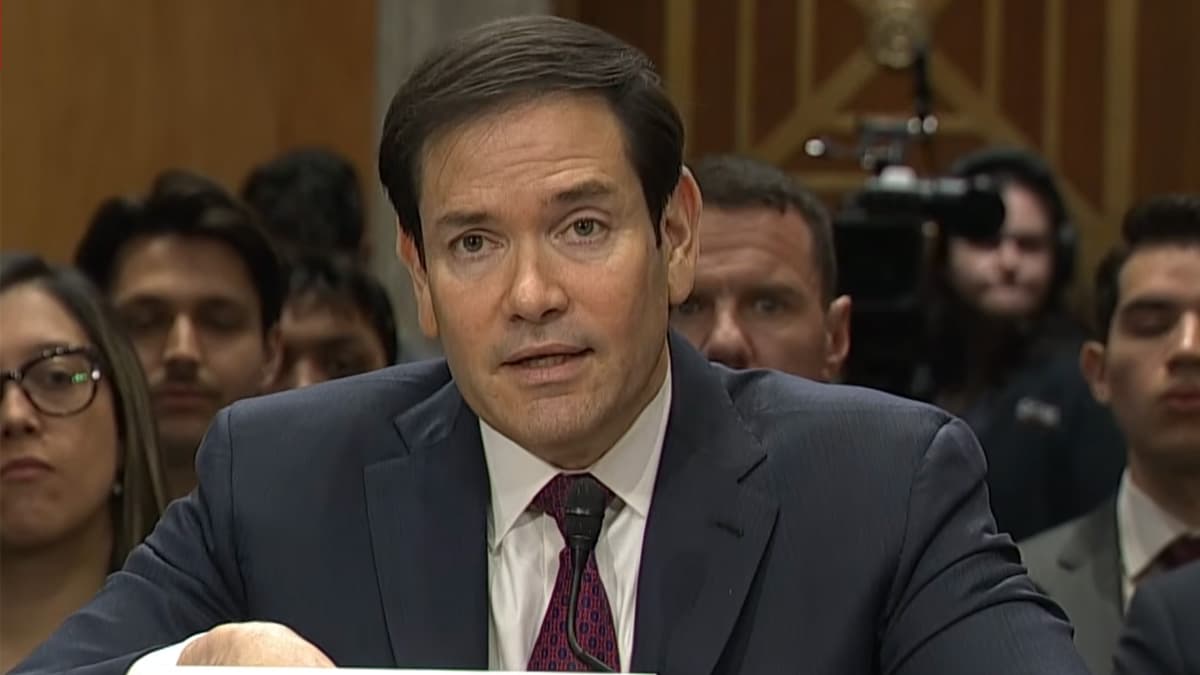
Secretary of State Marco Rubio on Wednesday, 28 January, denied that the United States was engaged in a war with Venezuela, telling the Senate Foreign Relations Committee that military force was neither imminent nor desired following the ousting and capture of longtime Venezuelan leader Nicolás Maduro.
In testimony to lawmakers, Rubio clarified earlier statements suggesting military readiness, stating, “We are not postured to, nor do we intend or expect to, have to take any military action in Venezuela at any time.” He added, “The only military presence you will see in Venezuela is our Marine guards at an embassy.”
Rubio's remarks follow a controversial US military operation earlier this month that removed Maduro from power and led to the deaths of over 120 people in maritime strikes on suspected drug-trafficking boats off Venezuela’s coast and in the eastern Pacific Ocean.
The testimony marked the Trump administration’s first public explanation of its actions in Venezuela since the high-profile raid that ended with Maduro and his wife, Cilia Flores, pleading not guilty to drug trafficking charges in a US court.
Scrutiny over oil and democracy
Senators from both parties pressed Rubio on the broader implications of the operation, particularly regarding control over Venezuela’s oil sector.
President Donald Trump has said that the United States will manage Venezuela’s vast oil reserves “for a period of time,” working with American companies to rebuild infrastructure and sell oil globally. Trump was quoted as saying, “We’re in the oil business,” during a press conference held after Maduro’s capture.
Democratic Senator Chris Murphy accused the administration of “taking their oil at gunpoint,” adding that the US is holding and selling Venezuelan oil while deciding how the proceeds are used—without clarity on Venezuelan self-determination.
Rubio confirmed that no-bid licenses were granted to two US oil trading companies to market Venezuelan oil, describing the move as a “short-term fix.” He acknowledged that longer-term plans involve direct sales and involvement from major oil firms like Chevron.
He denied accusations that oil executives had foreknowledge of the raid. “The notion that the president authorised the operation at the urging of oil executives is absurd,” Rubio said, refuting Senator Chris Van Hollen’s claims based on Trump’s own statements.
Legal ambiguity and congressional tension
The military strikes, particularly those resulting in dozens of deaths at sea, have also prompted legal concerns. Democratic Senator Tim Kaine criticised the lack of a clear legal rationale and decried the operation’s secrecy.
“This was shared in a closed setting,” Kaine said. “If it was such a righteous operation, why is the administration and the [Republican] majority in the Senate so jealously protecting the details about it?”
Senator Rand Paul questioned whether the operation could be considered an act of war, comparing the raid to a hypothetical foreign attack on the US government. Rubio rejected that view, calling the mission a “law enforcement operation” since the US does not recognise Maduro as a legitimate head of state.
Rubio’s testimony came just weeks after Republicans narrowly blocked a resolution that would have required congressional authorisation for any future military actions in Venezuela. Vice President JD Vance cast the tie-breaking vote.
Uncertainty over transition and interim leadership
The US is currently working with Delcy Rodríguez, Maduro’s former vice president, who was sworn in as interim president after his removal. Rubio described US engagement with Rodríguez as “respectful and productive,” and said the State Department is preparing to reopen its embassy in Caracas.
However, senators expressed scepticism about partnering with a figure so closely tied to the ousted regime. Rubio maintained that Rodríguez’s cooperation marks a significant shift and opens the door for democratic reforms.
Opposition leader María Corina Machado, who has called Maduro’s removal the beginning of an “irreversible process,” is also in talks with the administration. Rubio is scheduled to meet her following his Senate appearance.
Domestic pressure and human rights concerns
Democratic Senator Cory Booker raised concerns over contradictions in US policy, citing travel advisories warning of unlawful detention in Venezuela, even as the administration lifts protected status for Venezuelans in the US.
Booker called this “hypocritical,” suggesting the administration was downplaying ongoing oppression in Venezuela while simultaneously threatening deportation.
Rubio defended the move, saying temporary protected status had been granted to a large number of individuals “without proper vetting,” suggesting some might be linked to criminal gangs.
Democratic Senator Jeff Merkley was more direct in his criticism: “We had a dictator we didn’t like; we’ve replaced it with a dictator we think we can manipulate.” He challenged Rubio to commit to not using taxpayer funds to support the new Venezuelan government, which Rubio did.
A fragile roadmap and mixed signals
Rubio urged patience from lawmakers and the public, noting that it had been “less than four weeks” since Maduro’s removal. “Four, five or six months from now cannot look like now,” he said, while refusing to provide a clear timeline for elections or a democratic transition.
He compared Venezuela to a “critically ill patient,” whose immediate needs had to be stabilised before long-term recovery could begin.
Nonetheless, frustration is growing among lawmakers across the aisle. Some Republicans expressed unease over the administration’s unilateral actions and lack of transparency, while Democrats called for congressional reassertion of war powers.
As Senator Tammy Duckworth pressed Rubio on whether he would advise President Trump to rescind the wartime Alien Enemies Act, Rubio refused, citing the ongoing threat posed by drug cartels and criminal gangs.