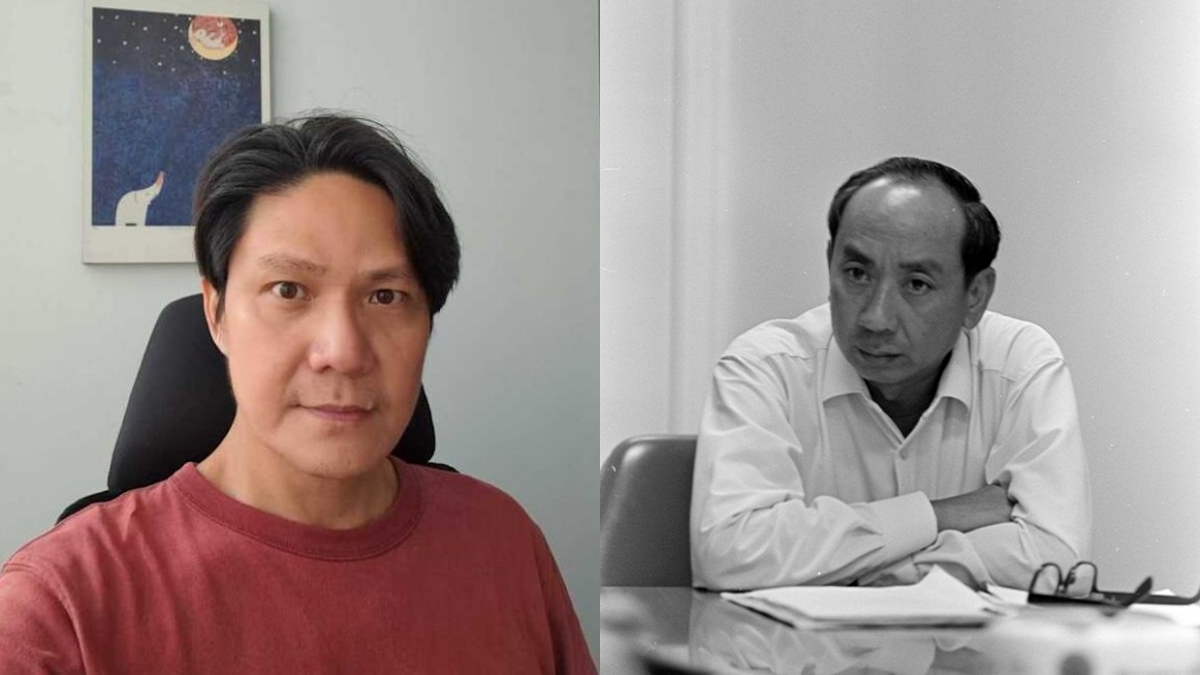
Academic Donald Low says Singapore scored an 'own goal' over Dear You dialect curbs
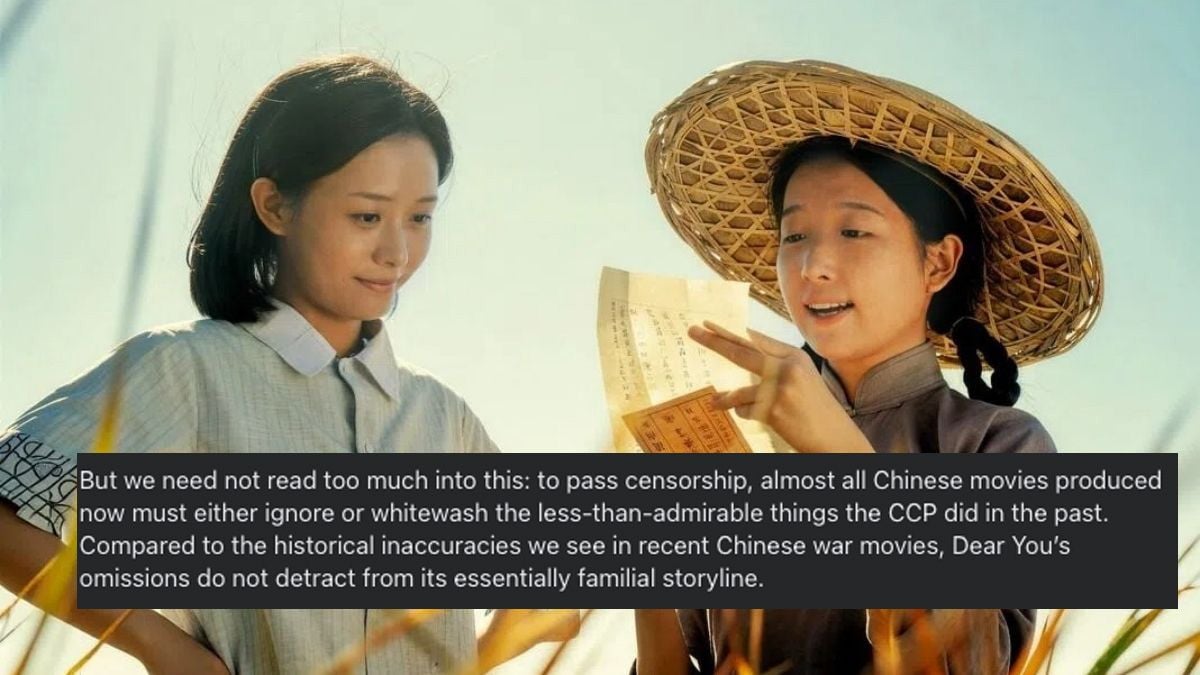
Donald Low has said Singapore's handling of the Teochew film Dear You was an "own goal", arguing the Mandarin-dubbed version may do more to foster affinity with China than the original dialect version the authorities restricted.
Donald Low, Professor of Practice at the HKUST Institute for Public Policy, has weighed in on the debate over the Teochew-dialect film Dear You, calling Singapore's handling of its screenings an "own goal".
Writing on his Facebook page, Low said he had watched the film in its original Teochew in a half-empty Hong Kong cinema, where it screens only in the original dialect and is treated, in his words, as a niche foreign-language work.
He praised the film as well-made and emotionally powerful, and said every Chinese Singaporean should watch it, preferably in Teochew.
His central point concerned identity. Low argued that the film's Nanyang migrants did not long for an abstract "China", still less the present-day People's Republic, but for the specific families, villages and dialect-speaking communities they had left behind.
He suspected this nuance came across less strongly in the Mandarin-dubbed version. As an example, he noted that children shown learning Chinese in the Teochew version were learning Teochew, a distinction he believed the dub would blur.
Low said he found it ironic that the authorities had, for the sake of consistency, controlled the number of Teochew screenings. He acknowledged that the Ministry of Digital Development and Information (MDDI) had since said it would allow more, but questioned why the matter had been left to bureaucratic discretion at all.
He argued the film should have been treated as a foreign-language work and shown in its original dialect from the outset, as in Hong Kong.
Turning to concerns that the film might deepen some Chinese Singaporeans' sense of affinity with China — an effect he did not think the producers intended — Low suggested the Mandarin version was more likely to have that effect than the Teochew original. On that reading, he wrote, the restriction was an own goal.
Reactions to the post
Low's post drew a range of responses. Several commenters argued the dialect debate was peculiar to Singapore, noting that the film had screened in its original Teochew in Malaysia and Hong Kong without becoming a political issue.
One commenter cautioned against over-reading the film's politics, observing that the interpretation of Dear You as "United Front" propaganda had originated as a Singapore newspaper commentator's personal view rather than any official position.
Another, who had seen the Mandarin version, said a teacher in one scene urged students to persevere in learning Mandarin and pass it on, and wondered how the line had been rendered in Teochew — a point several felt underscored Low's argument.
Others raised the diversity of Singapore's Chinese community, noting that not all had come directly from China, with families tracing roots to Malacca, Indonesia and earlier waves of migration.
Background
Low's comments come amid a wider debate over Dear You, which was shot almost entirely in Teochew but released for general screening in Singapore in a Mandarin-dubbed version.
The Infocomm Media Development Authority said the decision supported the bilingual policy, which promotes Mandarin among Chinese Singaporeans.
MDDI said on 22 June that it would take a more flexible approach to dialect film screenings, after appeals from film-makers and strong public demand for the Teochew version.