Violence against women cases handled by WAO surge in 2025 as digital harassment and abuse rise in Malaysia
Malaysia’s Women’s Aid Organisation reported a sharp rise in violence-related cases in 2025, including domestic abuse and digital harassment. The group urged stronger legal protection and social reforms as child marriage concerns and gaps in domestic violence laws continue to affect vulnerable women.
- Violence cases handled by the Women’s Aid Organisation rose sharply in 2025, reaching 7,939 cases.
- Domestic violence and digital harassment increased significantly, while survivors often came from low-income backgrounds.
- Advocates urged legal reforms, including broader domestic violence protections and action on rising child marriage cases.
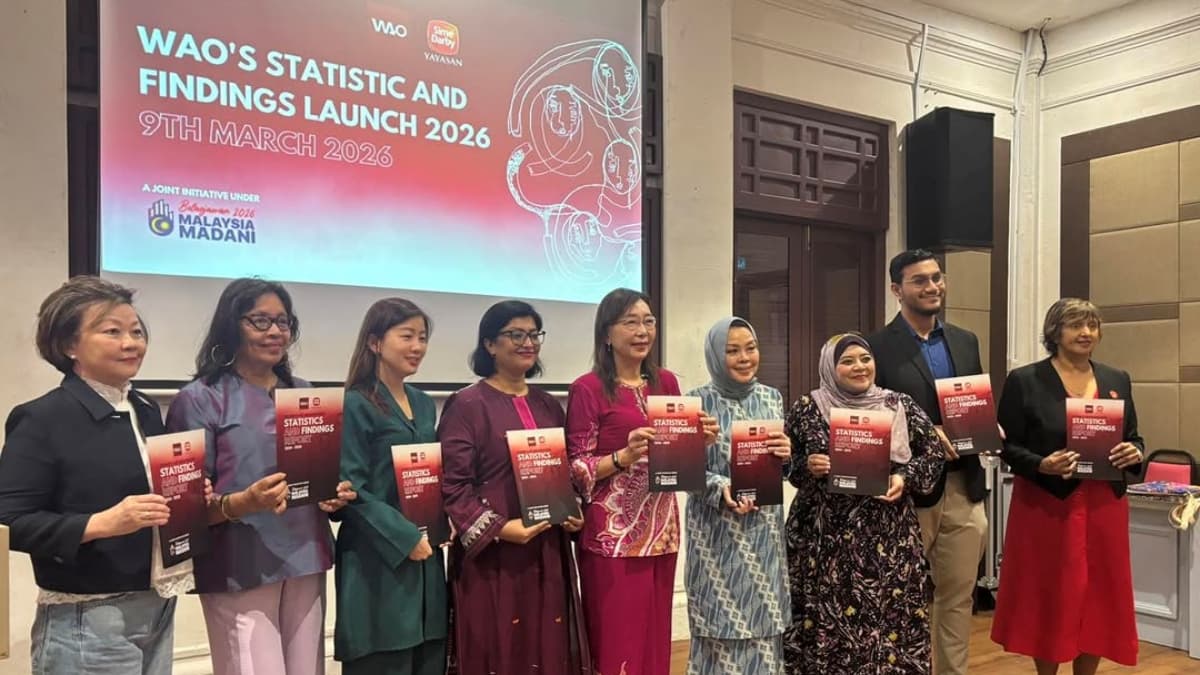
KUALA LUMPUR, MALAYSIA: Violence against women cases handled by the Women’s Aid Organisation (WAO) increased sharply in 2025, according to the organisation’s latest statistics and findings report.
The report, released on 9 March 2026, revealed that WAO handled 7,939 cases in 2025, a significant rise from 5,209 cases recorded in 2024.
The data highlighted growing demand for support services and reflected the complex forms of gender-based violence faced by women across the country.
General inquiries made up the largest portion of cases, rising from 2,691 in 2024 to 3,952 in 2025.
Domestic violence cases also increased considerably, climbing from 1,162 to 1,759 during the same period.
WAO said the increase indicates a greater need for support services and possibly a growing willingness among survivors to seek help.
Growth in complex and overlapping forms of abuse
The report identified rising cases across several categories of abuse.
These included relationship disputes, non-intimate domestic violence, sexual harassment, child abuse and technology-based harassment.
Such trends suggest that many survivors face multiple forms of abuse simultaneously.
One of the most striking increases involved technology-based harassment, which more than doubled.
Cases rose from 92 in 2024 to 251 in 2025.
The data highlighted growing concerns over digital abuse, including harassment through messaging platforms, social media and other online tools.
Vulnerable groups face increased risks
The report also noted higher levels of victimisation among particularly vulnerable groups.
These included single pregnant women, trafficking victims, migrant domestic workers and survivors of incest.
WAO said these cases reflect how social, economic and immigration vulnerabilities can heighten risks of abuse.
Demographic data showed that wives remained the largest group of survivors seeking shelter services.
There were 60 such cases in 2024 and 59 in 2025.
Meanwhile, cases involving ex-wives declined from 11 in 2024 to six in 2025.
Intimate partner violence remains dominant
Intimate partner violence continued to be the most common form of abuse among shelter residents.
The report showed that husbands were identified as perpetrators in the majority of cases.
There were 60 such cases in 2024 and 59 in 2025.
Domestic violence remained the primary reason for shelter admissions.
There were 75 cases recorded in 2024 and 72 in 2025.
Although the number fell slightly, WAO said the figures demonstrate that domestic abuse remains a persistent issue.
Incidents involving biological parents also increased from five cases in 2024 to eight cases in 2025.
Some forms of sexual violence decline
Several categories of sexual violence recorded lower numbers among shelter residents.
Rape cases declined from 10 in 2024 to five in 2025.
Sexual harassment cases fell from seven to five.
Abuse or sexual assault cases also decreased, dropping from six to two.
Stalking cases saw a notable reduction, falling from four to one case.
The report suggested this decrease may be linked to the deterrent effect of strengthened anti-stalking legislation in Malaysia.
Survivors largely from low-income backgrounds
Economic hardship was identified as a major factor affecting many survivors seeking help.
The majority of shelter residents were in the lowest income category, earning between RM0 and RM1,500.
There were 68 such cases in 2024 and 66 in 2025.
WAO said the figures highlight the urgent need for financial support programmes, employment opportunities and economic empowerment services for survivors.
Location data also showed that most residents in WAO shelters came from highly populated states.
Selangor and Kuala Lumpur recorded the highest numbers.
Violence against women seen as structural issue
WAO executive director Nazreen Nizam said the report should serve as a reminder that violence against women is not an isolated issue.
“It is not merely a personal problem. It is not about other people’s household or relationship problems,” Nazreen said.
“Violence against women is a structural issue.”
She said the problem is closely linked to power inequalities, restrictive gender norms, social stigma and gaps in protection systems.
Nazreen added that the increase in reported cases may not necessarily indicate that violence itself is increasing.
Instead, it may reflect a growing willingness among survivors to come forward.
“When more victims dare to speak out, our systems must be ready to welcome them with empathy, efficiency and appropriate protection,” she said.
Concerns over rising child marriage cases
Separately, lawmaker Teresa Kok raised concerns over rising child marriage cases in the country.
Data from the Statistics Department showed that 923 child marriages were recorded in 2023.
The figure increased to 1,261 cases in 2024.
Data for 2025 has not yet been released.
Kok said the rise demonstrates that the issue remains a serious social concern.
In a discussion on social media, a commenter suggested that marriage involving children aged 13 or younger was part of cultural practice.
Kok responded that such views highlight why continued awareness and reform efforts are needed.
She said legal reform is complicated because marriage laws fall under the authority of state governments.
Both civil and syariah jurisdictions are involved, which can slow the process of change.
Kok noted that advocacy groups have spent years pushing for reforms to protect women and children.
She added that previous amendments to domestic violence legislation took more than a decade before they were passed in Parliament.
WAO proposes broader protection under domestic violence law
WAO also released a policy brief proposing amendments to Malaysia’s Domestic Violence Act 1994.
The proposal aims to expand legal protection to survivors in unmarried intimate relationships.
Under the current law, protection measures such as Emergency Protection Orders and Interim Protection Orders apply only to certain legally recognised domestic relationships.
Nazreen said this leaves many survivors without legal protection.
These include individuals who are dating, engaged or previously involved in intimate relationships outside marriage.
She said protection should focus on the risk and harm experienced by survivors rather than marital status.
“Violence occurs when there is control, threats, coercion, fear and danger,” she said.
Nazreen added that women’s experiences should be translated into legal reform, policy changes and improvements in support systems.
View this post on Instagram