Jalan Besar’s Very Lucky Turtle Soup stall to close after six decades
Very Lucky Turtle Soup, a Jalan Besar hawker stall established in the 1960s, will close permanently by August 2025. Owner Chua Yoke Lin, 65, made the decision after doctors warned that his long work hours could worsen health issues.
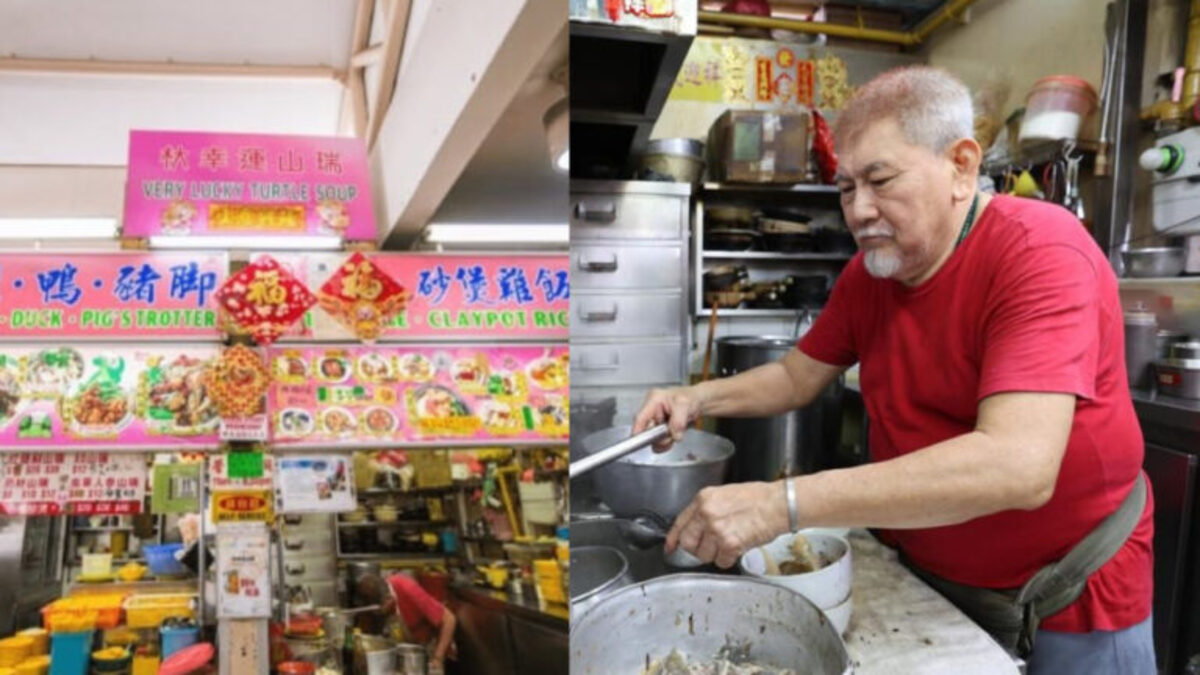
- Very Lucky Turtle Soup in Jalan Besar will close by end-August 2025, after doctors advised owner Chua Yoke Lin to retire for health reasons.
- The stall, founded in the 1960s, is known for turtle soup, crocodile meat soup, and claypot rice.
- Chua is willing to sell his secret recipes for S$40,000 to anyone interested in continuing the trade.
An iconic turtle soup stall in Jalan Besar, Singapore, is set to close its shutters after more than 60 years in operation. Very Lucky Turtle Soup, located at Berseh Food Centre, will cease business by the end of August 2025, following medical advice to its owner.
The decision marks the end of a long-standing family-run business. According to Shin Min Daily News, the brand was founded in the 1960s by the parents of current owner, 65-year-old Chua Yoke Lin.
Chua, who has helmed the stall since 1981, is well known among regular customers for serving traditional turtle soup alongside over 20 other dishes, including crocodile meat soup and claypot rice.
A career defined by long hours
Chua began helping at his family’s stall in his youth. Although he briefly left to learn how to prepare claypot rice, he eventually returned to continue the family legacy.
For decades, Chua worked long hours daily, typically opening the stall at 9 a.m. and returning home around 11 p.m. The routine meant spending about 14 hours a day on his feet.
On 18 April 2025, Chua fell ill while at work, experiencing dizziness and weakness in his legs. He was rushed to hospital, where doctors diagnosed him with a contagious virus and poor blood circulation caused by prolonged standing.
He was hospitalised for three weeks and later took additional time off to recuperate. Doctors advised him to avoid long periods of standing, warning that failure to do so could result in disability.
Reflecting on this advice, Chua said: “I do not want to continue working until I have to rely on a walking stick to go around. I hope I can get some good rest after retiring.”
Family ties and legacy decisions
Chua revealed that his two sons, who work as a manager and a pork supplier respectively, had expressed interest in continuing the stall. However, he declined their offers.
“Practising this trade requires determination. Those who are not interested will find it difficult to continue in the long run,” he explained.
His decision means that the stall will be returned to the authorities once it shuts down. Nonetheless, Chua indicated he is willing to sell his secret recipes to others interested in continuing the trade.
He has placed a price tag of S$40,000 on the recipes and is open to teaching buyers his culinary techniques. “If they have the heart to learn, they can pick it up in a week or a few weeks,” he said.
Chua added that he intends to visit the stall in future to observe its operations and offer suggestions for improvements if required.
A stall steeped in history
Very Lucky Turtle Soup has been part of the Jalan Besar food scene for decades, attracting locals and visitors with its distinctive offerings. Turtle soup, once considered a delicacy, is less commonly found in Singapore today, contributing to the stall’s reputation as a unique dining destination.
The stall has survived Singapore’s evolving hawker culture, changes in consumer tastes, and increased competition. Its closure will mark the end of one of the few remaining businesses dedicated to traditional turtle soup preparation.
For many long-time customers, the announcement is likely to stir nostalgia. Hawker stalls such as Very Lucky Turtle Soup are often seen not only as food outlets but also as cultural institutions that carry forward family traditions and local heritage.
Looking ahead
While Chua prepares to retire, his decision to sell the recipes provides a potential avenue for the brand’s continuation. Interested buyers could preserve the culinary knowledge and potentially reintroduce the dishes under new management.
Whether or not the stall’s signature dishes reappear in future, the closure reflects a broader trend in Singapore’s hawker scene. Ageing stallholders, health concerns, and younger generations pursuing different careers have contributed to the gradual disappearance of long-standing hawker businesses.
Chua, however, appears at peace with his choice. Recalling advice from his mother, he said: “If I want to close it down, I should not feel pity about it.”