HK liaison chief under fire over posts showing five-star hotel upgrade and private ferry cabin perks
A Hong Kong government official has sparked public controversy after sharing social media posts about receiving luxury travel and hotel perks, prompting official clarification and an ongoing investigation into possible conflicts of interest.
- A Hong Kong government liaison office director is under scrutiny after social media posts showed luxury travel and hotel perks.
- Authorities say hotel costs were personally paid, while an investigation continues into a private ferry cabin arrangement.
- Lawmakers and officials have called for a review under civil service and anti-bribery rules.
HONG KONG: A senior Hong Kong government official has come under public scrutiny after posting on social media about receiving luxury travel and accommodation perks, prompting calls for an investigation into potential conflicts of interest.
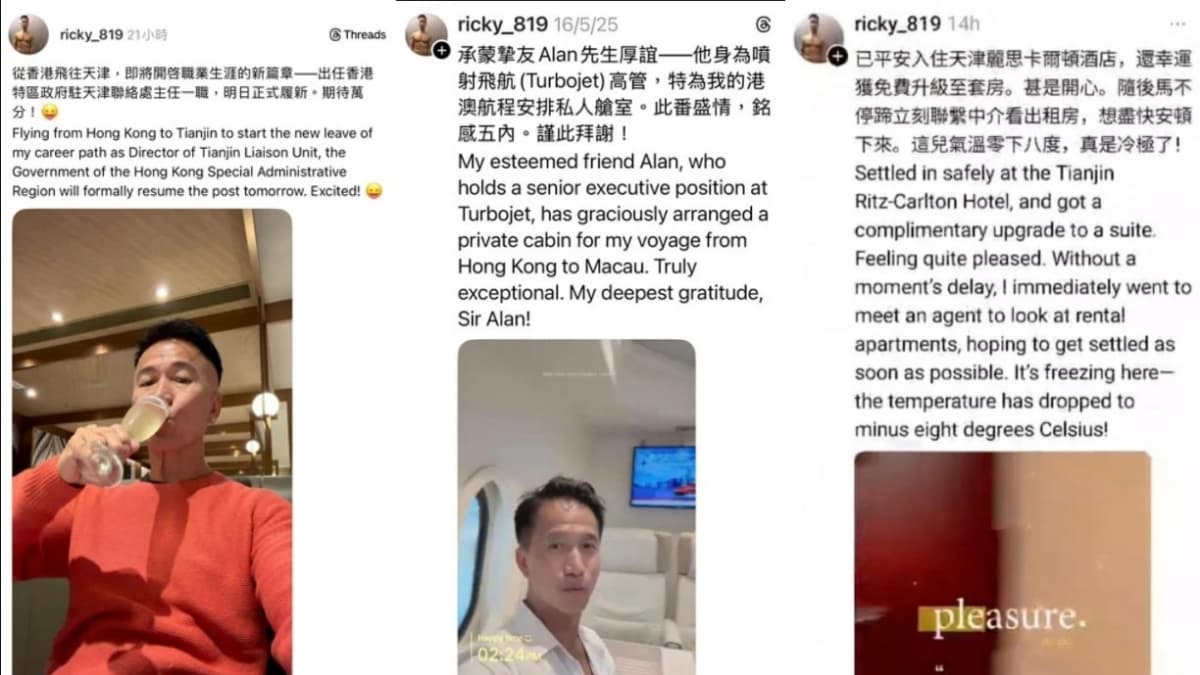
The official, Ricky Cheng Chun-sang, heads the Hong Kong Special Administrative Region government’s Tianjin Liaison Unit under the Constitutional and Mainland Affairs Bureau. His online posts showed a five-star hotel suite upgrade and a private ferry cabin.
The controversy emerged after Cheng shared photos and videos on social media platform Threads, describing himself as “lucky” to receive a complimentary suite upgrade at the Ritz-Carlton Tianjin shortly after taking up his post.
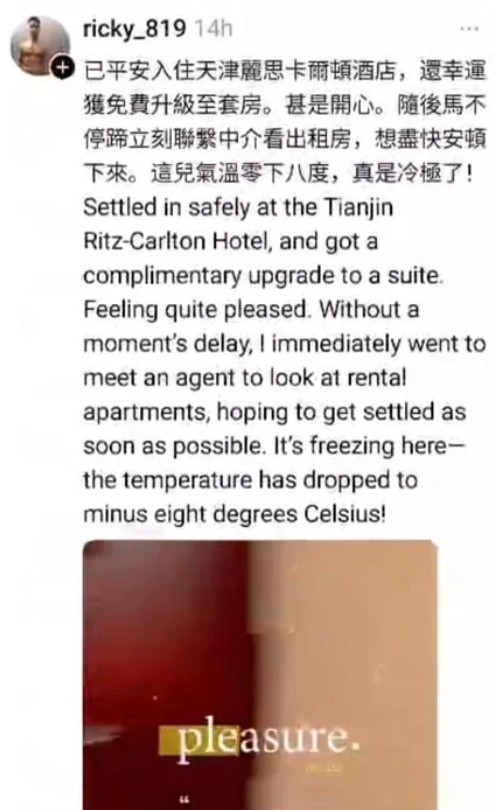
In the posts, Cheng included images of a welcome letter from the hotel’s regional general manager, along with footage of the upgraded suite. The content was widely shared before being deleted.
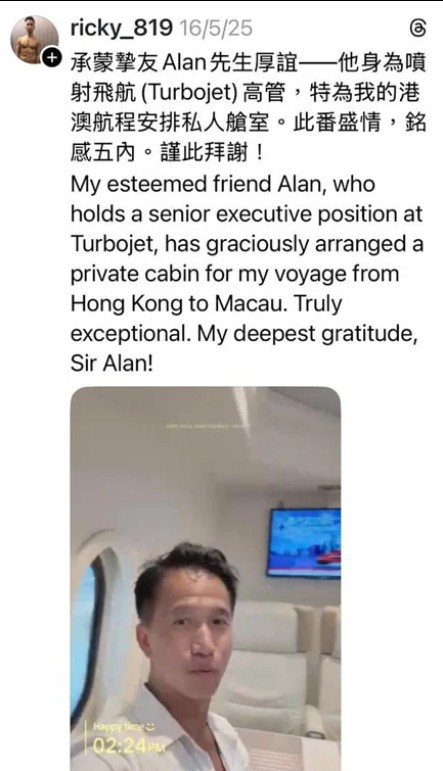
Another post, dating from May last year, resurfaced online and drew further attention. In it, Cheng thanked a “close friend Alan,” reportedly a senior executive at TurboJET, for arranging a private ferry cabin on a Hong Kong–Macau journey.
Photos attached to that post showed a cabin equipped with a sofa and television.
Cheng described the arrangement as a gesture of deep friendship and expressed gratitude for the hospitality.
The posts sparked criticism from online users, who questioned whether such perks were appropriate for a senior civil servant. Some comments said the displays risked damaging public confidence in government impartiality.
On 21 January 2026, authorities responded to the controversy.
According to the Constitutional and Mainland Affairs Bureau, Cheng personally paid for his accommodation in Tianjin and no public funds were involved.
The bureau said the hotel room upgrade was provided because Cheng was a senior member of the hotel group’s loyalty programme, rather than due to his official position.
However, officials confirmed that the incident involving the private ferry cabin was still under review.
The bureau said it would take serious action if any violations of law or regulations were found.
The government also said relevant departments had reminded staff to be mindful of public perception when sharing aspects of their personal lives on social media.
The Civil Service Code requires public officers to avoid actual, perceived or potential conflicts between their official duties and private interests. It also requires such situations to be declared promptly for appropriate handling.
The code further states that civil servants must not exploit their positions for personal gain or accept advantages that could influence, or be seen to influence, their official duties.
While entertainment is not classified as a “benefit” under the Prevention of Bribery Ordinance, officials are expected to avoid overly lavish or frequent hospitality that could cause embarrassment or damage the government’s reputation.
Legislator Chan Cho-kwong, a former police officer, said all civil servants are subject to anti-bribery laws. According to Chan, whether a breach occurred depends on the nature of the hospitality.
He said that if the perks were connected to Cheng’s official role, they could breach regulations. If the hotel upgrade was a standard benefit available to ordinary travellers, it might be acceptable.
Chan urged the Civil Service Bureau to investigate the matter to clarify the facts and reassure the public.
Another legislator, Peter Douglas Koon Ho-ming, said civil servants should be particularly sensitive when accepting hospitality. He added that the bureau should follow up if the reported details were accurate.
Executive Council convenor Ip Lau Suk-yee also commented on the issue, saying the department concerned should examine the case if the social media posts reflected the facts, according to local media reports.
Citing the Prevention of Bribery Ordinance, Ip said complimentary travel or upgrades could constitute advantages and should only be accepted with explicit permission and under specific circumstances.
She added that modest gifts of limited value from close friends on special occasions might be acceptable, but being treated to private travel arrangements by acquaintances would not normally meet that threshold.