Jimmy Lai found guilty under Hong Kong national security law, faces possible life sentence
Hong Kong’s High Court has convicted Apple Daily founder Jimmy Lai of national security offences, a ruling that could lead to life imprisonment and has drawn strong international condemnation over press freedom and judicial independence.
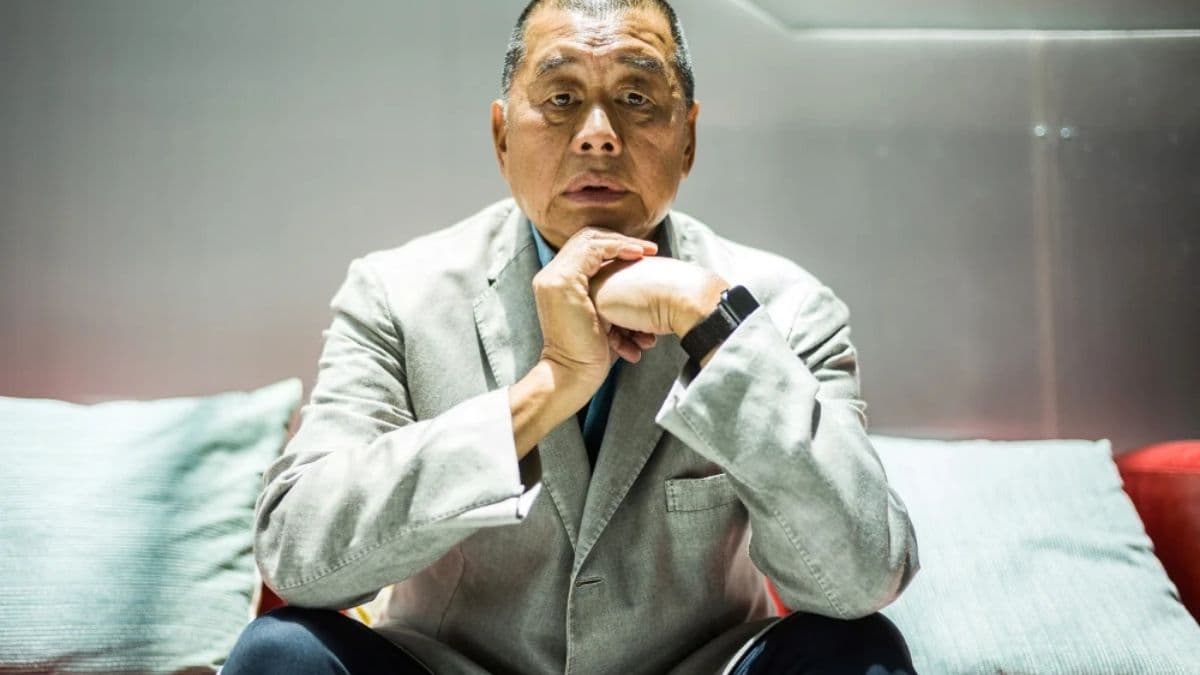
- Hong Kong’s High Court convicted media tycoon Jimmy Lai on three national security charges after a two-year trial.
- The verdict exposes Lai to a potential life sentence, with mitigation hearings starting on 12 January.
- Press freedom and human rights groups condemned the ruling as emblematic of Hong Kong’s democratic decline.
HONG KONG: Hong Kong’s High Court on Monday found pro-democracy campaigner and media tycoon Jimmy Lai guilty of two counts of conspiracy to collude with foreign forces and one count of conspiracy to publish seditious publications under a Beijing-imposed national security law, a verdict that could result in life imprisonment.
The 78-year-old founder of the now-defunct Apple Daily newspaper pleaded not guilty to all charges. The court’s ruling followed a trial that lasted more than two years and spanned 156 hearing days. Three government-vetted judges unanimously convicted Lai on all three counts.
The next court hearing is scheduled for 12 January, when mitigation proceedings will begin. The sentencing date has yet to be determined, and Lai retains the right to appeal.
Details of the Verdict
he High Court ruled that all defendants were guilty on the first and second counts, while Lai was found guilty on the third count. Reading from an 855-page judgment, Judge Esther Toh said the court was satisfied that Lai was the “mastermind” behind the conspiracies.
“The only reasonable inference we can draw from the preponderance of the evidence is that the first defendant’s intention — pre or post-National Security Law — was to seek the downfall of the Chinese Communist Party,” Judge Toh said, as quoted by The Guardian.
The court ruled that Lai had made use of the platforms of Apple Daily with the full agreement and knowing assistance of corporate defendants, making them parties to the conspiracies.
Judge Toh also said Lai’s testimony during the trial was at times contradictory, inconsistent and unreliable.
Charges and Potential Sentences
Under Hong Kong’s national security law, the offence of collusion with foreign forces carries a sentence ranging from three years’ imprisonment to life, depending on the nature of the offence and the defendant’s role. The charge of conspiracy to publish seditious publications carries a maximum sentence of two years.
A four-day mitigation hearing is scheduled to begin on 12 January for Lai and other defendants, during which arguments may be presented for reduced sentences.
Background to the Case
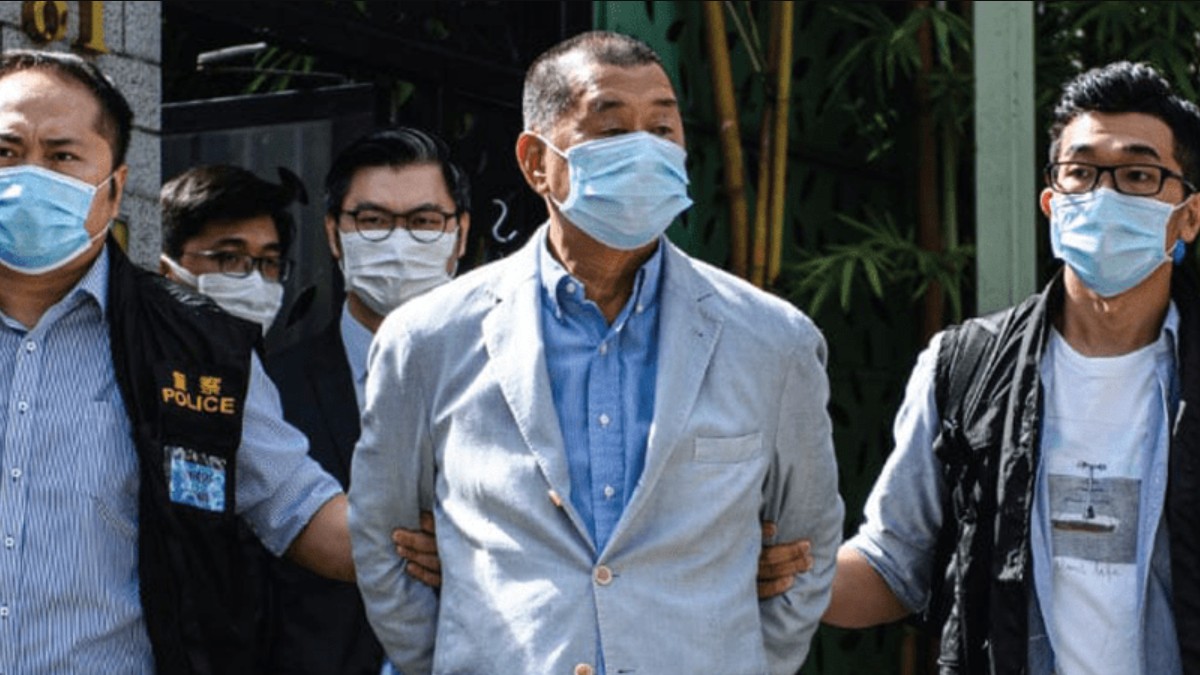
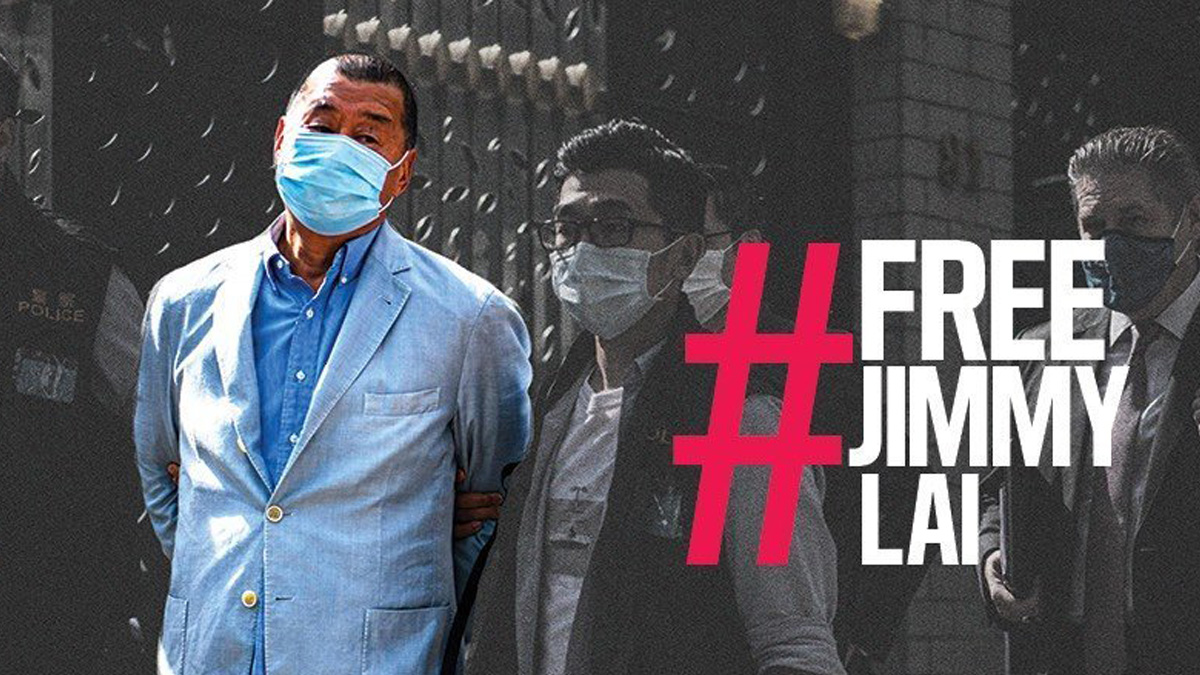
Lai, a self-made billionaire and outspoken critic of Beijing, was arrested in August 2020 after China imposed the national security law on Hong Kong following mass pro-democracy protests in 2019. He has been held in custody since December 2020, much of it in solitary confinement.
The prosecution accused Lai of conspiring with senior executives of Apple Daily and others to request foreign governments to impose sanctions or engage in hostile activities against Hong Kong or China. Prosecutors presented 161 publications, including Apple Daily articles, as evidence of conspiracy to publish seditious material, alongside social media posts, interviews and private messages.
Reuters reported that prosecutors also highlighted Lai’s meetings with former US Vice President Mike Pence and former Secretary of State Mike Pompeo in July 2019, arguing that they demonstrated attempts to solicit foreign interference at the height of the protests.
Apple Daily, a tabloid-style newspaper known for its sharp criticism of the Hong Kong government and the Chinese Communist Party, was forced to shut down in 2021 after police raided its newsroom, arrested senior journalists and froze the company’s assets.
During the trial, prosecutors argued that the newspaper served as a platform for advancing what they described as seditious narratives and foreign collusion.
International Attention and Trial Delays
Lai’s trial was conducted without a jury and was closely watched by the United States, Britain and the European Union as a measure of media freedom and judicial independence in Hong Kong, a former British colony that returned to Chinese rule in 1997.
The trial was originally scheduled to begin in December 2022 but was postponed to December 2023 after authorities barred a British lawyer from representing Lai, citing national security risks.
Health Concerns and Family Reaction
Lai’s prolonged detention has raised concerns over his health. His lawyers have said he suffers from high blood pressure and has lost significant weight. In September, his legal team launched an urgent appeal to the United Nations, warning that his continued detention posed a risk to his life.
According to Reporters Without Borders (RSF), Lai has been held in harsh conditions, including long periods of solitary confinement with limited exercise. His daughter, Claire Lai, earlier this month that his fingernails had fallen off and his teeth had deteriorated.
The Hong Kong government has rejected allegations that Lai has been denied adequate medical care.
Lai’s wife and son attended the verdict hearing, along with Hong Kong’s Roman Catholic Cardinal Joseph Zen. Lai nodded to his family before being escorted out of the courtroom by guards.
Diplomatic and Political Responses
The verdict has also become a diplomatic issue. Reuters reported that US President Donald Trump has raised Lai’s case with Chinese President Xi Jinping, while UK Prime Minister Keir Starmer has said his government has made securing Lai’s release a priority, noting that Lai is a British citizen.
Before his re-election, Trump pledged in an October 2024 podcast interview that he would seek Lai’s release. During his testimony, Lai said he had hoped the US president could prevent the national security law from taking effect in 2020.
Reactions from Press Freedom and Rights Groups
Jimmy Lai’s conviction under Hong Kong’s National Security Law has triggered a wave of condemnation from international press freedom and human rights organisations, many of which described the verdict as emblematic of the territory’s deepening crackdown on independent journalism and dissent.
Reporters Without Borders (RSF) said it was “outraged” by what it called a sham trial, arguing that Lai’s prosecution was not merely a case against one individual but an attack on press freedom itself. The organisation said he had been arbitrarily detained in “appalling conditions” for more than 1,800 days, warning that his health was rapidly deteriorating.
“It is not an individual who has been on trial — it is press freedom itself, and with this verdict that has been shattered,” RSF said, urging democratic leaders to act immediately to secure Lai’s release. The group warned that failure to do so would signal to Beijing that it could continue violating international law without consequence.
RSF detailed Lai’s prolonged solitary confinement, limited access to daylight and exercise, and what it described as severe medical neglect, citing warnings from his family that his nails had fallen off, his teeth were rotting and that he had suffered extreme weight loss. The organisation said Lai had been denied a fair trial, pointing to the absence of a jury, restrictions on legal counsel and the selection of judges under the national security framework.
Amnesty International described the verdict as “dismaying” and said it marked “the death knell for press freedom in Hong Kong”. Its China director, Sarah Brooks, said the national security law had been weaponised to silence critics rather than protect public safety.
“Jimmy Lai has been jailed simply because he and his Apple Daily newspaper criticised the government,” Brooks said, adding that the activities for which Lai was convicted “would never have been considered crimes before the 2020 National Security Law was enacted”.
She said the ruling was part of a broader and systematic crackdown on freedom of expression in Hong Kong and warned that the case should serve as a caution to international businesses operating in the city. Amnesty called Lai a “prisoner of conscience” and demanded his immediate and unconditional release.
The Committee to Protect Journalists (CPJ) condemned the ruling as a “disgraceful act of persecution”, saying it underscored Hong Kong’s “utter contempt for press freedom”. CPJ Asia-Pacific director Beh Lih Yi said Lai’s only crime was running a newspaper and defending democratic values.
“The risk of him dying from ill health in prison increases as each day passes,” Beh said, calling for Lai to be freed and reunited with his family.
CPJ highlighted Lai’s declining health after years in maximum-security detention, much of it spent in solitary confinement, and noted that a United Nations working group had previously found his detention to be arbitrary and unlawful.
Human Rights Watch said Lai’s conviction on what it described as “bogus charges after five years of solitary confinement” was both cruel and a travesty of justice. Its Asia director, Elaine Pearson, said the case illustrated Beijing’s determination to silence anyone who dared criticise the Communist Party.
The International Press Institute (IPI) said the verdict demonstrated how Hong Kong’s courts had been “weaponised to crush independent journalism and voices”. Its executive director, Scott Griffen, said Lai’s treatment laid bare how far authorities were willing to go to suppress independent information.
“His unwavering commitment to press freedom — despite years of brutal conditions — has made him a powerful symbol for media communities worldwide,” Griffen said, calling for Lai’s immediate release. IPI named Lai a 2025 World Press Freedom Hero in October.
Hong Kong Media Overseas Condemns Verdict as Political Retribution
Hong Kong Media Overseas (HKMO) issued its strongest condemnation of the guilty verdict against Jimmy Lai in a press release posted on its Facebook page on 15 December 2025, describing the case as a blatant act of political retribution against journalists and a profound assault on press freedom and the rule of law.
The overseas media advocacy group said Lai’s prosecution under the national security law symbolised the collapse of media freedom in Hong Kong, noting that the founder of Apple Daily has been arbitrarily detained since December 2020 and subjected to what it called harsh and degrading prison conditions.
HKMO expressed serious concern over Lai’s deteriorating health and questioned whether he would survive what it described as a draconian sentence.
The organisation rejected the charges of “conspiracy to collude with foreign forces” against Lai and former senior Apple Daily executives as baseless and politically motivated, arguing that criminalising journalistic work, editorial decisions and commentary amounted to putting society’s right to know on trial.
It also criticised the use of designated judges instead of a jury under the national security law, saying the practice undermined judicial transparency and public confidence in fair trials.
HKMO warned that the prosecution of Lai and the forced closure of Apple Daily had caused irreversible damage to professional journalism, media workers’ safety and Hong Kong’s credibility as an open international city, and urged authorities to drop all politically motivated charges and restore press freedom and judicial independence.
Since the national security law came into force in 2020, at least 28 journalists have been prosecuted in Hong Kong, eight of whom remain in detention, according to RSF. Hong Kong is ranked 140th in the 2025 World Press Freedom Index, down from 18th place two decades ago.
Lai’s sentencing is expected to take place after mitigation hearings conclude in January.