
Bitcoin rout deepens as it hovers just above US$60,000 threshold
Bitcoin slid to around US$60,803 after a 20% weekly drop, with over US$1 billion in liquidations. ETF outflows, macro fears, and corporate stress worsened the downturn. Eyes are now on US data and whether Bitcoin can stabilise above the key US$60,000 level.
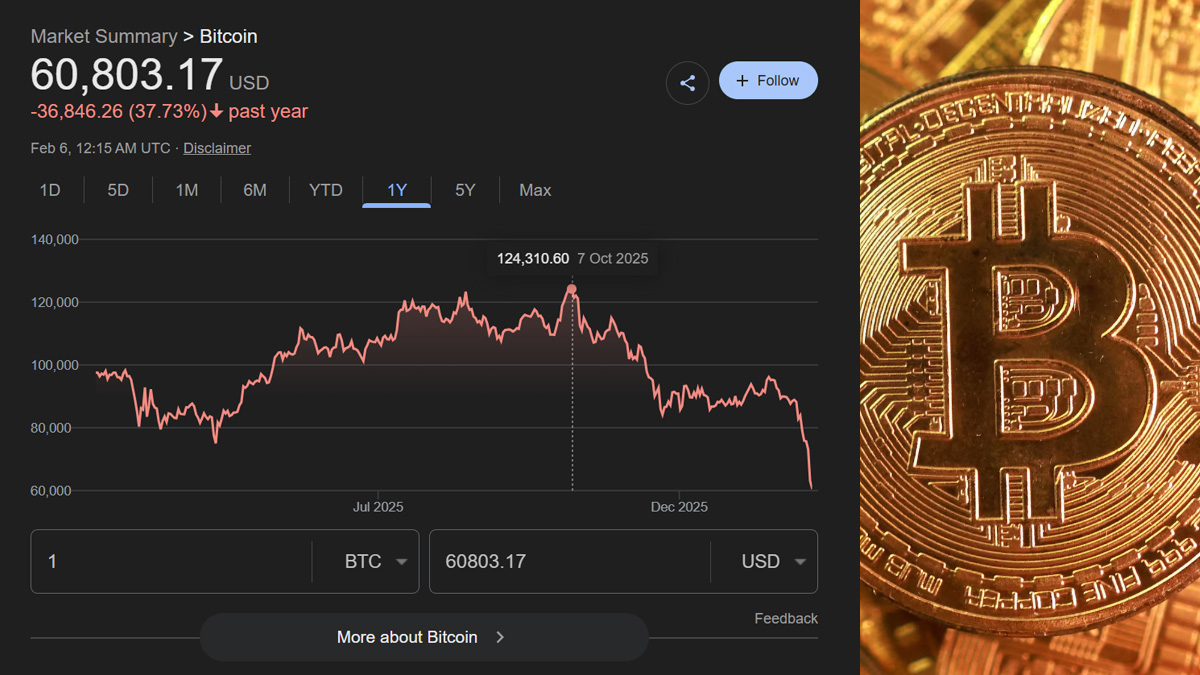
- Bitcoin nears US$60,000 after a 20% weekly plunge, driven by over US$1 billion in forced liquidations and sharp ETF outflows.
- Macro fears escalate as President Trump nominates Kevin Warsh—seen as a monetary hawk—for Federal Reserve chair.
- Altcoins and crypto firms suffer, with Ethereum and XRP tumbling, and Gemini cutting 25% of its workforce amid shrinking profitability.
The cryptocurrency market carnage accelerated on 6 February 2026, as Bitcoin (BTC) plummeted toward the critical US$60,000 psychological threshold.
After a brief and failed recovery attempt at US$73,406 just a day prior, the premier digital asset has seen its losses snowball, most recently trading near US$60,803—marking a staggering decline of nearly 20% within the week.
A state of "full capitulation"
The velocity of the crash has been fuelled by a massive deleveraging event. Over US$1 billion in leveraged positions were wiped out in 24 hours as margin calls forced liquidations across the board. The total crypto market capitalisation has shrivelled to US$2.27 trillion, a double-digit percentage drop that has left traders reeling.
Nic Puckrin, co-founder of Coin Bureau, noted that the market has entered "full capitulation mode", suggesting this is no longer a standard correction but a systemic reset of the current cycle.
The perfect storm: ETFs and macro fears
The downturn is being driven by a "triple threat" of negative catalysts:
-
Institutional flight: U.S. spot Bitcoin ETFs saw a massive US$578 million net outflow on 4 February, signalling that institutional "paper hands" are de-risking as the price action turns ugly.
-
The “Warsh” factor: President Trump’s nomination of Kevin Warsh to succeed Jerome Powell has sent shockwaves through risk assets. Known as a monetary hawk, Warsh’s potential appointment suggests a future of tighter liquidity and higher-for-longer interest rates.
-
Corporate distress: MicroStrategy (Strategy) reported wider-than-expected Q4 losses, with its massive stockpile of 713,502 BTC now sitting at an average cost of US$76,052—leaving the company’s “HODL” strategy deep underwater.
Altcoin contagion and corporate retreat
The pain isn’t limited to Bitcoin. Ethereum has slid toward US$1,850, while XRP collapsed 23% to US$1.18.
On the corporate front, Gemini announced a 25% workforce reduction and an exit from major markets including the UK and Europe, citing a desperate need for profitability in a shrinking market.
Is the bottom in?
Prediction markets currently place the odds of Bitcoin dipping below US$60,000 in the mid-80% range. While some analysts, like Jim Bianco, argue that "crypto winter" will persist until a new narrative emerges, others point to the US$126,000 peak seen in October 2025 as a distant memory.
“Crypto is now for normies,” says Steve Sosnick of Interactive Brokers, noting that the influx of retail investors has ironically made the market more fragile, as these participants often lack the "diamond hands" required to weather a 20% weekly drawdown.
All eyes are now on the rescheduled U.S. labour and CPI reports (due 11 and 13 February). Until then, the market remains in a defensive crouch, watching to see if the US$60,000 floor holds or if a fresh wave of panic is imminent.