Johor police bust cross-border syndicate trafficking drug-laced vape cartridges
Johor police have arrested a Singaporean and a Malaysian man involved in a cross-border drug syndicate trafficking ketamine-laced vape cartridges, seizing RM1.19 million (US$303,000) worth of drugs and assets in the state's largest recorded case of its kind.
- Two men, including a Singaporean, arrested in Johor Bahru over drug-laced vape trafficking.
- Police seized RM1.19 million worth of drugs and assets in the state’s largest case of its kind.
- The syndicate allegedly used runners and drop points for distribution across nightlife venues.
Johor police have dismantled a cross-border syndicate trafficking ketamine-laced vape cartridges, arresting two men and seizing drugs and assets worth RM1.19 million (approximately US$303,000).
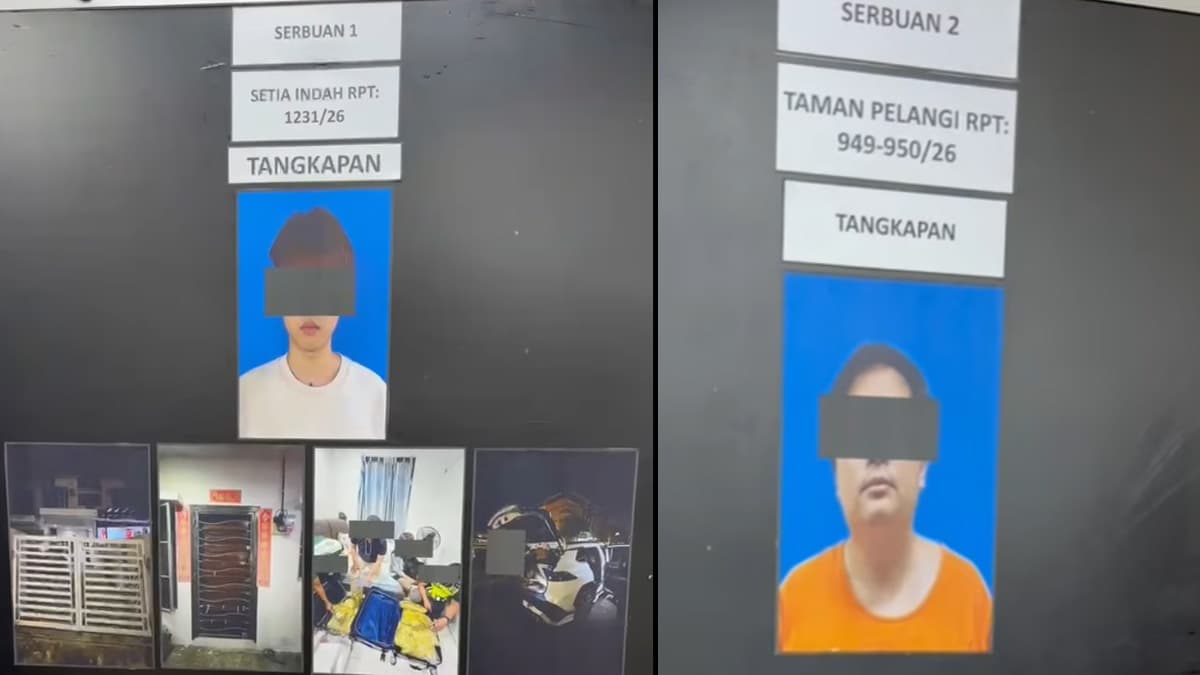
The arrests were made during two separate raids in Johor Bahru on 29 January, 2024.
The suspects, a 38-year-old Singaporean and a 25-year-old Malaysian, were detained in Taman Molek and Taman Mount Austin respectively, according to Johor Police Chief, Datuk Ab Rahaman Arsad.
He announced the development during a press conference held on 3 February, noting that the syndicate had been active since December 2023 and primarily targeted nightlife patrons.
The Singaporean suspect is believed to have managed the syndicate's finances, while the Malaysian national allegedly handled on-ground distribution as a "runner".
Following the arrests, police uncovered a cache of 3,200 vape cartridges each containing approximately 3.4ml of ketamine, along with 48 packets containing 960g of ecstasy powder.
The drugs were seized from a house used as a storage facility in Taman Setia Indah. Authorities also confiscated a Toyota Cross vehicle and RM136,850 in cash.
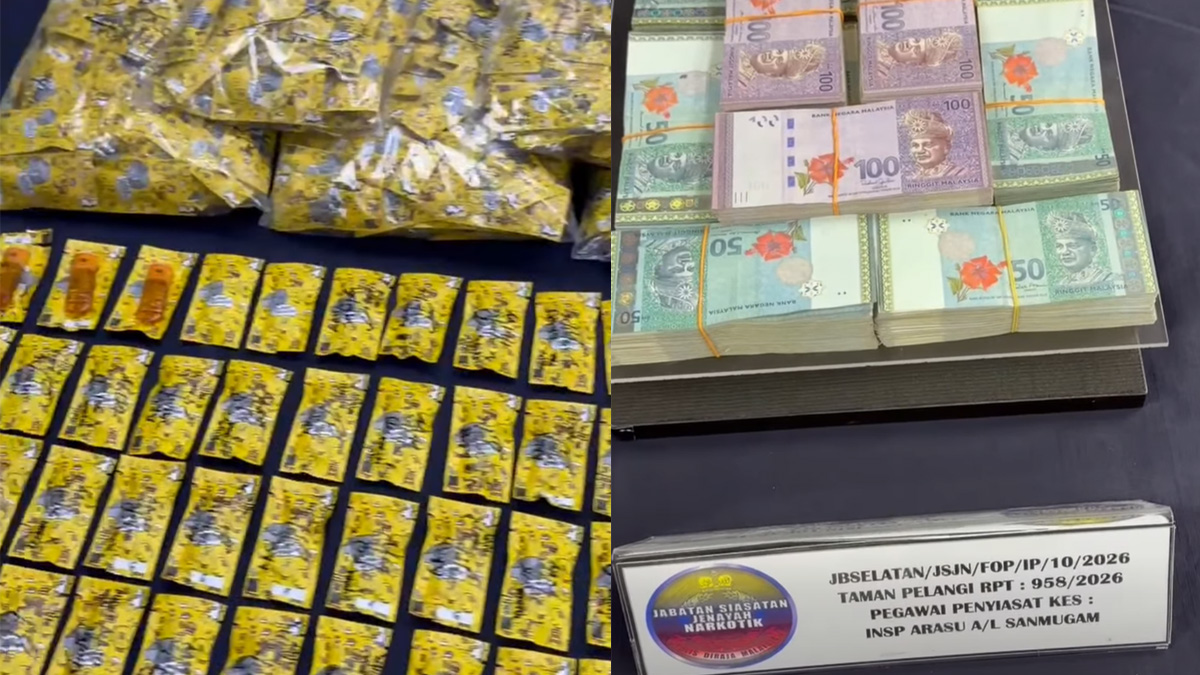
Ab Rahaman confirmed that the seized narcotics could supply up to 6,400 addicts and represented Johor's largest drug seizure of its kind to date.
Each vape cartridge was reportedly being sold for RM300 and distributed via a drop-off point system, with locations including residential areas and entertainment centres.
"Their modus operandi involved runners who would place the items at designated pick-up points for customers or other agents," he said.
Both suspects tested negative for drugs and had no prior criminal records. They have been remanded for seven days since 29 January as investigations continue.
The case is being investigated under Section 39B of the Dangerous Drugs Act 1952, which provides for the death penalty or life imprisonment with no fewer than 12 strokes of the cane upon conviction.
Additionally, authorities have invoked the Dangerous Drugs (Forfeiture of Property) Act 1988, under which the assets linked to the syndicate have been seized.
Although Malaysia retains capital punishment provisions for drug trafficking, a de facto moratorium on executions has been in place since 2018. No executions have been carried out since 2017.
According to national news agency Bernama, the police are not ruling out the possibility of additional arrests or a wider network spanning beyond Johor.