Spider-Man beggar case in Melaka triggers Malaysia probe into alleged child exploitation of young girl
Malaysian authorities are probing a case involving a man dressed as Spider-Man who allegedly used a seven-year-old girl to solicit money from tourists in Melaka, raising concerns over child exploitation and illegal street collections.
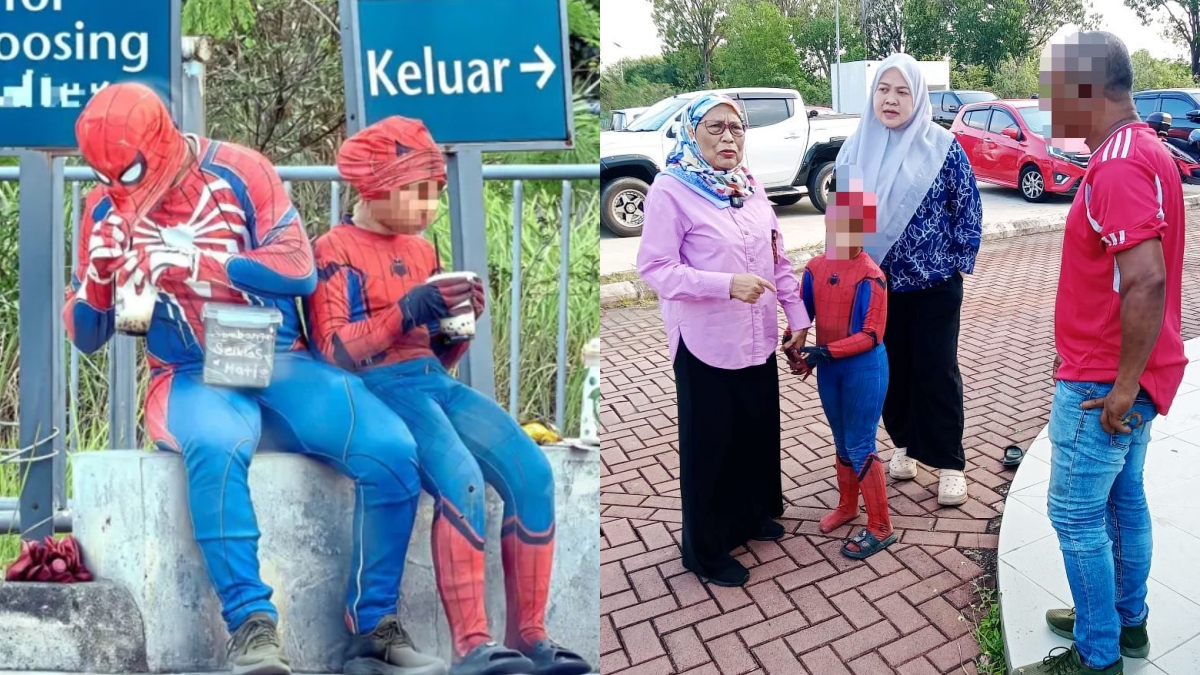
- Malaysian authorities are investigating a man accused of using a seven-year-old girl to beg from tourists in Melaka.
- The case may involve offences under the Child Act 2001 and the House-to-House and Street Collections Act 1947.
- Officials are examining whether similar costumed begging activities involve organised exploitation of children.
MELAKA, MALAYSIA: Malaysian authorities have launched an investigation into a man accused of exploiting a child for begging after he was found soliciting money from tourists in Melaka while dressed as the superhero Spider-Man.
According to a statement by Melaka women, family and community development committee chief Kalsom Noordin, the incident involved a 50-year-old security guard and a seven-year-old girl from Terengganu.
The pair were intercepted by officers from the Melaka Welfare Department at a petrol kiosk in Cheng at about 6pm on Sunday, following a public complaint.
Kalsom said the man claimed the child was his niece and told officers that he had brought her along during his activities in Melaka.
“The girl was also made to wear a Spider-Man costume, and we are now in the process of verifying the man’s claims,” she said on 9 February 2026.
She added that the child’s welfare was the immediate priority, particularly given the considerable distance the girl had travelled with the man.
“I rushed to the location after receiving a complaint about the man’s alleged exploitation of the child for begging,” Kalsom said.
Authorities are assessing whether the man’s actions constitute an offence under Section 32 of the Child Act 2001.
The provision prohibits the exploitation of children for purposes including begging, hazardous work or any form of commercial gain.
Kalsom said the man informed her that he had managed to collect a significant amount of money from members of the public during his time in Melaka.
Officials are also examining the broader issue of individuals dressing as cartoon characters or superheroes to solicit money at popular tourist areas across the city.
“These mascots can be seen waving at crowds along busy streets in the city centre,” Kalsom said.
She noted that some individuals were also observed dancing or posing for photographs to attract passers-by, who were then encouraged to give money.
According to Kalsom, such activities may contravene the House-to-House and Street Collections Act 1947.
The law requires individuals or groups to obtain a police permit before collecting donations in public places or business premises.
“We need to determine who is behind these mascots and whether children are being exploited by syndicates to solicit money,” she said.
The investigation will involve verifying the relationship between the man and the child, as well as assessing whether the activity was organised or carried out independently.
Welfare officers are expected to conduct further checks to establish the girl’s background and ensure her safety.
Kalsom said enforcement agencies would continue monitoring tourist hotspots to prevent potential abuse involving vulnerable groups.
She stressed that the use of children in public begging activities, regardless of costume or setting, would not be tolerated.
The case has drawn public attention amid increasing sightings of costumed individuals seeking money in Melaka’s historic districts.