
Chan Chun Sing: Salaries of political appointment holders under review by independent committee
An independent committee has been formed to review the salaries of political appointment holders, covering ministers, MPs and NMPs, with findings to be presented to the Government and Parliament when ready.
- The Government has convened an independent committee to review salaries of political appointment holders, including ministers, MPs and NMPs.
- The review follows the existing salary framework established in 2012, with possible refinements to ensure continued relevance.
- The committee, chaired by Gan Seow Kee, will submit recommendations to the Government before an update is provided to Parliament.
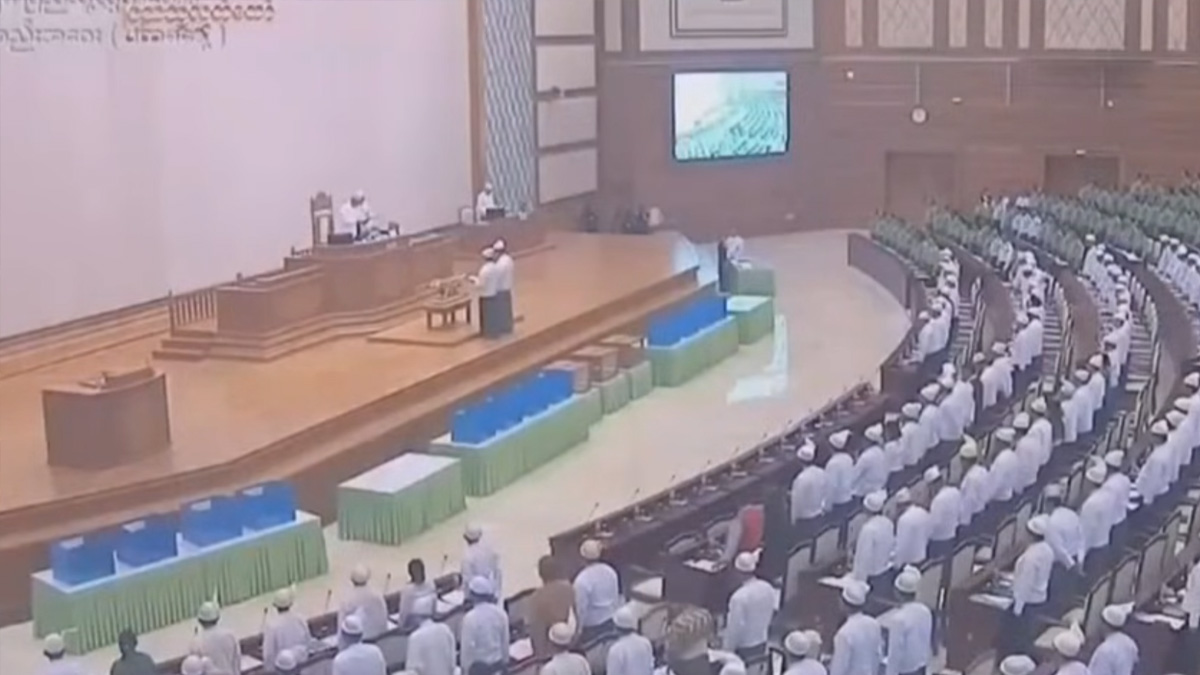
SINGAPORE: The Government has convened an independent committee to review the salaries of political appointment holders, Coordinating Minister for Public Services Chan Chun Sing said in Parliament on 12 January 2026.
The review will cover the salaries of all members of the House, including ministers, Members of Parliament (MPs) and Non-Constituency Members of Parliament (NMPs), Mr Chan said in a written reply.
He was responding to a parliamentary question from Alex Yam, MP for Marsiling-Yew Tee GRC, during the sitting on 12 January 2026.
Mr Chan said the committee will be chaired by Gan Seow Kee, chairman of Singapore LNG Corporation and an alternate member of the Council of Presidential Advisers.
The committee has been tasked with recommending appropriate salary levels based on the current salary framework, Mr Chan said on behalf of Prime Minister Lawrence Wong.
Where necessary, it may also propose refinements to ensure the framework remains relevant and able to meet its intended purpose, he added.
Mr Chan said the committee has just been formed and will submit its report to the Government when ready.
After receiving the report, the Government will consider its findings and provide an update to Parliament, he said.
The current salary framework for political appointment holders was established following a review by an independent committee in 2012, Mr Chan noted.
At that time, the Government agreed with the committee’s recommendation that the framework should be reviewed every five years by an independent body.
The recommendations from the 2012 review were accepted by the Government and took effect from May 2011.
A subsequent committee was convened in 2017 to review the 2012 framework, Mr Chan said.
That committee concluded the framework remained sound and recommended that political salaries continue to be adjusted annually in line with movements in benchmark salaries.
However, the Government decided not to make any changes to political salaries following the 2017 review, he said.
In 2023, the Government decided to defer the scheduled five-year review, citing an uncertain external environment and downside risks in the global economy at the time.
Mr Chan said this context informed the decision to delay the review, which would otherwise have taken place as scheduled.
“It is therefore timely to undertake a review,” said Mr Chan, who is also Minister-in-Charge of the Public Service.
The committee’s formation follows earlier parliamentary queries on the issue of political salaries.
In January 2023, then Non-Constituency Member of Parliament Hazel Poa from the Progress Singapore Party asked whether the Government had appointed a committee to conduct the scheduled review.
Mr Chan responded at the time that the Government would revisit the issue, without committing to a specific timeline.
It has now been confirmed that the review was formally deferred in 2023 due to prevailing economic uncertainties.
The newly formed committee includes members from the public, private and people sectors, reflecting a range of professional backgrounds.
Its members are Ramlee Buang, a member of the Public Service Commission, and Cham Hui Fong, deputy secretary-general and group director at Workforce, NTUC.
Other members include Thomas Chua Kee Seng, executive chairman of Teckwah Industrial, and Theresa Goh, chairwoman of the Charity Council.
Also appointed are Hsieh Fu Hua, chairman of the NUS Board of Trustees and chairman of GXS Bank, and Lily Kong, president of Singapore Management University and a member of the Public Service Commission.
The committee is rounded out by Shekaran K Krishnan, partner at Ernst & Young LLP.
In 2018, The Committee to Review Ministerial Salaries highlighted a 9% rise in benchmark salaries and proposed adjusting political salaries “annually in tandem with benchmark movements.”
The suggested annual salary for entry-level ministers stood at S$1.2 million, incorporating a 13th-month bonus, a three-month performance bonus, and a National Bonus based on meeting indicators.
Additionally, the committee proposed raising NCMPs’ allowance from 15% to 20% of elected MPs’ pay, acknowledging their full voting rights in Parliament since April 2017.
During a Parliamentary session in March 2018, former Deputy Prime Minister Teo Chee Hean stated, “The government has decided that since the scheme remains valid and the economy is still in transition, we will not change anything now and will maintain the current salary structure and level.”
Paid among highest in the world
The 2012 White Paper on ministerial salaries was put up after many Singaporeans got angry with the incumbent PAP government and voted against the PAP during the 2011 General Election, resulting in the ruling party garnering the lowest percentage of valid votes in the history of Singapore and the first loss of a Group Representative Constituency.
To appease the public, the White Paper, written by an independent committee chaired by Gerald Ee, then helped to lower the salaries of ministers and the other political appointees somewhat by benchmarking the entry MR4 Minister’s salary to the median income of the top 1,000 earners who are Singapore Citizens but with a 40% discount.
Still, with the new salary formula devised by the committee, PAP politicians continue to remain among the highest paid in the world.
For example, according to World Population Review, PM Lee is currently paid US$1.6 million annually:
Salary (in USD) of PM Lee compared with that of others:
- PM Lee Hsien Loong – $1,610,000
- Chief Executive Hong Kong – $672,000
- United States President – $400,000
- Australian Prime Minister – $384,000
- Chancellor of Germany – $369,727
- British Prime Minister – $200,000
And in fact, even under the revised salary in 2012, many of Singapore’s ministers and civil servants make more than some of the mentioned heads of states of other first-world countries.
Nevertheless, it’s not known if the salaries of ministers and other political appointment holders will be increased this time since they are already among the highest-paid politicians in the world.