CCP accused of escalating intimidation against Hong Kongers in Taiwan
Pro-democracy activist Henry Tong has accused the Chinese Communist Party of escalating cross-border intimidation in Taiwan, including vandalism, surveillance and threats targeting Hong Kongers who have relocated after the 2019 protests.
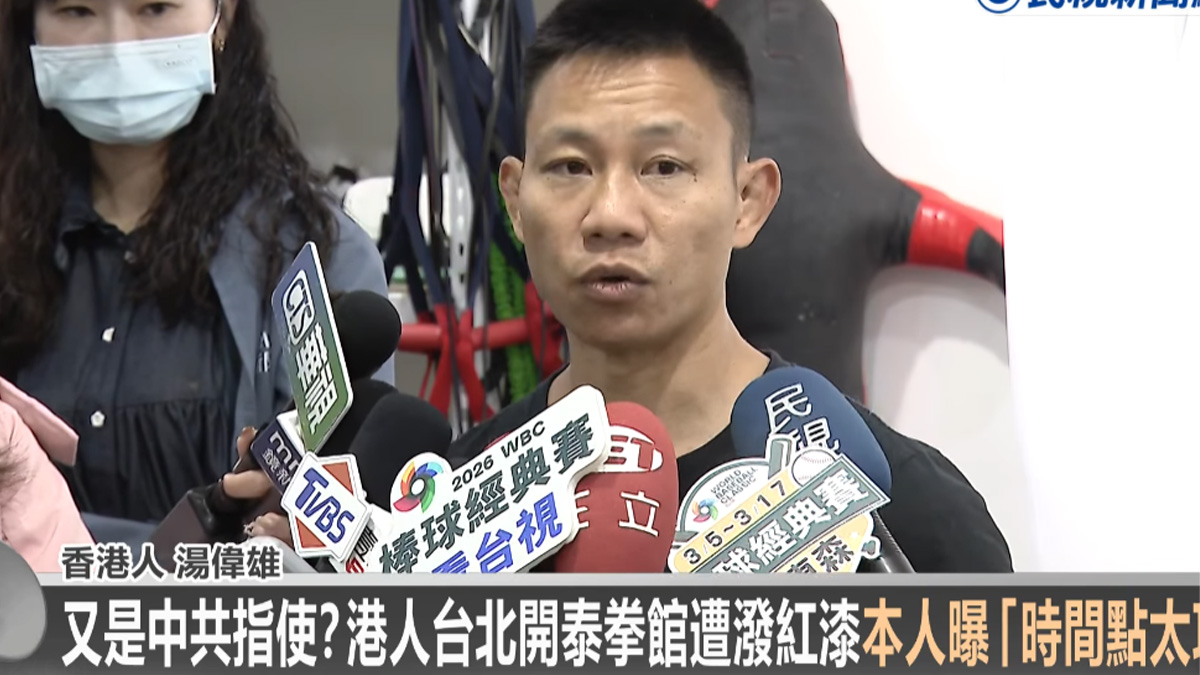
- Pro-democracy activist Henry Tong says the CCP has escalated cross-border repression of Hong Kongers in Taiwan.
- Tong’s gym in Taipei was vandalised three days after being placed on a wanted list by Hong Kong authorities.
- Authorities suspect the attack was coordinated from Hong Kong and are investigating broader intimidation patterns.
The Chinese Communist Party (CCP) has escalated its cross-border intimidation efforts against Hong Kongers residing in Taiwan, according to pro-democracy activist Henry Tong (湯偉雄). Tong, who relocated to Taiwan following the 2019 anti-extradition bill protests, said these acts of repression have intensified over the past year.
On 20 November 2023, Tong was placed on a “wanted list” by the Hong Kong government for allegedly violating election laws. Within three days, his Muay Thai gym in Taipei was vandalised. Surveillance footage was destroyed, and the main entrance was splashed with red paint.
Police identified two main suspects in the vandalism, both of whom were from Hong Kong. According to Deputy Minister of the Mainland Affairs Council, Liang Wen-chiang (梁文傑), the individuals had scouted the location before the incident and departed Taiwan shortly after. Liang stated that this was “a scare tactic to intimidate Tong and other Hong Kongers in Taiwan,” and that the Taiwanese government would not tolerate actions aligned with CCP repression.
In an interview with the Liberty Times, Tong said he believes the vandalism is directly linked to his political advocacy and criticisms of the Hong Kong and Chinese governments. During the lead-up to Hong Kong’s legislative elections, he had urged Hong Kongers to boycott the vote and published related articles. The vandalism occurred days after he was officially targeted by Hong Kong authorities.
Tong also referenced past instances of similar intimidation, citing the case of Lam Wing-kee (林榮基), the former Causeway Bay Books owner detained by the CCP before relocating to Taiwan. In earlier incidents, he said, the CCP had relied on collaborators based in Taiwan. However, in this case, the attackers allegedly arrived directly from Hong Kong, signalling a more aggressive tactic.
He believes the objective of these operations is to disrupt his livelihood and dissuade others from engaging in pro-democracy advocacy. "The purpose was to frighten me and make it harder to operate my business," Tong said. "It sends a message that others who follow my example may face the same consequences."
The alleged intimidation extends beyond vandalism. Tong said surveillance has taken place during private screenings of Deadline (自殺通告), a film by banned Hong Kong director Kiwi Chow (周冠威). Unidentified individuals reportedly took photographs of audience members, most of whom were Hong Kongers living in Taiwan.
He also cited bomb threats received during a Tiananmen Square Massacre memorial event on 4 June 2023, as well as disruptions caused by Chinese tourists at a separate event held in October.
Tong claimed that some Taiwanese private detective firms have accepted payment from Hong Kong entities to conduct surveillance on dissidents. He became aware of one such case through a personal connection, alleging that the payments were processed through legal channels, complicating efforts to trace them back to CCP-linked clients.
Although Taiwanese police provide some protection, Tong criticised the government’s reactive posture. He called for legal amendments to impose heavier penalties on those involved in cross-border repression. “This is an infringement on national security,” he said. “Not just a case of splashed paint.”
An official with knowledge of the case, speaking anonymously, confirmed that Hong Kongers in Taiwan who experience harassment or unauthorised photography should report incidents to police. Prosecutors and investigators would treat such matters as national security threats if cross-border repression is suspected.
Authorities reiterated that any local actors or private firms found to be aiding CCP intimidation efforts would be held accountable under Taiwanese law.