Taiwan President urges swift passage of NT$1.25 trillion defence budget
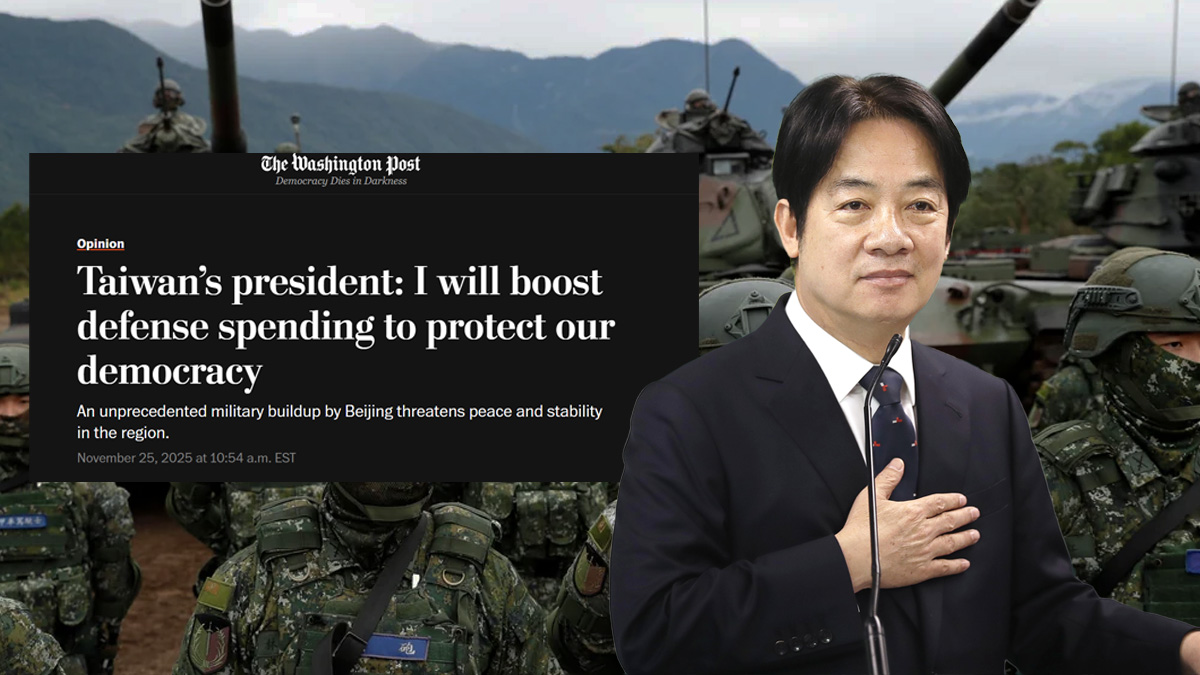
President William Lai has called for swift passage of Taiwan’s NT$1.25 trillion defence budget, warning that further delays could affect arms deliveries and international confidence in the island’s self-defence efforts.
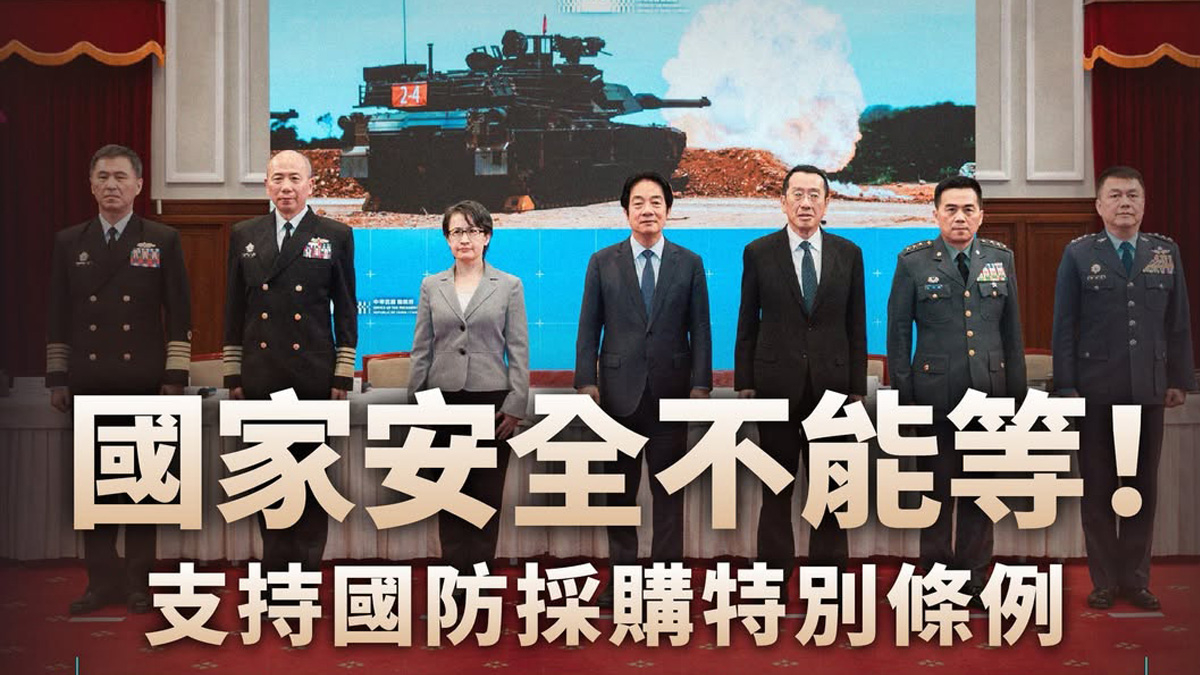
- President William Lai called on the legislature to pass a NT$1.25 trillion special defence budget without further delay.
- Opposition lawmakers have blocked review of the proposal 10 times, citing concerns over oversight.
- Lai warned that continued delays could affect arms deliveries and Taiwan’s international credibility.
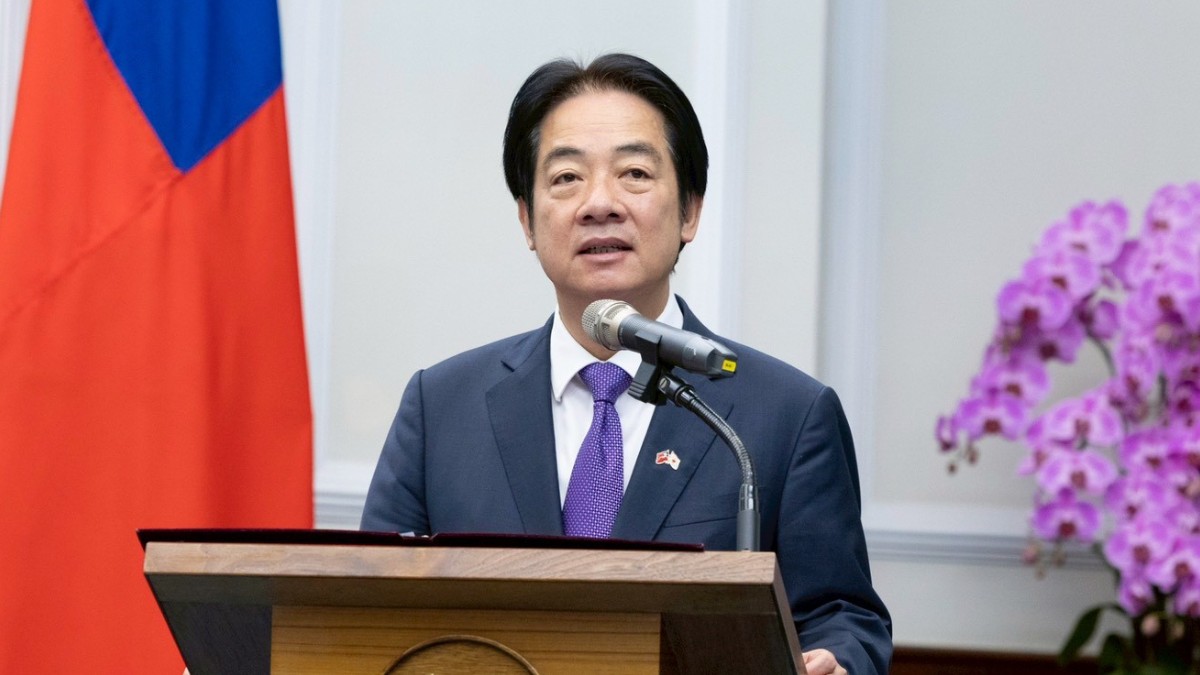
President William Lai on Wednesday (11 February) called on the legislature to pass the government’s proposed NT$1.25 trillion (US$39.74 billion) special defence budget, warning that continued delays could weaken Taiwan’s security and global standing.
Speaking at the Presidential Office in Taipei, Lai said that “national defence cannot wait, our safety cannot wait, and support for our troops cannot wait”.
Later the same day, he reiterated his appeal in a detailed post on his official Facebook page, stressing that the draft “National Defence Special Budget Act” had been obstructed for two months and had yet to be referred for committee review.
The Executive Yuan approved the eight-year special budget on 27 November to strengthen military modernisation and enhance asymmetric warfare capabilities across seven major categories.
However, opposition lawmakers have refused to schedule a review of the proposal 10 times. Instead, they have submitted an alternative plan that would examine selected items on an annual basis.
The main opposition Chinese Nationalist Party (KMT) has said it would not “sign blank cheques” and maintains that it has a duty to scrutinise the bill.
In his Facebook post, Lai said that as Taiwan approaches the Lunar New Year, he hopes the legislature will “turn over a new leaf” when the new session begins and complete deliberations on the special budget as quickly as possible.
He wrote that there is broad international consensus that peace and stability in the Taiwan Strait are indispensable to global security and prosperity.
Citing regional trends, Lai said Japan’s defence budget has reached NT$1.8 trillion this year, South Korea’s stands at NT$1.4 trillion and the Philippines has also increased spending.
“Taiwan cannot be an exception,” he wrote.
Lai thanked the US administration for its continued support, noting that Taiwan had received pricing quotations for arms procurement and that its self-defence efforts had garnered backing from the White House and bipartisan members of Congress.
He warned that with major arms suppliers’ production lines already fully booked, further delays in approving the budget could push Taiwan down priority lists and postpone delivery of critical weapons systems.
Such a scenario could also lead the international community to question Taiwan’s determination to defend itself, he said.
“Increasing defence spending is not a provocation,” Lai wrote. “It is a demonstration of our resolve to defend ourselves and to ensure global security.”
Minister of National Defence Wellington Koo also addressed the news conference, warning that failure to pass the budget could create a “rupture” in the Indo-Pacific collective deterrence posture against China.
Koo said Taiwan plays a uniquely critical role among countries along the first island chain and that the government had held intensive discussions with US counterparts regarding defence requirements.
Lai also addressed opposition claims that the budget impasse was linked to the government’s refusal to incorporate a uniform monthly pay rise for volunteer service members from NT$15,000 to NT$30,000.
The legislature approved the uniform increase in June last year. In December, the Executive Yuan filed for a constitutional interpretation and sought a temporary injunction.
Lai rejected what he described as a “completely incorrect connection” between the two matters.
He said the armed forces comprise a large and diverse organisation, with different units and missions entitled to varying allowances by design.
A blanket pay rise could raise constitutional concerns, lack professional consideration and undermine military leadership structures, he said.
If the court finds the measure constitutional, the government would replenish funding through a supplementary budget, Lai added.
Lai argued that the Democratic Progressive Party (DPP) administration had consistently supported the armed forces.
Over the past decade, military and civil service pay has been raised four times, amounting to a cumulative 14 per cent increase, alongside equipment upgrades, renovation of ageing housing and adjustments to 23 allowances.
Last year alone, five allowances were increased, adding NT$13.8 billion in annual expenditure, he said.
Recalling his time as a legislator 21 years ago, Lai said a previous special arms procurement package, including eight submarines, was blocked 69 times in the legislature’s Procedure Committee and ultimately failed.
Had the submarines entered service, Taiwan could have contributed earlier to regional stability, he said.
“We cannot repeat the same mistake,” Lai wrote, adding that while parties may compete politically, they should unite on issues of national security and sovereignty.
“Peace is priceless and war has no winners,” he said. “We may hold ideals about peace, but we must not harbour illusions. Only strength can ensure genuine peace.”