Nvidia and Taiwan partners to build first AI supercomputer amid tariff tensions
Nvidia CEO Jensen Huang announced on 19 May plans to build Taiwan’s first AI supercomputer with Foxconn, TSMC, and the government. The move highlights Taiwan’s role in global semiconductors, even as US tariffs pose risks to its chip industry.
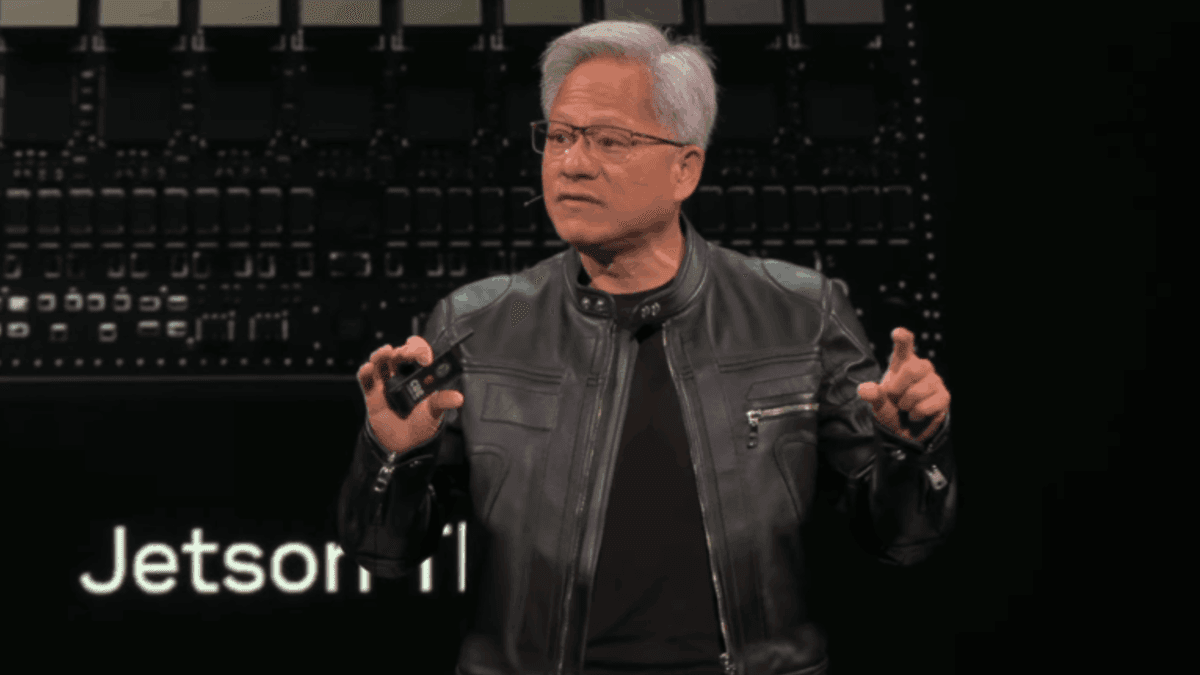
- Nvidia CEO Jensen Huang announced Taiwan’s first AI supercomputer project with Foxconn, TSMC, and the government on 19 May.
- The plan reinforces Taiwan’s semiconductor hub role amid US tariff threats.
- TSMC and GlobalWafers are expanding investments in the US to manage risks while maintaining Taiwan’s central role.
Nvidia chief executive Jensen Huang announced plans on 19 May 2025 to build Taiwan’s first AI supercomputer, working with Foxconn, TSMC, and the Taiwanese government.
The announcement, delivered during Huang’s keynote speech on the eve of Computex, signals a major step in strengthening Taiwan’s global leadership in semiconductors and AI infrastructure.
Strategic significance of the project
Huang stressed the importance of world-class AI infrastructure in Taiwan, calling it essential to the island’s technology ecosystem.
“Having a world-class AI infrastructure in Taiwan is really important,” he said, underscoring Taiwan’s role in producing chips that power everything from iPhones to ChatGPT servers.
The project is expected to enhance Taiwan’s position as a semiconductor hub and provide critical support for AI research, development, and applications across industries.
Computex focus on AI integration
This year’s Computex expo, one of the world’s leading technology trade shows, has drawn executives from companies such as Qualcomm, MediaTek, and Foxconn.
The four-day event focuses on expanding AI applications beyond data centres to laptops, robots, and vehicles, reflecting global trends in consumer and industrial AI adoption.
Tariffs and geopolitical risks
Huang’s announcement comes amid uncertainty for the semiconductor sector. The US government recently launched a national security probe into semiconductor technology imports, fuelling concerns about new tariffs.
Taiwanese firms, heavily reliant on exports, are seen as especially vulnerable. Reports indicate Washington is considering tariffs as high as 32 per cent.
Since taking office, President Donald Trump has imposed or threatened tariffs on key trading partners to push technology production onto American soil.
Taiwan’s response and overseas investments
In response, Taiwan has pledged to increase investments in the United States to cushion the potential impact of tariffs.
TSMC, the island’s top contract chipmaker, has committed an additional US$100 billion to its US projects, supplementing an earlier US$65 billion pledge.
Similarly, GlobalWafers, a key TSMC supplier, announced a US$4 billion expansion of its Texas wafer facility.
Analysts view these moves as a dual strategy to maintain influence both in Taiwan and abroad, reducing risks of overdependence on one region.
Balancing global role and local strength
Despite the challenges, Huang voiced optimism about Taiwan’s resilience in the global technology ecosystem.
“There are so many smart companies here, there are so many innovative and spirited companies,” he said, expressing confidence that Taiwan could thrive despite shifting geopolitical conditions.
Taiwan’s semiconductor industry has long been described as a “silicon shield”, not only underpinning global technology supply chains but also serving as a strategic deterrent to potential military threats from China.
Some analysts, however, warn that an accelerated relocation of production to the US could weaken Taiwan’s dominance.
Still, the supercomputer project and investments by both TSMC and GlobalWafers suggest a balancing act—ensuring Taiwan remains indispensable while aligning with US industrial policy.