Taipei prosecutors end probe into 19 Dec attack; no charges as suspect acted alone and is deceased
Prosecutors in Taipei have formally concluded their investigation into the fatal 19 December attack, confirming the suspect, who died at the scene, acted alone. No charges will be filed, and no evidence links the act to organisations or accomplices.
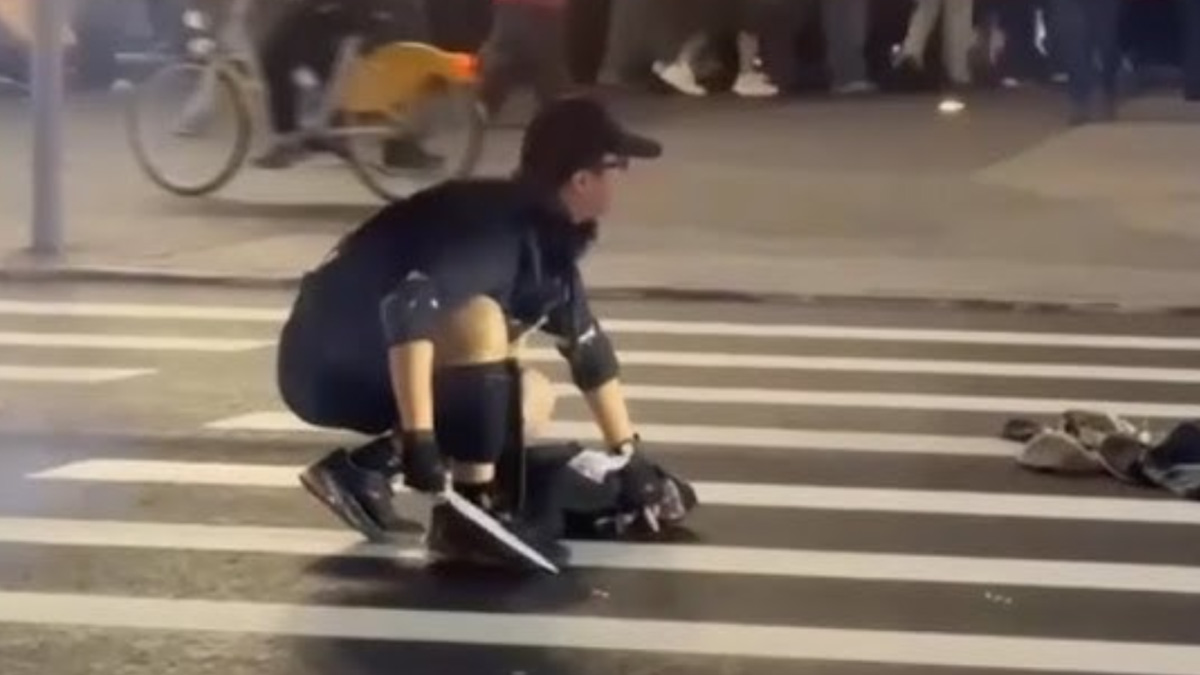
- Prosecutors have confirmed Chang Wen acted alone in the 19 December stabbing and arson attack.
- No charges will be filed as the suspect is deceased, with no organisational or foreign involvement found.
- A detailed investigation traced Chang’s year-long planning and financial independence.
The Taipei District Prosecutors’ Office has formally concluded its investigation into the 19 December 2024 attack at Taipei Main Station, determining that the suspect, Chang Wen (張文), acted alone in the killings and related arson attempts.
As the 27-year-old suspect is deceased, the office confirmed on 15 January 2026 that no charges will be filed, in accordance with the law.
Chang, wearing tactical gear and armed with knives and smoke grenades, attacked passers-by in and around Taipei Main Station and Zhongshan MRT Station. Three people were killed and 11 others injured.
The rampage ended when Chang fell from the rooftop of the Eslite Spectrum Nanxi department store while being pursued by police. He was later pronounced dead.
Attack found to be long planned and independently executed
Prosecutors stated that Chang began planning the attack more than a year and a half before its execution. He created a detailed attack plan, beginning with the purchase of knives, smoke grenades, gas masks, and other equipment in early 2023.
A key document recovered from his Google account, titled “2025/12,” was created on 5 October 2024 and accessed multiple times up until 16 December 2024. It detailed locations for smoke grenade and Molotov cocktail use, mapped escape routes, and listed his gear, which he later used during the attack.
Surveillance, YouBike usage records, and EasyCard transit logs confirm that Chang moved and acted alone. The prosecutors found no evidence of collaboration, communication, or ideological links with any criminal organisations, religious groups, or foreign actors.
Financial independence confirmed; no support uncovered
Authorities traced Chang’s financial records back to 2020. His income consisted solely of salary and remittances from his mother, totalling NT$1,986,961 (approximately US$62,892). All expenditures relating to the attack were determined to be within this financial capacity.
Major purchases included NT$48,200 spent on military-style replica smoke grenades and NT$37,563 spent through online platforms such as Ruten and Shopee for knives, protective equipment, and arson tools.
He had NT$967,438 in accessible funds by the time of the attack on 19 December 2024, following full withdrawals from his Chunghwa Post and Yuanta Bank accounts in August that year.
Arson attempts preceded the stabbing rampage
Prior to the stabbings, Chang conducted four arson attempts at different sites in Taipei, including parking areas and his rented flat. While none resulted in significant structural damage due to rapid fire suppression, several vehicles and personal items were destroyed, and one individual suffered smoke inhalation injuries.
These coordinated acts were aimed at causing public panic, prosecutors said.
Motivation linked to long-term isolation and symbolic intent
Chang’s actions, according to expert analysis, reflect an expressive act of violence rather than ideological terrorism or impulsive rage. Three academic experts in criminology were commissioned by prosecutors to assess the motive.
They concluded that Chang’s actions constituted a “highly premeditated expressive crime,” intended to shock society and symbolically assert his presence, rather than being politically or religiously motivated.
Chang was described as socially isolated, with limited interpersonal ties and a history of employment instability. He withdrew from social circles after resigning from a security job in 2021. He reportedly admired past high-profile mass attacks, including the Taipei MRT attack by Cheng Chieh (鄭捷).
He had consumed thousands of online materials related to random killings, arson, and violent acts in Taiwan, Japan, and Western countries. The prosecutors noted this as contributing to his reinforcement of planned mass harm.
Suicide confirmed as cause of death
The Ministry of Justice’s Forensic Institute concluded that Chang’s death was due to suicide by jumping from the rooftop of the Eslite store. He had removed all protective and combat gear before leaping, and had not prepared any escape route or plan.
No narcotics were found in his system. Evidence showed he made no attempt to obscure his identity during the attack and used his own motorcycle and accommodation bookings throughout.
Authorities strengthen nationwide response to threats
Following the attack, the High Prosecutors’ Office directed all district prosecutors to prioritise investigations involving online threats, transportation systems, and public areas.
Between 19 December 2024 and 14 January 2026, 51 such cases were reviewed. None were found to be connected to Chang or the Taipei attack. Separately, 198 cases of online threats or hoaxes inspired by the attack were recorded, also without links to the deceased attacker.
No prosecution over military service evasion
The Taoyuan District Prosecutors’ Office also concluded an investigation into Chang for failing to update his household registration, which prevented the delivery of a military call-up notice in November 2024. He was added to a wanted list in July 2024, but this case was also closed with no charges due to his death.