Taiwan president backs premier's rejection of revenue-sharing bill over fiscal risks
Taiwanese Premier Cho Jung-tai has refused to countersign a revenue-sharing bill passed by the opposition-controlled legislature, citing constitutional authority. President Lai supported the move, warning the amendments could trigger fiscal imbalance and undermine Taiwan’s democracy.
- Premier Cho declined to countersign the revenue-sharing amendments, citing constitutional grounds.
- President Lai Ching-te supported the move, warning of fiscal collapse and democratic erosion.
- The opposition-led Legislative Yuan may initiate a no-confidence motion against the premier.
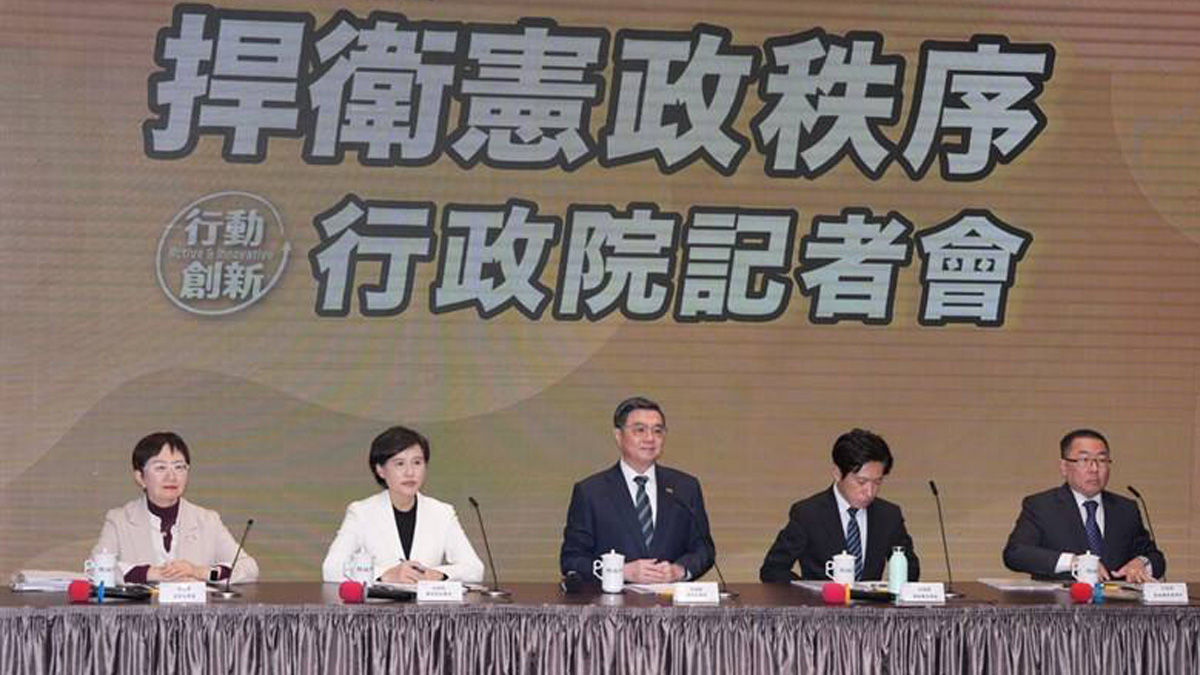
Premier Cho Jung-tai on 15 December declined to countersign controversial amendments to the Act Governing the Allocation of Government Revenues and Expenditures, passed by the opposition-controlled Legislative Yuan. Cho’s decision, the first of its kind by a Taiwanese premier, triggered a significant constitutional standoff.
Citing Article 37 of the Constitution, Cho stated that his refusal aims to uphold constitutional order and prevent legislative overreach. He warned that the amendments, if enacted, would severely impact the central government’s fiscal capacity.
“The decision aims to safeguard our Constitution,” Cho said at a press conference, emphasising that his actions did not constitute authoritarianism. He noted that the legislature retains the power to pass a no-confidence vote against him, stating that such a move would be a democratic “badge of honour” if it resulted from defending constitutional principles.
The amendments, passed on 5 December by a 59-50 vote, would increase local governments’ share of national tax revenues. The Executive Yuan estimates the change would add NT$264.6 billion (US$8.43 billion) to next year’s debt burden, exceeding the legal borrowing cap.
In his remarks, Cho accused the opposition of pushing the legislation through without adequate consultation, calling the Legislature an “autocratic political branch”. He argued the bill represents a politically motivated redistribution of funds lacking accountability.
President Lai Ching-te backed Cho’s decision, stating in a national address later that evening that the legislation would endanger Taiwan’s fiscal discipline, democracy, and national security. According to the Presidential Office, Lai said the changes would “further weaken central finances, distort vertical and horizontal revenue allocations, hinder key policy implementation, and strain the government’s ability to safeguard national security”.
In a press release, the Presidential Office confirmed Lai had earlier met with leaders of the Executive and Examination Yuans to discuss the budget crisis. Legislative Yuan President Han Kuo-yu did not attend the meeting.
Lai warned that the amendments could force the central government to borrow up to NT$563.8 billion annually, breaching the Public Debt Act and endangering vital national policies such as childcare, education, defence, and long-term care programmes.
The president also criticised other recent legislative moves, including pension counter-reform bills and proposals that would weaken anti-corruption laws and electoral integrity. Lai claimed these efforts collectively represent a shift toward “opposition dictatorship” and “legislative abuse”.
He further noted that the legislature’s actions have effectively paralysed the Constitutional Court, which has lacked a quorum since January after amendments raised the requirement for judicial deliberation to 10 grand justices. With only eight currently seated, the court has been unable to operate.
Lai accused opposition lawmakers of attempting to “manipulate the direction of national governance” by pushing through bills without consensus. He appealed to the Legislative Yuan to withdraw the controversial amendments, saying, “We cannot allow laws riddled with errors to weaken Taiwan’s competitiveness.”
Under Taiwan’s constitutional framework, a law requires promulgation by the president with the countersignature of the premier. Cho’s refusal prevents the legislation from taking effect unless the legislature overrides it through constitutional means or initiates a no-confidence vote.
If such a motion were passed, Cho would be required to resign within ten days or ask the president to dissolve the legislature, triggering fresh elections within 60 days.
Lai reiterated his willingness to deliver a state of the nation address to the Legislative Yuan under the Additional Articles of the Constitution. He said, “To defend the constitutional order is to defend democratic Taiwan; to maintain fiscal discipline is to maintain the lifeline of the nation”.
As the standoff deepens, political observers expect tensions between the Executive Yuan and the opposition-led legislature to escalate further, with a potential no-confidence motion looming.