Thailand sets conditions for ceasefire talks with Cambodia amid rising tensions
Thailand's Foreign Ministry reiterated it will not enter ceasefire talks with Cambodia unless three conditions are met, citing the need for a genuine halt in hostilities and mine clearance co-operation. An estimated 5,000–6,000 Thais are currently in Poipet.
- Thailand has outlined three conditions for entering ceasefire talks with Cambodia, including a sustained ceasefire and co-operation on mine clearance.
- Around 5,000–6,000 Thai nationals are estimated to be in Poipet, while 669 have registered in Phnom Penh to return.
- A Special ASEAN Foreign Ministers’ Meeting is scheduled for 22 December to discuss the conflict diplomatically.
Thailand’s Ministry of Foreign Affairs has reaffirmed that ceasefire negotiations with Cambodia will only begin once three preconditions are met, citing international practice and ongoing concerns about Cambodian military actions near the border.
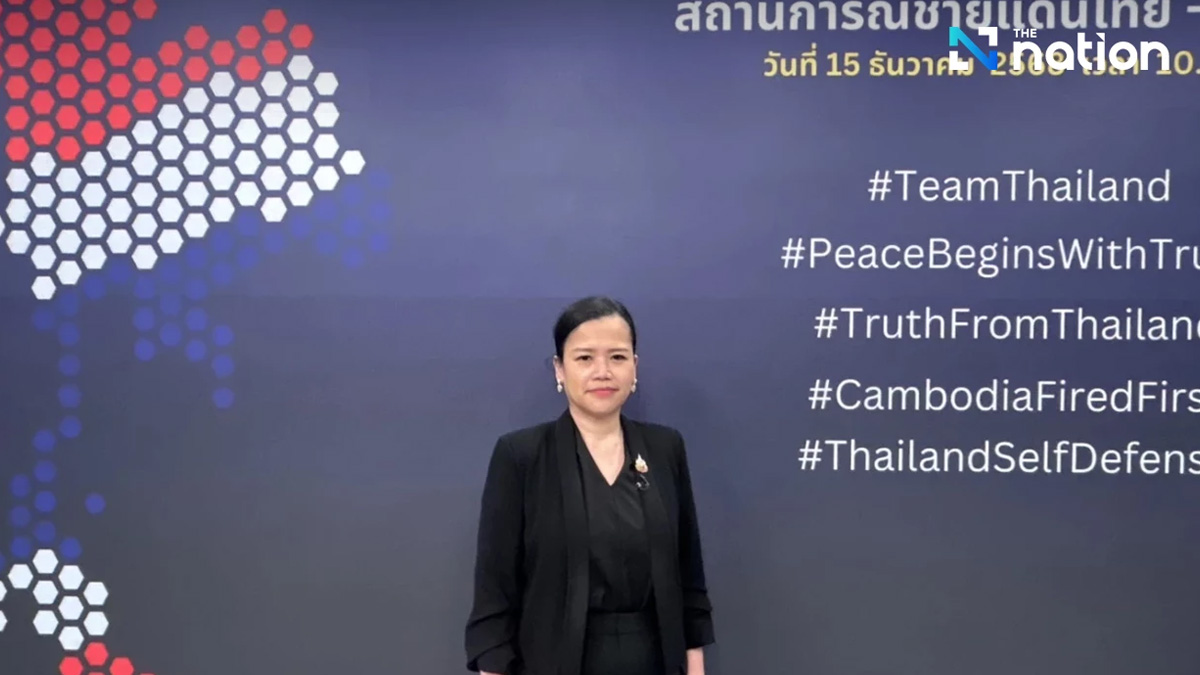
At a press conference on 16 December, Deputy Foreign Ministry Spokesperson Maratee Nalita Andamo outlined the country’s stance following calls from multiple nations for both sides to de-escalate.
The ministry stated that approximately 5,000–6,000 Thai nationals remain in Poipet, near the border area affected by the ongoing dispute. Additionally, 669 Thais have registered with the Thai embassy in Phnom Penh to return home.
Three ceasefire conditions
According to Maratee, the Thai government’s position has been consistent and communicated through the prime minister, foreign minister, and the foreign ministry itself.
She stressed that under international norms, ceasefires must be meaningful and visible through action, not merely announced.
Thailand’s three conditions for a ceasefire with Cambodia are:
-
Cambodia must declare a ceasefire first, as it is considered by Thailand to have initiated the territorial incursions.
-
The ceasefire must be genuine and sustained, and not merely a short pause followed by further military action.
-
Cambodia must co-operate on mine clearance, which Thailand has long prioritised under its obligations to the Ottawa Convention banning anti-personnel mines.
Maratee emphasised that all Thai military responses are conducted under the principle of self-defence, in accordance with Article 51 of the United Nations Charter and international humanitarian law.
ASEAN involvement in conflict resolution
On the diplomatic front, Thailand expressed support for ASEAN efforts to address the conflict.
Maratee confirmed that Malaysia’s foreign ministry will host a Special ASEAN Foreign Ministers’ Meeting on 22 December. Thailand’s foreign minister intends to attend in person, believing the seriousness of the situation requires direct dialogue among member states.
Co-ordination for full participation by ASEAN members is currently ongoing.
Support for Thai nationals in Cambodia
The Ministry of Foreign Affairs also provided updates on Thai nationals currently in Cambodia.
As of 15 December:
-
669 individuals have registered with the Thai embassy in Phnom Penh to return.
-
352 have already departed, while four await confirmed travel arrangements.
-
317 remain in Phnom Penh.
In Poipet, the estimated number of Thai nationals is between 5,000 and 6,000. However, this remains an approximation as registration is voluntary and incomplete.
The ministry urged all Thais in Cambodia who wish to return to contact the Thai embassy or consulate-general immediately.
Emergency travel documents are being issued, and flights from both Phnom Penh and Siem Reap are being arranged to facilitate repatriation.
Outlook and regional implications
The reiteration of ceasefire conditions comes amid growing international concern over stability along the Thailand–Cambodia border.
While ASEAN’s diplomatic involvement signals a possible pathway toward de-escalation, Thailand’s insistence on concrete action from Cambodia suggests that talks may not materialise soon unless conditions are demonstrably met.
The upcoming ASEAN meeting on 22 December will be closely watched as a litmus test for the bloc’s ability to mediate internal disputes effectively.