US lawmakers call for broader chip equipment export curbs on China over security risks
Bipartisan US lawmakers are calling for tougher export controls on advanced semiconductor equipment to China, citing national security risks. The move follows reports of China’s progress in EUV lithography and alleged illicit exports of Nvidia AI chips.
- Bipartisan House leaders urged broader export controls on advanced semiconductor equipment to China.
- Lawmakers warned that servicing existing tools in China sustains advanced chip production.
- Concerns follow reports of China’s EUV progress and alleged illegal exports of Nvidia AI chips.
UNITED STATES: Bipartisan leaders of key House committees on 10 February, 2026 called on the State and Commerce Departments to tighten export controls on advanced semiconductor manufacturing equipment destined for China, warning that existing gaps pose risks to national security.
In a joint letter, House Select Committee on China Chairman John Moolenaar and House Foreign Affairs Committee Chairman Brian Mast urged the administration to implement countrywide restrictions on critical chipmaking tools and related subcomponents.
They argued that China has accelerated imports of foreign-made semiconductor equipment essential for producing advanced chips, despite earlier US-led restrictions.
“We urge the Administration to press allies to implement countrywide controls on key chokepoint semiconductor manufacturing equipment and subcomponents: that is, all equipment and subcomponents that China cannot produce indigenously,” the lawmakers wrote to Secretary of State Marco Rubio and Commerce Secretary Howard Lutnick.
The letter was also signed by House Foreign Affairs Ranking Member Gregory Meeks and members of the South and Central Asia Subcommittee, reflecting bipartisan backing for the proposal.
The lawmakers called for restrictions not only on new exports but also on servicing and maintenance of equipment already operating in Chinese fabrication facilities, arguing that continued support is essential to keep such systems functional.
They requested that President Donald Trump’s administration provide a briefing within one month outlining its strategy to secure allied cooperation on comprehensive, countrywide controls targeting critical semiconductor manufacturing equipment and components.
Concerns over China’s technological advances
The congressional warning comes amid signs that China may be narrowing technological gaps long targeted by US export controls.
In December, 2025, reports indicated that Chinese scientists working in a high-security laboratory in Shenzhen, supported by Huawei and former ASML engineers, developed a prototype Extreme Ultraviolet lithography machine earlier in 2025.
The prototype reportedly generates 13.5-nanometre light, a key requirement for producing leading-edge chips. However, it has not yet produced functional semiconductors, with production targets set between 2028 and 2030.
Extreme Ultraviolet lithography systems, pioneered by ASML, are considered essential for manufacturing the most advanced chips used in artificial intelligence systems, smartphones and military hardware.
Despite reported progress, China continues to face major technical challenges, particularly in replicating the precision optical systems supplied by Western manufacturers.
Export enforcement and alleged violations
The United States has progressively tightened semiconductor export controls.
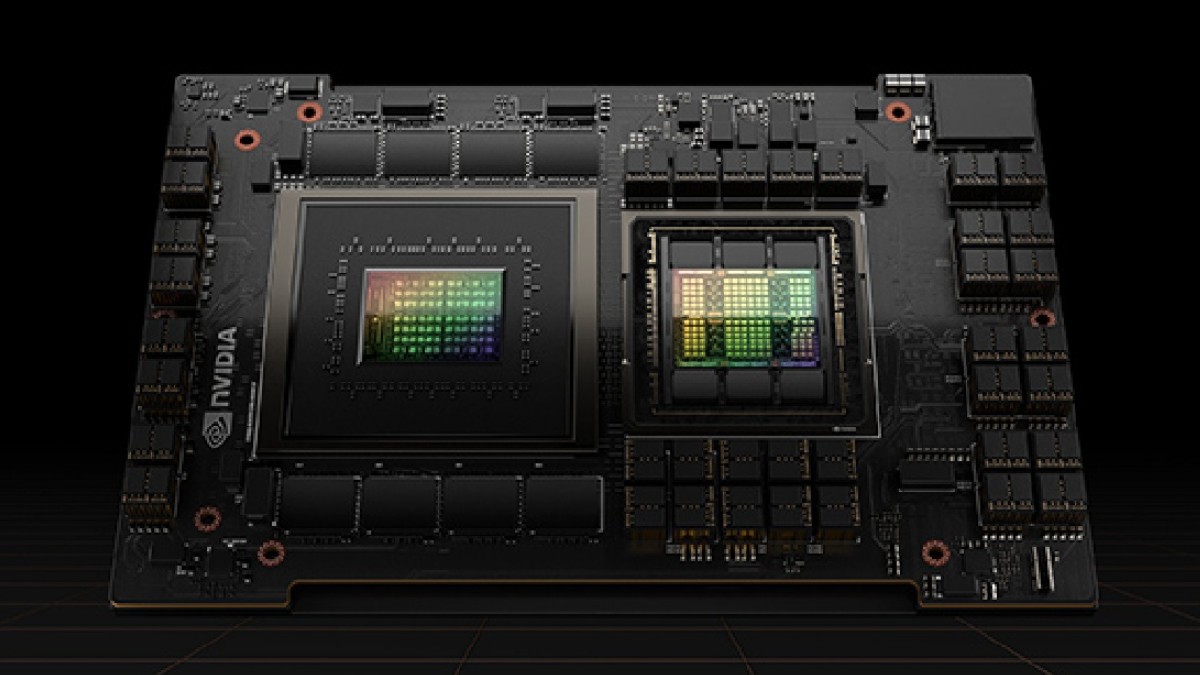
In 2022, Washington imposed restrictions on the export of high-performance AI chips, including certain Nvidia processors, to limit access by Chinese entities.
In November 2025, two Americans and two Chinese nationals were charged with conspiring to export advanced Nvidia artificial intelligence processors to China without authorisation.
According to prosecutors, the defendants falsified shipping documents and contract records to conceal the final destination of the processors and conducted four separate export attempts.
The first two shipments, sent between October, 2024 and January, 2025, reportedly included about 400 Nvidia A100 processors.
Investigators intercepted two later shipments that allegedly contained 10 Hewlett Packard Enterprise supercomputers equipped with Nvidia H100 graphics processing units and 50 H200 GPUs.
Authorities said the defendants received more than US$3.8 million in wire transfers from China to finance the purchases. Prosecutors alleged that the required export licences were not obtained and that end-users were knowingly misrepresented.
The indictment cited China’s ambition to become a global leader in artificial intelligence by 2030, including applications linked to military modernisation and advanced weapons development.
Separately, three men were charged in Singapore in February 2025 after the Republic was implicated in a US investigation into whether Chinese start-up DeepSeek obtained restricted Nvidia chips through third-party sales in other jurisdictions.
The US-led probe intensified after DeepSeek launched an AI platform in January, 2025 reportedly using Nvidia chips.
The launch disrupted US technology markets, with tech stocks reportedly losing around US$1 trillion in value.