HRF calls on UN group to declare Umar Khalid’s detention arbitrary after Indian Supreme Court denies bail
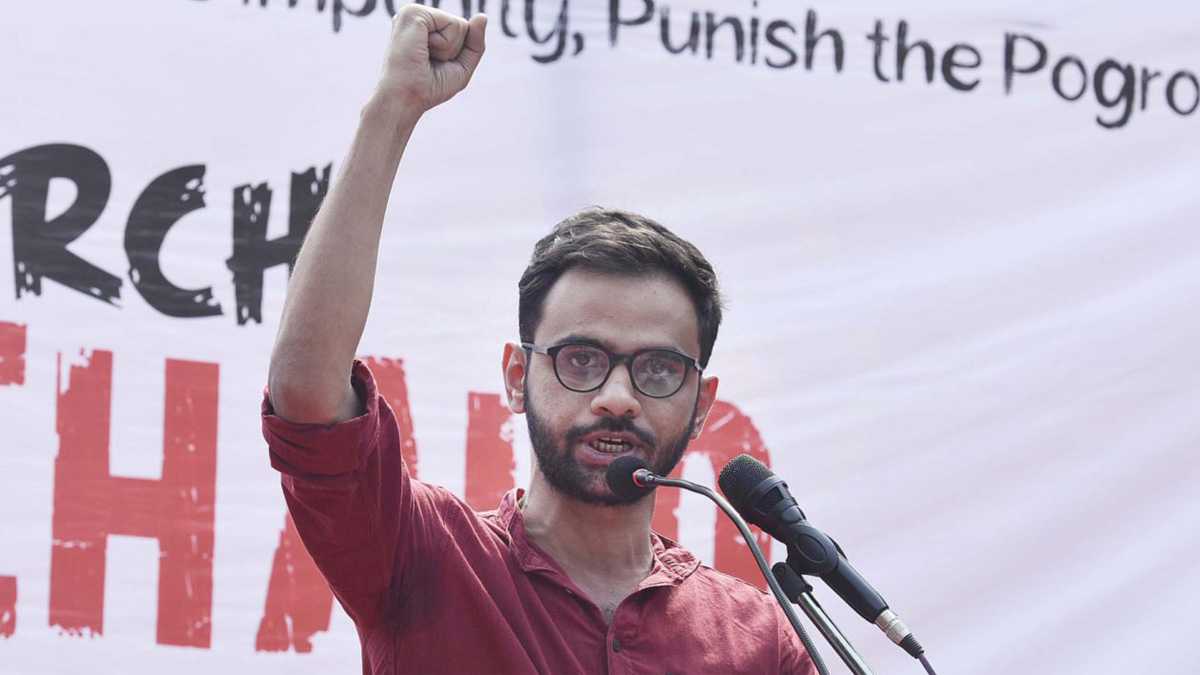
The Human Rights Foundation has urged the UN Working Group on Arbitrary Detention to declare Indian activist Umar Khalid’s five-year-long imprisonment as arbitrary and unlawful, following a fresh denial of bail by the Supreme Court of India.
- HRF has petitioned the UN Working Group to rule Umar Khalid’s detention arbitrary.
- The Indian Supreme Court denied Khalid bail after over five years in jail without trial.
- Hindus for Human Rights and other groups condemn the misuse of anti-terror laws in India.
The Human Rights Foundation (HRF) has called on the United Nations Working Group on Arbitrary Detention (WGAD) to declare Indian activist Umar Khalid’s ongoing detention under anti-terror legislation as arbitrary and unlawful, following a ruling by the Supreme Court of India denying him bail after more than five years in pre-trial detention.
HRF submitted a formal petition on 5 January 2026, stating that Khalid's imprisonment violates international human rights law and urging the UN body to demand his immediate and unconditional release.
Khalid, a former student leader and co-founder of the group United Against Hate, was arrested on 13 September 2020 following his participation in protests against the Citizenship Amendment Act (CAA), a law widely criticised for excluding Muslims from expedited pathways to Indian citizenship.
He has since been held without trial in Delhi’s Tihar jail, facing 29 charges including sedition, terrorism, and promoting religious enmity. HRF contends that these charges are politically motivated and enabled by the Unlawful Activities Prevention Act (UAPA), which the group describes as “draconian.”
“Khalid stands as a brave symbol of dissent in an increasingly authoritarian India,” said Hannah Van Dijcke, HRF Legal and Research Officer. “His case exemplifies the lengths Modi’s government will go to crush dissent, particularly from the Muslim minority.”
HRF's statement follows growing criticism from international and domestic rights groups over the application of UAPA, a law that allows extended detention without formal charges or trial. The group argues that such provisions undermine the presumption of innocence and constitute a violation of the International Covenant on Civil and Political Rights (ICCPR), to which India is a party.
Echoing HRF’s concerns, the advocacy group Hindus for Human Rights (HfHR) issued a parallel statement condemning the Supreme Court’s decision and urging a repeal of UAPA’s most punitive clauses.
In a release from Washington, DC, HfHR described the UAPA as a tool used by the Indian government to silence dissent, with a conviction rate of less than 3%. The law allows for up to seven years of pre-trial detention, granting wide discretion to the courts in denying bail.
“While we are glad that five of the co-accused, including Khalid Saifi and Gulfisha Fatima, were released on bail, the Supreme Court of India’s decision to deny bail to Umar Khalid and Sharjeel Imam is an unacceptable miscarriage of justice,” said Ria Chakrabarty, HfHR Senior Policy Director.
“As Hindus, we are appalled that Hindu nationalists are using our faith to crush the voices of Muslims like Khalid and Imam,” she added.
Khalid and Imam were arrested in the wake of the 2020 Delhi riots, which followed months of peaceful anti-CAA protests. The violence, in which 53 people were killed, disproportionately affected Muslim communities. Critics argue that rather than prosecuting those responsible for the violence, the authorities targeted prominent Muslim protest leaders under sweeping terror charges.
HfHR also highlighted that Khalid and Imam’s prolonged imprisonment illustrates the systemic denial of the right to a fair and speedy trial — protections enshrined both in Indian constitutional law and international treaties.
The group backed earlier calls by eight US lawmakers for Indian authorities to guarantee a fair trial for both men, noting the broader implications of the case for civil liberties and judicial independence in India.
Despite the increasing scrutiny, the Indian government has continued to defend its use of the UAPA, citing national security concerns and legal due process.