Illegal logging concerns intensify in Indonesia as Sumatra flood death toll surpasses 600
Authorities are examining alleged illegal logging following devastating floods in Sumatra, while BMKG stresses that extreme rainfall, not deforestation, triggered the disaster. Regional leader Gus Irawan also questions a sudden reopening of suspended logging permissions.
- Illegal logging and forest-cover loss are under scrutiny after massive flooding and landslides across Sumatra, with officials highlighting long-standing governance gaps.
- Statements from national and regional authorities differ, as BMKG attributes the disaster solely to extreme rainfall driven by a tropical cyclone.
- Bupati Tapanuli Selatan Gus Irawan raises concerns over the reopening of suspended logging permits weeks before the disaster.
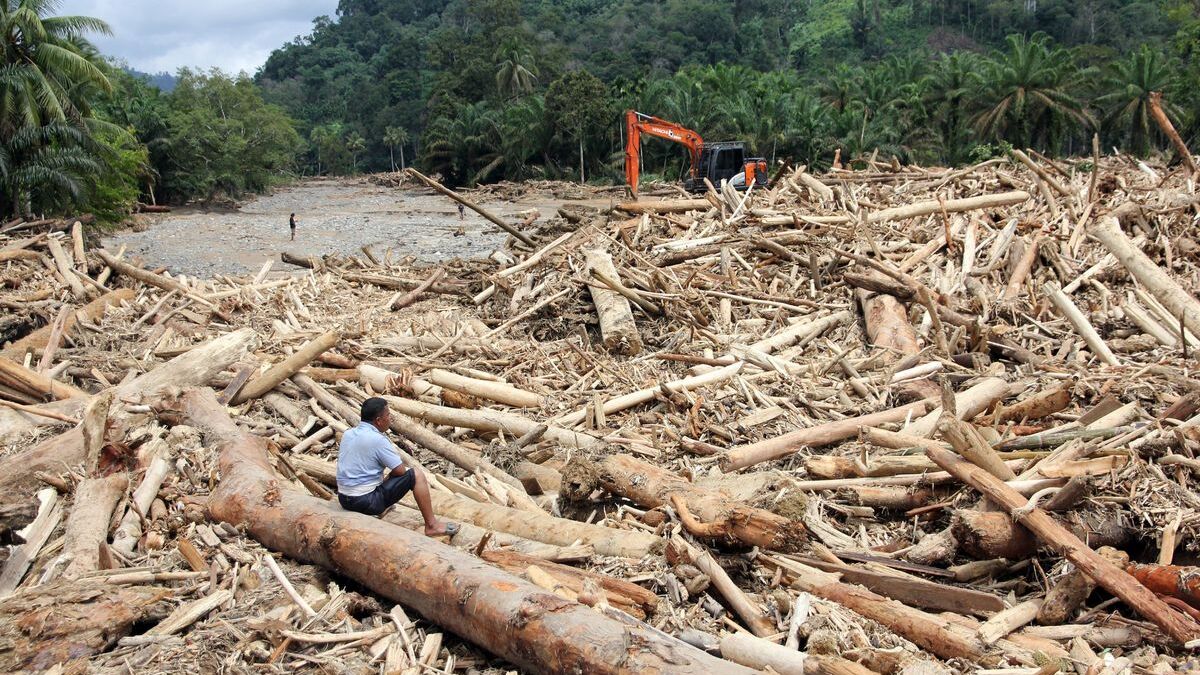
INDONESIA: Large volumes of logs appearing across several disaster sites in Sumatra have intensified scrutiny over suspected illegal logging practices, as officials debate the extent to which human activity contributed to recent flooding and landslides.
The death toll from the catastrophic floods and landslides rose to 604 on 1 December 2025, according to data from Indonesia's National Agency for Disaster Countermeasure (BNPB).
Video footage aired by Metro News showed extensive piles of large timber scattered across flooded areas.
According to the report, aerial imagery also revealed wide tracts of bare hillsides suspected to have been cleared through illegal logging.
Parliament (DPR) Vice-Chairman Cucun Ahmad Syamsurijal stated that Parliament would examine the matter in upcoming meetings.
He told Metro TV that ministries and related agencies would assess all potential human contributions to the disaster.
Cucun added that the findings would form part of a broader review of preventive measures.
According to the same report, he noted that authorities must consider both environmental damage and governance lapses when planning post-disaster action.
In a separate statement reported by IDN Times, former Vice-President Jusuf Kalla acknowledged that illegal logging might have contributed to the severity of the floods.
He said the presence of large logs drifting through waterways reflected both fallen old trees and possible human-driven deforestation.
Jusuf Kalla urged the government to prioritise reforestation once emergency operations conclude.
IDN Times reported that he stressed the need for long-term rehabilitation rather than commenting on potential legal proceedings, which he said remained the responsibility of state authorities.
The Ministry of Forestry also highlighted concerns over longstanding illegal logging practices.
Its Director-General for Law Enforcement, Dwi Januanto Nugroho, told IDN Times that logs swept downstream were suspected to have originated from illegal operations involving the misuse of natural growth timber-management schemes in Areal Penggunaan Lain for Pemegang Hak Atas Tanah (Other Use Area for the Holder of Land Rights).
From the regional level, South Tapanuli Regent Gus Irawan voiced strong concern about changes to logging-permit policies.
Speaking to Tribun News, he said that permissions halted in July 2025 were unexpectedly reinstated in October by the Directorate of Sustainable Forest Management.
He said he had already issued instructions to local administrators to comply with the earlier suspension and expressed surprise when the permits were reopened.
He stated that he subsequently wrote to the relevant directorate on 14 November to request renewed suspension.
Gus Irawan noted that floods in his region often transport large logs downstream, indicating upstream felling.
He emphasised that reopening permits shortly before the 25 November flood had raised serious concerns about environmental vulnerability.
However, assessments by the national meteorological agency offer a different perspective.
According to Kompas, Kepala BMKG Teuku Faisal Fathani attributed the disaster to extreme rainfall caused by the Senyar tropical cyclone, which affected Sumatra between 25 and 27 November 2025.
Faisal reported that rainfall exceeded typical monthly totals within a single day in some districts.
He stated that saturated ground conditions led to widespread hydrometeorological events including flash floods and landslides.
The Kompas report noted that BMKG did not identify deforestation as a causal factor in the disaster.
Instead, it urged authorities to strengthen preparedness for future tropical cyclone impacts in collaboration with BNPB, Basarnas, and the Ministry of Home Affairs.