Calls grow for President Prabowo to declare national disaster status as Sumatra flood toll rises to 800
More groups are urging President Prabowo Subianto to declare the Sumatran floods a national disaster as the death toll surpasses 800, with civil society organisations warning that regional authorities are overwhelmed and no longer able to cope with the scale of devastation
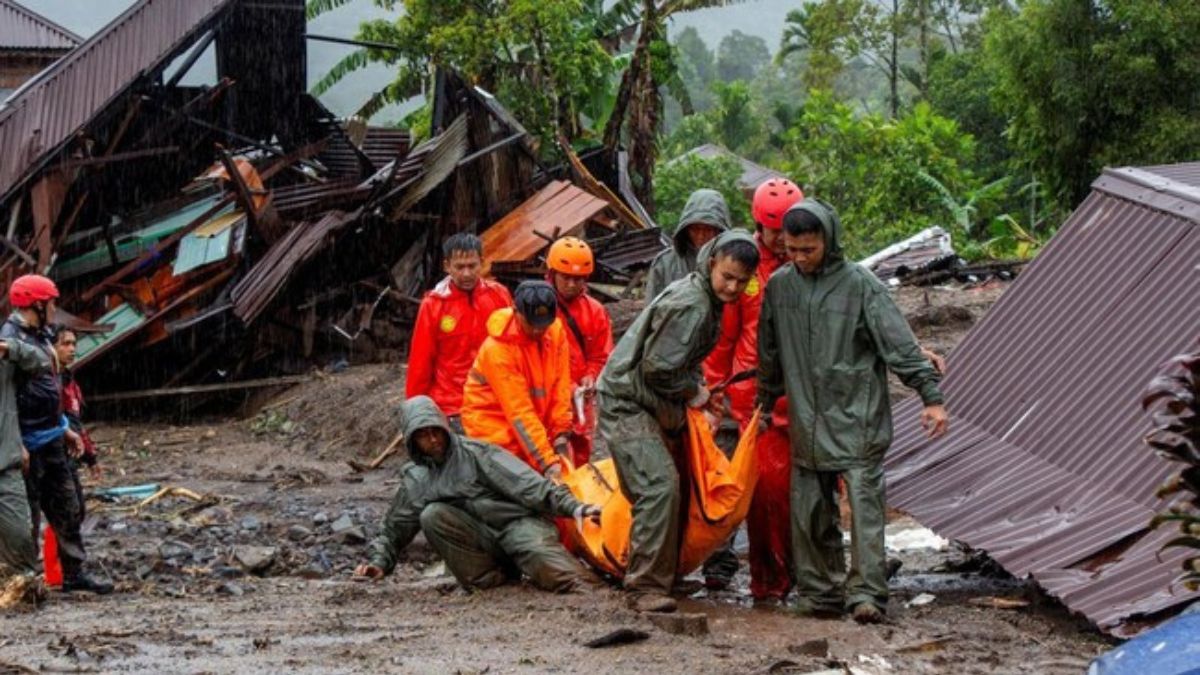
- Massive floods and landslides across Aceh, West Sumatra, and North Sumatra have led figures and civil society groups to urge President Prabowo to declare a national disaster.
- Casualties continue to rise, with over 800 dead, hundreds missing, and millions affected or displaced.
- Government acknowledges a suboptimal response, citing severe infrastructure damage and difficult terrain hampering rescue and relief efforts.
INDONESIA: The massive floods and landslides affecting Aceh, West Sumatra, and North Sumatra have prompted renewed calls for stronger national intervention.
Figures from across Sumatra have urged President Prabowo Subianto to declare the catastrophe a national disaster, saying regional authorities can no longer cope with the scale of devastation.
The appeal was made during a meeting on Tuesday evening (2 Dec), initiated by Dr Syahganda Nainggolan, Chairman of the GREAT Institute, and attended by dozens of representatives from the three provinces.
The group said the destruction had exceeded regional handling capacity and met all criteria for national disaster status under Indonesia’s Disaster Management Law.
Indonesian activist and political observer Ray Rangkuti said findings from media reports, volunteers, and regional leaders showed that the number of victims, losses, damage to public facilities, the size of affected areas, and the socio-economic impact all justified national intervention.
He warned that delays in issuing the declaration risked worsening the situation, noting that the longer the government waited, the higher the potential for increased casualties.
Dr Syahganda said that a national disaster declaration would speed up mobilisation, prevent further loss of life, reduce disease risks linked to poor sanitation, and deter potential social unrest.
The group also urged the government to use the moment to review environmental governance, citing concerns over forestry and mining practices that may have exacerbated the disaster.
Indonesian Churches Echo Plea for National Disaster Status
The Communion of Churches in Indonesia (PGI) has also called on the government to declare a national disaster in the three affected provinces, citing the magnitude of the impact and the increasingly strained capacity of local authorities.
PGI General Secretary Darwin Darmawan said national emergency status would enable the government to maximise resources, including emergency funds, logistics, and deployments of the armed forces (TNI) and police (Polri).
He added that such a declaration would centralise crisis management under the National Disaster Management Agency (BNPB), ensuring faster coordination and overcoming regional constraints.
Darwin stressed that a national disaster declaration would also provide a legal basis for receiving aid from domestic and international humanitarian organisations.
Indonesian civil society groups had earlier urged the President to declare the situation a national disaster emergency.
Rising Casualties and Widespread Impact
The National Disaster Management Agency (BNPB) continues to update data on the impact of last week’s flash floods and landslides.
As of Wednesday (3 Dec), the confirmed death toll had risen to 811, with 623 people still missing and approximately 2,600 injured.
The highest number of deaths was reported in Agam, which recorded 143 fatalities, followed by North Aceh with 112, Central Tapanuli with 86, and South Tapanuli with 79.
BNPB reported that around 3.2 million people across 49 districts and cities in Aceh, North Sumatra, and West Sumatra have been affected.
In Aceh, about 1.4 million residents were impacted, while North Sumatra recorded around 1.7 million affected individuals, and West Sumatra approximately 140,500.
Displacement is extensive, with more than 1.5 million people forced from their homes in Aceh, 538,800 in North Sumatra, and about 106,200 in West Sumatra.
Residential damage also continues to mount. Around 3,600 houses were severely damaged, 2,100 were moderately damaged, and another 4,900 sustained minor damage.
The National Search and Rescue Agency (Basarnas) reported evacuating 35,857 residents as of Tuesday evening (2 December), including 1,600 people in Aceh, 4,599 in North Sumatra, and 29,658 in West Sumatra.
Government Apologises for Suboptimal Response
Coordinating Minister for Human Development and Empowerment Pratikno apologised for what he described as a suboptimal disaster response, acknowledging that the scale and simultaneity of events across the three provinces posed extreme challenges.
He said many roads and bridges had been severed by landslides and debris, while electricity and internet disruptions were widespread due to damaged infrastructure, including collapsed transmission towers.
Pratikno noted that President Prabowo had ordered all ministries and agencies to mobilise from the first day of the floods, but difficult terrain and persistent bad weather had significantly hampered evacuation efforts and the distribution of logistics.