GRS claims victory in Sabah state election as peninsula parties falter
GRS, led by Hajiji Noor, has emerged victorious in the 17th Sabah state election, with local parties dominating and peninsula-based coalitions suffering major losses. GRS will form the new government with the help of PH, UPKO and independents.
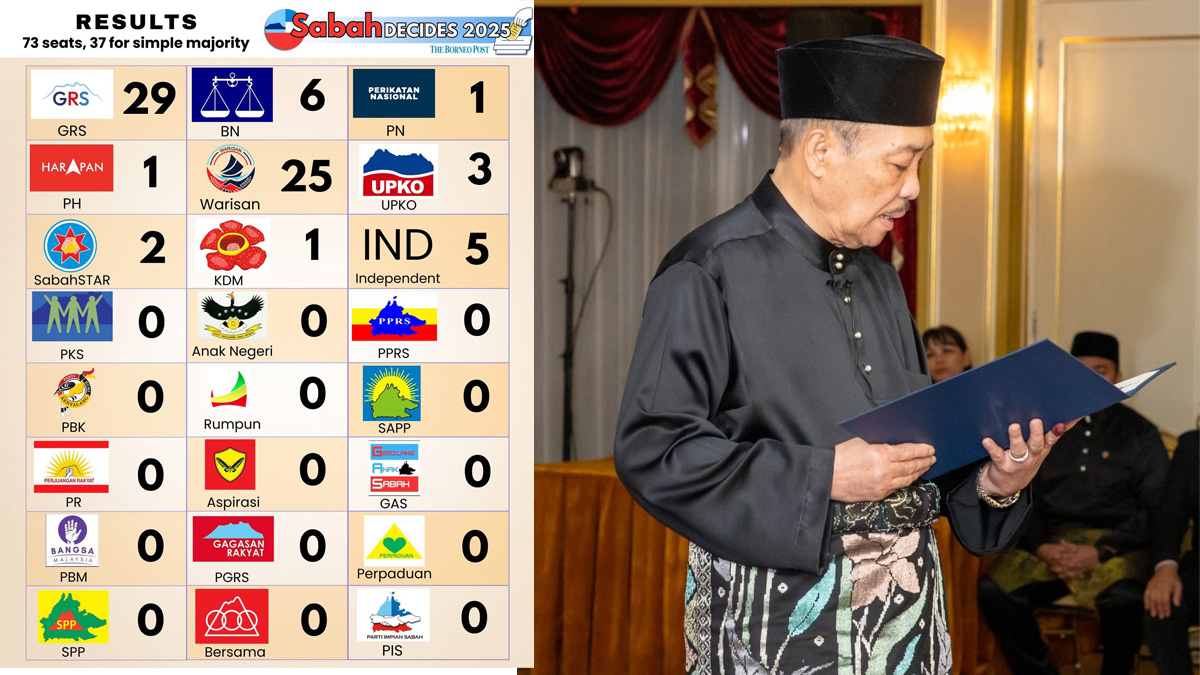
- Gabungan Rakyat Sabah (GRS) and allies form government with 38 seats in fractured 73-seat assembly.
- GRS chairman Hajiji Noor sworn in as chief minister for second term despite Warisan’s challenge.
- Major swing against peninsula-based parties, with DAP and PKR suffering historic losses.
Gabungan Rakyat Sabah (GRS) has emerged as the biggest winner in Sabah’s 17th state election, securing over 29 seats and reaffirming Hajiji Noor’s leadership in the state.
With the support of three United Progressive Kinabalu Organisation (UPKO) assemblymen and five independents, GRS is expected to form the new state government in alliance with Pakatan Harapan (PH), despite PH’s own poor showing.
According to the Election Commission’s early morning announcement on 30 November 2025, GRS won 29 seats while PH, led by Prime Minister Anwar Ibrahim, managed only one. Warisan, GRS’s closest rival, secured 25 seats.
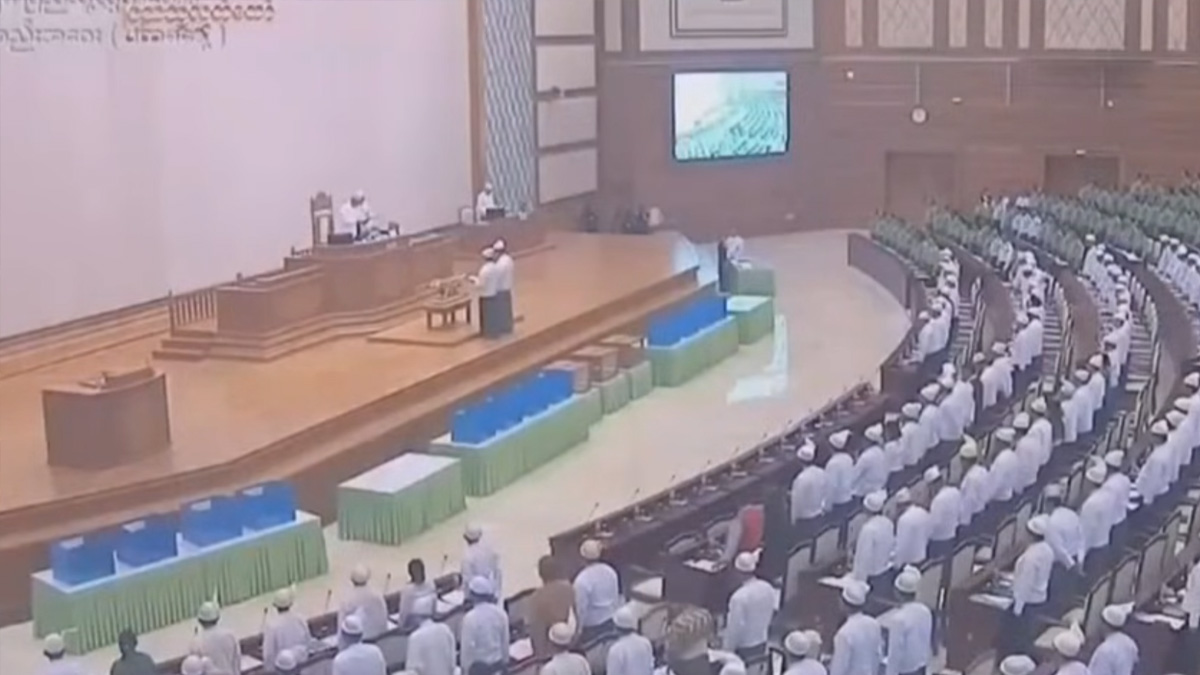
No party crossed the 37-seat mark required for a simple majority in the 73-seat Sabah state assembly. Nonetheless, Hajiji Noor was sworn in as Chief Minister after being deemed by the governor to have secured majority support.
The decision follows provisions in Sabah’s constitution allowing the governor to appoint a leader who is likely to command a majority in the assembly. Hajiji was seen arriving at the state palace shortly after polling closed, with Bernama later confirming his swearing-in for a second term.
In a statement, Hajiji expressed gratitude to voters, stating, “The people’s unwavering support and courageous belief in our cause have been the driving force behind this victory.”
Peninsula coalitions suffer heavy defeat
One of the most striking outcomes of the election was the dismal performance of peninsula-based parties.
Democratic Action Party (DAP) recorded its worst-ever result in Sabah, losing all eight of the seats it contested, including former strongholds such as Luyang, Likas and Kapayan.
Parti Keadilan Rakyat (PKR) won just one out of 11 seats, while Parti Amanah Negara (Amanah) failed to win any.
Warisan capitalised on the urban discontent and swept many of the city constituencies previously held by DAP and PKR, including Inanam, which it won from PKR incumbent Peto Galim.
Sabah DAP chief Phoong Jin Zhe lost in Likas to Warisan’s Tham Yun Fook. DAP national chair Anthony Loke accepted defeat and pledged to rebuild support in Sabah, taking personal responsibility for the party’s wipeout.
Warisan’s strong showing falls short
Despite a strong performance, Warisan, led by Shafie Apdal, was unable to quickly assemble a viable coalition to form the government.
Its 25 seats, while more than any other single party, fell short of the number needed to claim leadership. Warisan did, however, benefit from a strong swing in urban and Chinese-majority areas.
Party secretary-general Loretto Padua Jr claimed that GRS lacked the "right" to form the government due to questionable coalition arithmetic, stating that GRS “counts them in and says they have the numbers” when the seats may not fully align with them.
He added that while Warisan has been approached by other parties, it would deliberate internally before deciding on coalition talks.
Mixed fortunes for other local parties
Barisan Nasional (BN) won six seats out of the 45 it contested, a significant drop compared to previous cycles. Its chairman Ahmad Zahid Hamidi had earlier stated that BN was open to working with either Warisan or GRS to form a government.
Parti Bersatu Sabah (PBS) secured six out of 12 seats it contested. Parti Solidariti Tanah Airku (STAR), a former GRS partner, won only two — down from six in 2020.
Meanwhile, UPKO, which recently exited the PH coalition, won three seats and will join GRS in government formation.
Parti Kesejahteraan Demokratik Malaysia (KDM) and Perikatan Nasional (PN) won one seat each. Notably, PAS clinched its first-ever Sabah seat in Karambunai with Aliakbar Gulasan, marking a historic breakthrough for the party.
A total of five independents were elected. Among them were former GRS members Fairuz Renddan and Maijol Mahap, who triumphed in Pintasan and Bandau respectively.
Notable wins and losses
Several prominent figures secured or lost their seats in closely watched contests.
Hajiji retained Sulaman, while Shafie Apdal held Senallang. BN’s Bung Moktar Radin kept Lamag, and STAR’s Jeffrey Kitingan remained in Tambunan.
UPKO president Ewon Benedick also retained his Kadamaian seat.
A surprise result was the loss of Sindumin’s Yamani Hafez Musa, the son of Governor Musa Aman. However, his brother Hazem Mubarak Musa secured the Sungai Manila seat.
Meanwhile, Tan Sri Anifah Aman lost Bongawan to Warisan’s Daud Yusof, and USNO president Pandikar Amin lost to Fairuz Renddan for the second consecutive time.
Despite expectations, the Bahanda siblings — Wetrom, Redonah and Verdon — all failed to secure their respective constituencies.
Campaign issues and turnout
The campaign was marked by debates over Sabah’s demand for 40 per cent of federal revenue contributions, alongside infrastructure issues such as water, electricity, and road quality.
An alleged mining corruption scandal involving the incumbent GRS-PH administration also became a talking point in the final campaign days.
Turnout stood at 64.35 per cent, slightly lower than 2020’s 66.28 per cent during the COVID-19 pandemic.
A record 596 candidates contested across the 73 constituencies, with all seats involving multi-cornered fights. Most races featured at least four candidates.