IIUM lecturer defends claim that ancient Romans learned shipbuilding from Malays
IIUM lecturer Professor Dr Solehah Yaacob has defended her viral claim that ancient Romans learned shipbuilding from Malays, saying it was based on extensive research. IIUM said it is reviewing her remarks and stressed that the comments were made in her personal capacity.
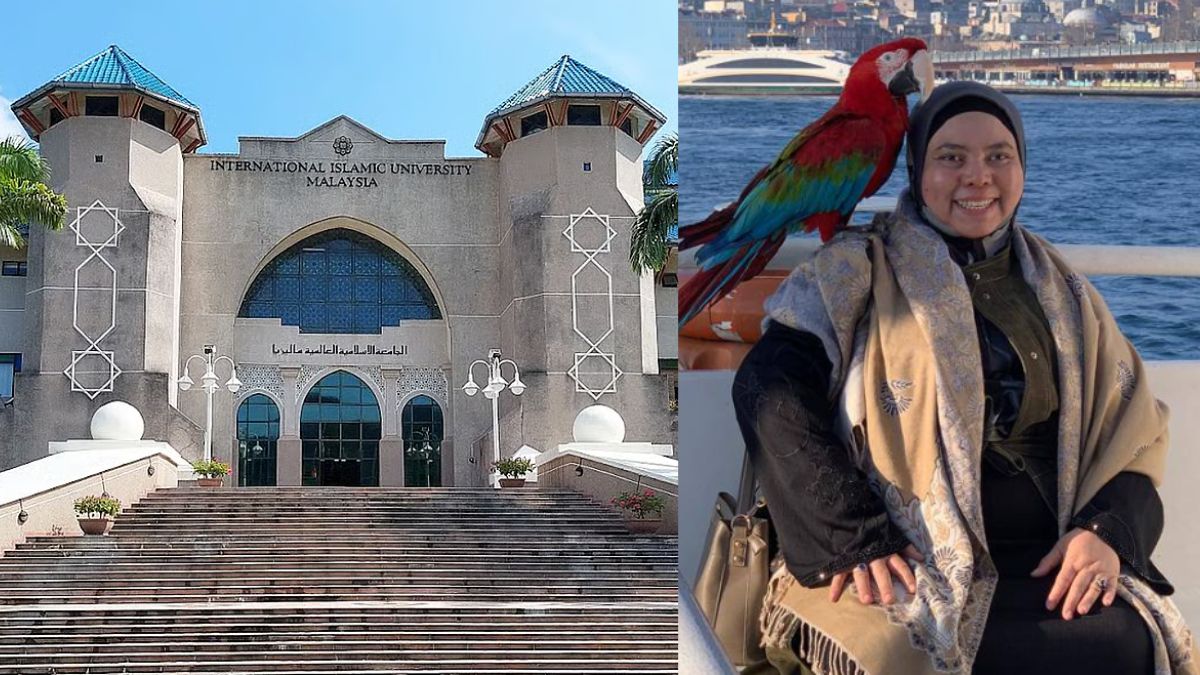
- IIUM lecturer Dr Solehah Yaacob defended her claim that ancient Romans learned shipbuilding from Malays, calling it a research-based hypothesis.
- She said her statement was misrepresented online and urged respect for academic freedom.
- IIUM said it is reviewing the remarks, stressing they were made in her personal capacity.
MALAYSIA: An International Islamic University Malaysia (IIUM) lecturer who went viral for claiming that ancient Romans learned shipbuilding from the Malays has defended her academic hypothesis, saying it was based on extensive research and historical sources.
Professor Dr Solehah Yaacob, a lecturer in Arabic language and professor of linguistic thought, delivered the lecture on 31 December 2022. The talk resurfaced after it was posted on 31 October on Nota Kuliah, a YouTube channel that primarily shares religious sermons.
As the video gained traction and drew widespread criticism online, IIUM launched an internal investigation into her remarks.
Solehah: “I Was Subjected to Media Lynching”
In a Facebook post on 9 November, Dr Solehah said she had been subjected to ridicule and “media lynching” over what she described as a research-based hypothesis developed through “extensive study”.
“During the past few days, I have been the victim of a media lynching following a public lecture that I delivered at Masjid Gombak Setia on 31 December 2022,” she wrote.
“As a result of this lecture, in which I discussed, among other topics, the historical relations between the Romans and the Malay world, I have been ridiculed on social media, in tabloids, and by official news outlets.”
Dr Solehah explained that her hypothesis, grounded in classical Arabic sources, proposes that the Romans acquired aspects of the art of shipbuilding from peoples of the Malay Archipelago.
“Unlike the Europeans, who were largely continental, the Malays were a maritime civilisation. Their superior nautical knowledge and shipbuilding skills made them among the earliest masters of the sea,” she said.
“I firmly believe that the Malays were among the first peoples in human civilisation to develop the art of shipbuilding, and that the Romans, like many others, learned navigational skills from earlier seafaring civilisations—most probably from the maritime Malay world.”
She also cited evidence from museum archives in Australia describing “the finest deep-sea shipbuilders” as originating from Austronesia, referring to modern-day Indonesia.
“Historical newspaper reports even record the striking statement: ‘The first man to sail around the world was a Malay’,” she added.
Dr Solehah said the term “Malay” predates “Austronesian”, which was coined by European Orientalists in the 19th century as part of their academic classification systems.
“Before this label emerged, who were these seafaring peoples? Clearly, during the period of the Śrīvijaya Empire (c. 600–1200 CE)—known as the Great Maritime Malay Kingdom—our ancestors were already recognised as Malays,” she explained.
She referenced works such as The Southeast Asian Ship: An Historical Approach by P.Y. Manguin in the Journal of Southeast Asian Studies, and R.L. Smith’s Premodern Trade in World History, to support her claims.
Denies Other Controversial Claims
Addressing other circulating videos, Dr Solehah denied ever claiming that Prophet Muhammad’s wife, Siti Khadijah, had Malay heritage.
She said the clips were edited and taken out of context, adding that she has filed a police report. She also provided links to the unedited version of her lecture for verification.
Dr Solehah appealed for respect for academic freedom, stating that scholars should not face persecution for their views.
“With these clarifications, I sincerely hope that all forms of slander, insult, disinformation, and ridicule circulating across social media, tabloids, and official news outlets will come to an end,” she said.
“My hypothesis concerning the achievements of the Malays and the borrowings of the Romans may be right or wrong. However, in both our academic and Islamic traditions, we are taught to respect differing opinions.”
IIUM Responds: Statement Does Not Represent University’s View
IIUM confirmed that it is reviewing the lecturer’s remarks, which it said had “once again tarnished the university’s academic integrity and reputation”.
In a statement, the university said it viewed the matter seriously and regretted the academic’s actions, adding that internal measures would be taken in line with existing procedures after the review.
“The university is aware of the viral video circulating on social media, which has caused public confusion. IIUM stresses that the comments were made in the academic’s personal capacity and do not represent the university’s official position,” it said.
IIUM reiterated that while it upholds academic freedom, public statements by academics must be made responsibly and grounded in verified research.