Singapore, Johor Crown Prince seal land swap to safeguard Botanic Gardens
Singapore has concluded a land swap with Johor’s Crown Prince, Tunku Ismail Sultan Ibrahim, involving property near the Botanic Gardens. The deal protects the integrity of Singapore’s only UNESCO World Heritage Site while allowing the regent development opportunities elsewhere.
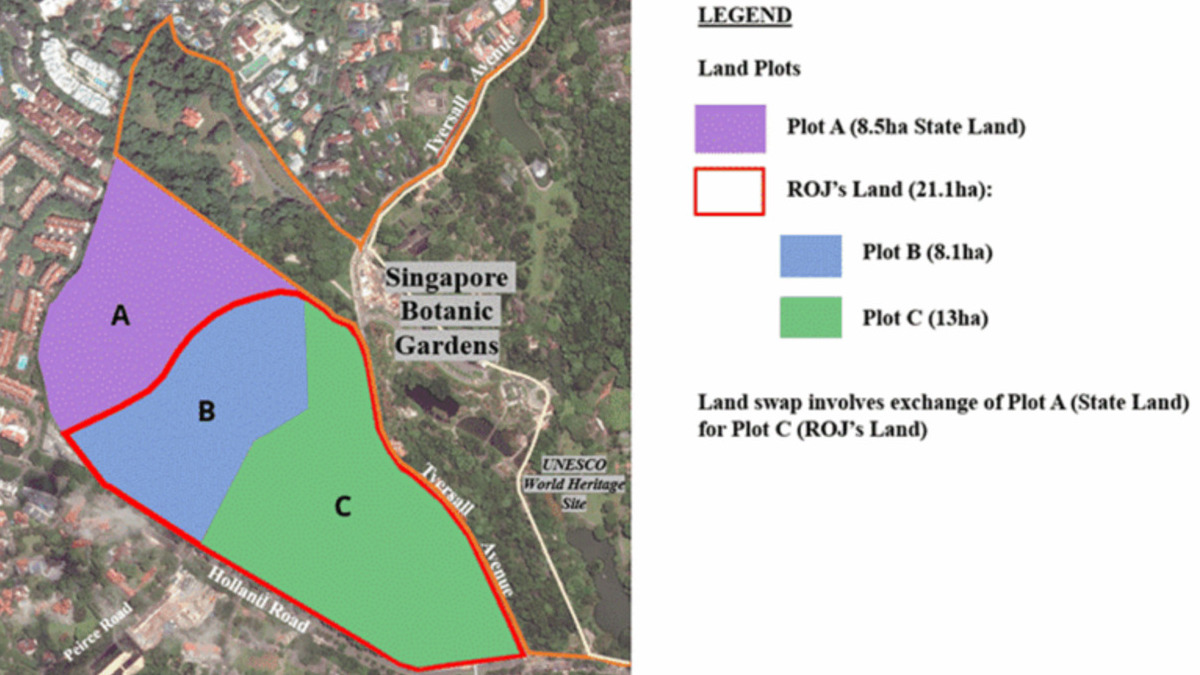
- Singapore has finalised a land swap with Johor Crown Prince Tunku Ismail Sultan Ibrahim, acquiring 13 hectares beside the Botanic Gardens.
- The deal protects Singapore’s only UNESCO World Heritage Site while granting the prince 8.5 hectares of state land zoned for “special use.”
- Future development by the regent must meet strict regulatory and environmental requirements.
The Singapore government has finalised a land exchange with Johor’s Crown Prince, Tunku Ismail Sultan Ibrahim, transferring a sensitive site beside the Botanic Gardens into state hands.
The agreement, announced on 10 June 2025 by the Urban Redevelopment Authority (URA) and Singapore Land Authority (SLA), ensures that 13 hectares of privately held land adjacent to Tyersall Avenue will now be state-owned.
In return, the government will transfer 8.5 hectares of state-owned land to the Crown Prince. This parcel lies to the west of his remaining landholdings in Holland Road and has been designated for “special use” purposes.
Officials emphasised that the parcels exchanged are of comparable value, reflecting both market considerations and planning objectives.
Protecting Singapore’s UNESCO site
The move comes against the backdrop of long-standing concerns about the potential impact of development on the Singapore Botanic Gardens, which has held UNESCO World Heritage status since 2015.
The Gardens, now 166 years old, are a cultural and ecological landmark, attracting millions of visitors annually and housing extensive botanical collections.
Authorities confirmed that the newly acquired 13-hectare plot will remain undeveloped for now. Any future plans will be approached cautiously to ensure protection of the site’s historical, cultural, and ecological value.
“The Botanic Gardens are a national treasure and an international heritage site. Ensuring their protection is of paramount importance,” the URA and SLA said in a joint statement.
Johor royal family’s historical ties
The land in question has deep historical links to the Johor royal family.
The site includes the ruins of Istana Woodneuk, once the residence of Temenggong Abu Bakar Daeng Ibrahim, father of Sultan Abu Bakar of Johor. The adjacent Istana Tyersall, also linked to the Johor royals, was demolished decades ago.
Tunku Ismail currently owns 21.1 hectares in the area. After the swap, he will retain 8.1 hectares of his original holdings, while the newly acquired 8.5 hectares will sit adjacent to these private lands.
Plans and restrictions for development
While the Crown Prince retains control of his remaining land, any development will be subject to Singapore’s planning and regulatory framework.
URA confirmed that projects must undergo environmental impact assessments and respect the zoning designations applied to the land.
The transferred 8.5-hectare parcel is earmarked for low-rise, low-density residential use. Officials emphasised that all submissions will be subject to formal evaluation to ensure that any project is “sensitive to the surrounding site context.”
Portions of the regent’s current holdings are classified as “special use” or “open space.” Any proposed rezoning will require clear justification and compliance with planning policies.
Previous plans for luxury development
Concerns about potential development of the land date back several years.
In 2021, Bloomberg reported that Tunku Ismail had considered a multibillion-dollar luxury residential project within Tyersall Park. At that time, heritage and conservation experts warned that large-scale construction so close to the Botanic Gardens risked undermining its status and ecological integrity.
The land’s position, bordering a UNESCO site, placed additional scrutiny on any proposed development.
By concluding the land swap, Singapore’s government has removed the most sensitive portion of the regent’s holdings from potential redevelopment.
Balancing heritage with private ownership
Officials highlighted that the deal reflects a balance between safeguarding national heritage and respecting private ownership rights.
“The government recognises the historical and personal significance of this land to Tunku Ismail,” the URA and SLA stated. “At the same time, this arrangement ensures that the integrity of the Botanic Gardens will not be compromised.”
Urban planners note that similar swaps have been used in Singapore’s past to consolidate sensitive sites under state protection while offering landowners viable alternatives.
Regional and political significance
The agreement also carries diplomatic undertones, given the sensitive history of Johor royalty landholdings in Singapore.
Historians note that much of the land once owned by the Johor royal family in Singapore was transferred to the state in the decades following independence. The current holdings around Tyersall are among the last significant remnants.
By finalising the deal, both sides have avoided potential tension over land use and heritage protection.
Next steps
The government has not announced detailed plans for the newly acquired 13-hectare parcel. Officials confirmed it would remain under state ownership with no immediate development proposals.
Urban planners suggest that future uses could include conservation, research, or controlled public access. However, they stressed that any move would undergo detailed study and consultation to ensure compliance with UNESCO guidelines.
For the Johor Crown Prince, the transfer of 8.5 hectares west of his existing holdings provides an opportunity for development, albeit under strict conditions.
Observers expect that any proposals will be closely scrutinised by both heritage advocates and environmental experts, given the sensitivity of the surrounding area.