
Tropical Storm Senyar triggers widespread destruction across Malaysia and Indonesia
Tropical Storm Senyar has caused severe weather across Malaysia and Indonesia, triggering floods, landslides and structural collapses. One person died in Malaysia, while Indonesia reported dozens of fatalities as authorities warned of ongoing risks from rain-soaked terrain.
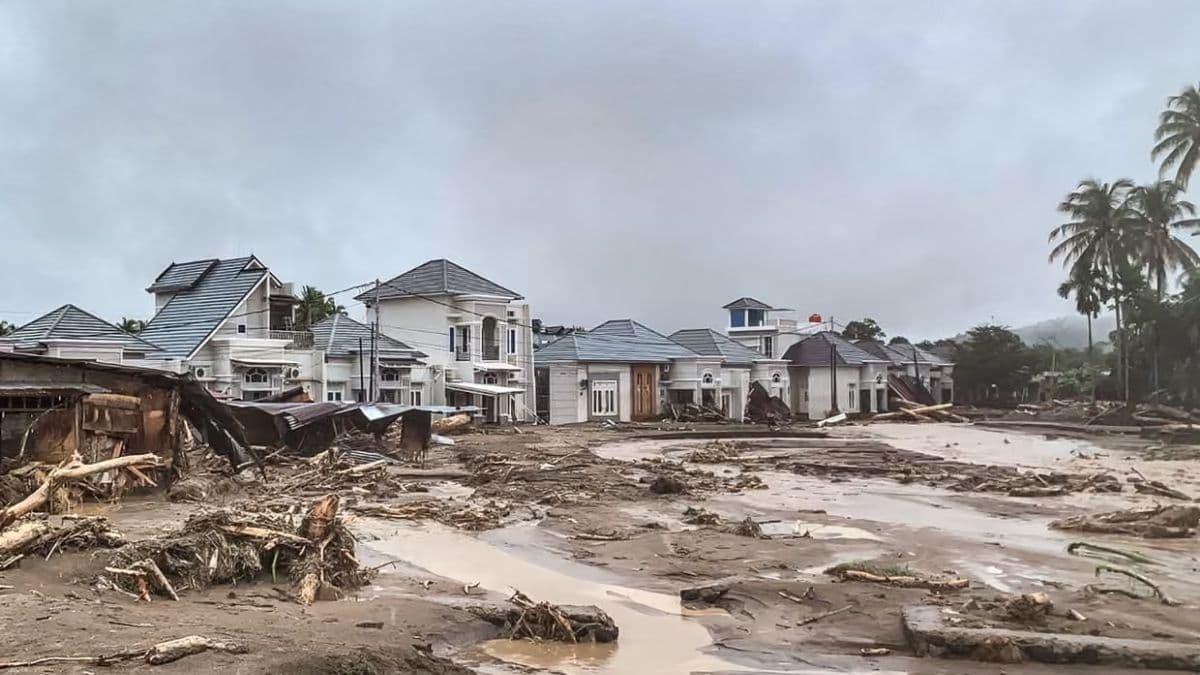
- Tropical Storm Senyar has caused severe damage across Malaysia and Indonesia, including landslides, floods and structural failures.
- One person died in Malaysia in a storm-related incident, while Indonesian authorities reported dozens of fatalities in Sumatra.
- Meteorological agencies warn of continued risks due to saturated soil, rare cyclone formation, and unstable terrain.
Tropical Storm Senyar has unleashed severe weather across Malaysia and Indonesia, causing landslides, flooding, structural collapses and widespread damage, while one person was killed in Malaysia on Friday, 28 November 2025.
Malaysian Fire and Rescue Department (JBPM) director-general Datuk Seri Nor Hisham Mohammad said the fatality occurred at 6.57am today, when a motorcyclist crashed into a fallen tree along Jalan Selandar–Machap.
“This fatality is not a direct consequence of Senyar, but a secondary incident caused by the storm’s impact,” he said at the JBPM Integrity Day event in Ayer Keroh.
As of 8.00am, JBPM recorded 49 fallen tree incidents across several states following strong winds and continuous rain. Nor Hisham said Negeri Sembilan suffered the most severe impact, reporting 33 fallen trees, one landslide, one structural collapse and two flooding locations.
Melaka, Selangor, Putrajaya and Perak also recorded related incidents, while Kuala Lumpur, despite being within the storm’s range, reported none. A structural collapse at the Petron Diesel Jetty in Port Dickson involved eight workers, though no fatalities were reported.
Nor Hisham warned that although Senyar had weakened, persistent rain had softened the ground, increasing the risk of additional tree falls and slope failures. Authorities in states along the storm’s path have been instructed to remain on alert.
He advised the public to avoid high-risk areas during the weekend and school holiday period.
“We have repeatedly reminded people not to swim in rivers during this season, but many still do so,” he said.
He also advised NGOs assisting flood victims to coordinate with the Disaster Operations Control Centre (PKOB) to ensure organised and safe monitoring. “We celebrate the role of NGOs and individuals in evacuation and logistics, but they must inform PKOB and use safety vests,” he said.
Indonesia Warns of Rare Cyclone Formation Near the Equator
In Indonesia, the Meteorology, Climatology and Geophysics Agency (BMKG) reported on 26 November 2025 that two tropical cyclones were influencing national weather: Tropical Cyclone Koto in the West Philippine Sea and Tropical Cyclone Senyar, which developed from disturbance 95B.
Cyclone Senyar was observed east of Aceh near the Malacca Strait, with maximum winds of 43 knots (80 km/h) and air pressure of 998 hPa. The Category 1 system is moving west-southwest and expected to gradually weaken.
BMKG warned the storm may produce extreme rainfall and strong winds in Aceh and North Sumatra, moderate rainfall in West Sumatra and Riau, and waves up to 4 metres in the northern Malacca Strait and the Indian Ocean west of Aceh.
BMKG described Senyar’s formation in the strait as “rare.” “Indonesia's location near the equator theoretically makes it less prone to the formation or passage of tropical cyclones,” said Andri Ramdhani, BMKG’s Director of Public Meteorology on 27 November 2025.
He added that several tropical systems had moved toward Indonesia over the past five years. “A tropical system like Senyar rarely develops in the Malacca Strait, especially one strong enough to affect land. This is why public preparedness is crucial.”
ABC meteorologist Tom Saunders said that while cyclone development near the equator is uncommon, it is “not unprecedented” for weak systems to appear or drift into latitudes near 5° north or south.
Severe Damage Across Sumatra
Senyar has battered Sumatra since 21 November 2025, bringing heavy rainfall, flash floods and landslides.
The Tapanuli region of North Sumatra has faced some of the worst destruction in years.
In Sibolga, at least 47 people were reported buried by landslides, while police confirmed 24 deaths across the province as of 27 November.
In Batangtoru, South Tapanuli, hundreds of homes were swept away on 25 November when a surge of mud, logs and water struck residential areas.
Search and rescue efforts continue in challenging conditions, with unstable terrain and low visibility hampering responders.
Aceh has also experienced severe flooding between 26 and 28 November, affecting 12 districts and cities.
Ten local governments in Aceh declared states of emergency as nearly 1,500 residents were displaced.
The provincial disaster agency BPBA confirmed two fatalities linked to the flooding.
In West Sumatra, the Padang–Bukittinggi route was cut off on 28 November after the Batang Anai River overflowed in Padang Pariaman.
Vehicles were stranded in water reaching 50 centimetres.
Doni, a truck driver transporting gas cylinders, said, “We’ve been stuck since 7am,” describing long delays and worsening conditions.
Authorities across the region continue to monitor Senyar’s weakening system, warning that saturated soil and unstable slopes may prolong risks.
Emergency services are urging residents to remain alert as recovery efforts proceed.