26yo Singaporean woman says she bought S$1M private condo after years of 12–18 hour workdays
A 26-year-old Singaporean woman said she bought a S$1 million private condominium after years of working 12 to 18 hours daily, drawing praise and concern online over housing affordability and work-life balance.
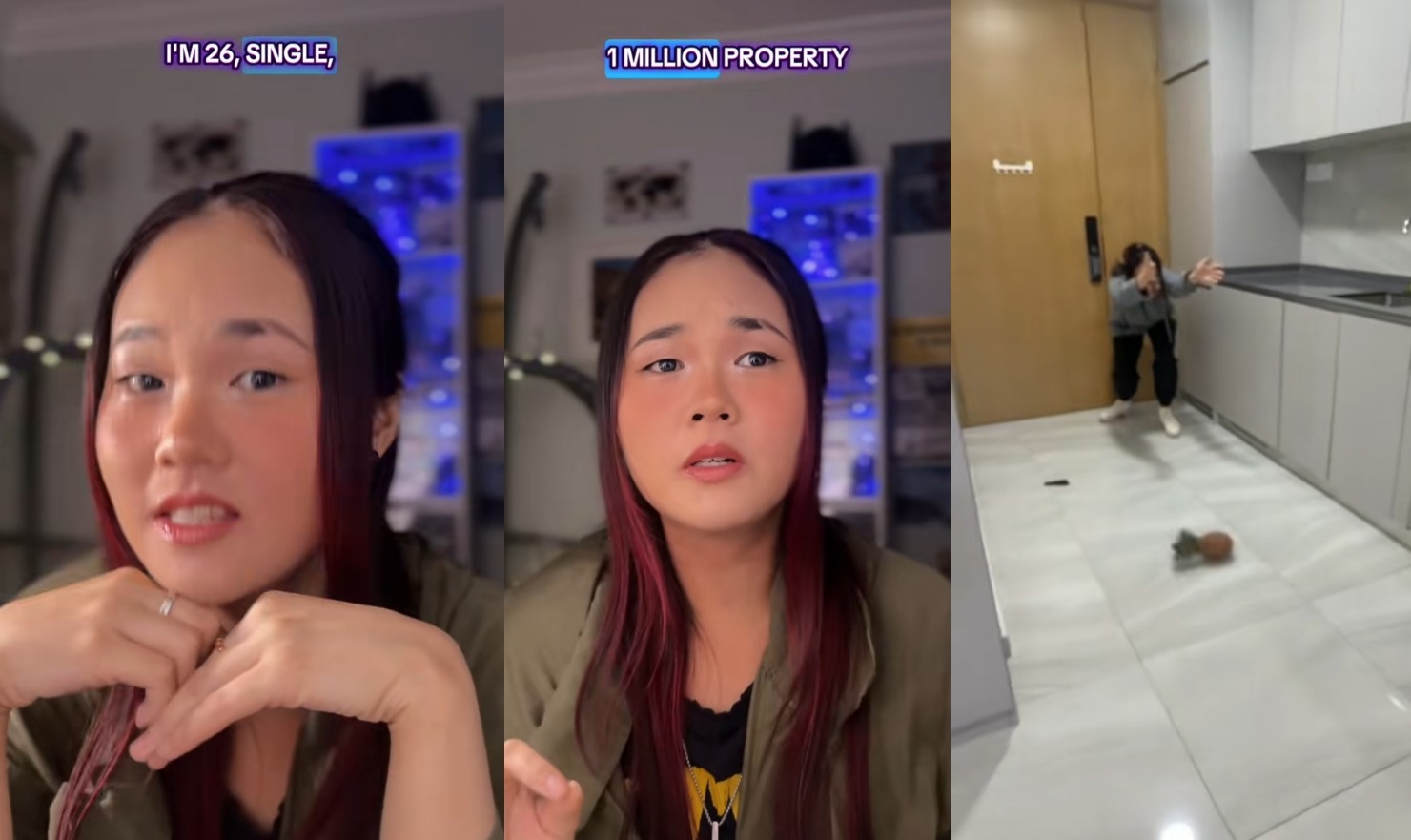
- A 26-year-old Singaporean woman said she bought a S$1 million private condominium on her own.
- She claimed to have worked 12 to 18 hours daily across multiple jobs to save for the purchase.
- Her story sparked praise, debate, and concern online about affordability and work-life balance.
SINGAPORE: A 26-year-old Singaporean woman has drawn widespread attention online after saying she purchased a S$1 million private condominium on her own, following years of intense work and disciplined saving.
In a video posted on TikTok on 20 December, the user, who goes by the name Chris Chross, said owning property before the age of 27 had been her long-term personal goal.
“I always wanted to own my own house, property by the time I turned 27,” she said in the video.
“At the year end of 2025, I did it.”
She added that the two-bedroom condominium was fully purchased in her own name, without financial assistance from family members.
According to Chross, her family only learned about the purchase on the day she collected the keys to the property.
In a separate interview with local broadcaster 8World News, Chross said she paid a S$242,000 downpayment entirely in cash, with the remaining amount financed through a mortgage.
She attributed her ability to accumulate the downpayment to working long hours over many years, often holding multiple jobs at the same time.
Chross said her main profession is as a producer, while also juggling two additional jobs concurrently.
“I work 12 to 18 hours every day, seven days a week,” she said in the interview.
She shared that her approach to saving began early in life.
According to her account, she started saving money at the age of eight, and became more systematic after starting her first job at McDonald’s at 14.
Chross said she began investing at 19, which she credited as a key factor in building her assets over time.
“I just started earlier and had enough time to slowly accumulate,” she said.
Beyond income generation, she described maintaining strict control over her daily expenses.
Her strategies included scheduling “no-spend weeks”, using cashback programmes to offset food expenses, and redeeming transport-related rewards through the Healthy 365 mobile application.
“I try my best to save as much as possible, and I strictly follow the plans and budgets I set for myself,” she said.
Chross also addressed why she chose to buy a private condominium instead of a Housing and Development Board flat.
She explained that as a single individual below the qualifying age, she was not eligible to apply for a public housing unit, making private property her only viable option.
For singles in Singapore, the standard age to buy an HDB flat (BTO or resale) is 35 years old.
As of 24 December, the TikTok video had garnered more than 592,000 views, with many users congratulating her on achieving her goal at a relatively young age.
In a separate video, Chross documented bringing her parents to the condominium after collecting the keys, marking their first visit to her new home.
The video showed her rolling a pineapple across the floor of the unit, a traditional Chinese custom symbolising prosperity, wealth, and good fortune entering a new home.
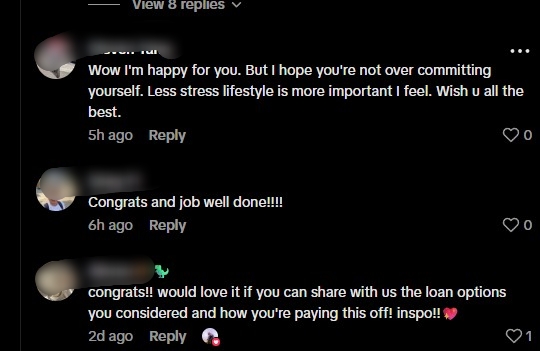
While many commenters praised her discipline and determination, others expressed mixed feelings about the broader implications of her story.
Some users lamented that they were already over 30 years old and still unable to afford a property in Singapore, citing rising housing prices and cost-of-living pressures.
Others voiced concern over Chross’s wellbeing, particularly her disclosure of working 12 to 18 hours daily over an extended period.
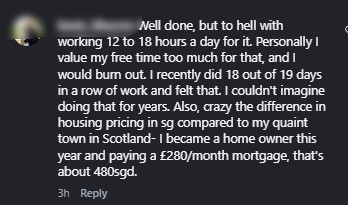
One Instagram user from Scotland commented on the contrast in housing affordability and work culture, saying the level of work described would lead to burnout.
The user wrote that they had recently worked 18 out of 19 consecutive days and found it exhausting, adding that they valued free time too much to sustain such a pace long-term.