New measure to bar prohibited and undesirable travellers from entering Singapore starts today
Singapore will begin issuing No-Boarding Directive notices to airlines from 30 January 2026, preventing prohibited or undesirable travellers from boarding flights to the country, as part of efforts to strengthen upstream border enforcement.

- Singapore’s Immigration & Checkpoints Authority (ICA) will begin issuing No-Boarding Directive notices to airlines from 30 January 2026.
- The measure prevents prohibited or undesirable travellers from boarding flights to Singapore at their points of departure.
- Airlines that fail to comply face fines, with potential jail terms for staff who allow affected passengers to board.
SINGAPORE: Singapore will introduce a new border control measure from today, 30 January 2026, aimed at preventing undesirable or prohibited immigrants from travelling to the country.
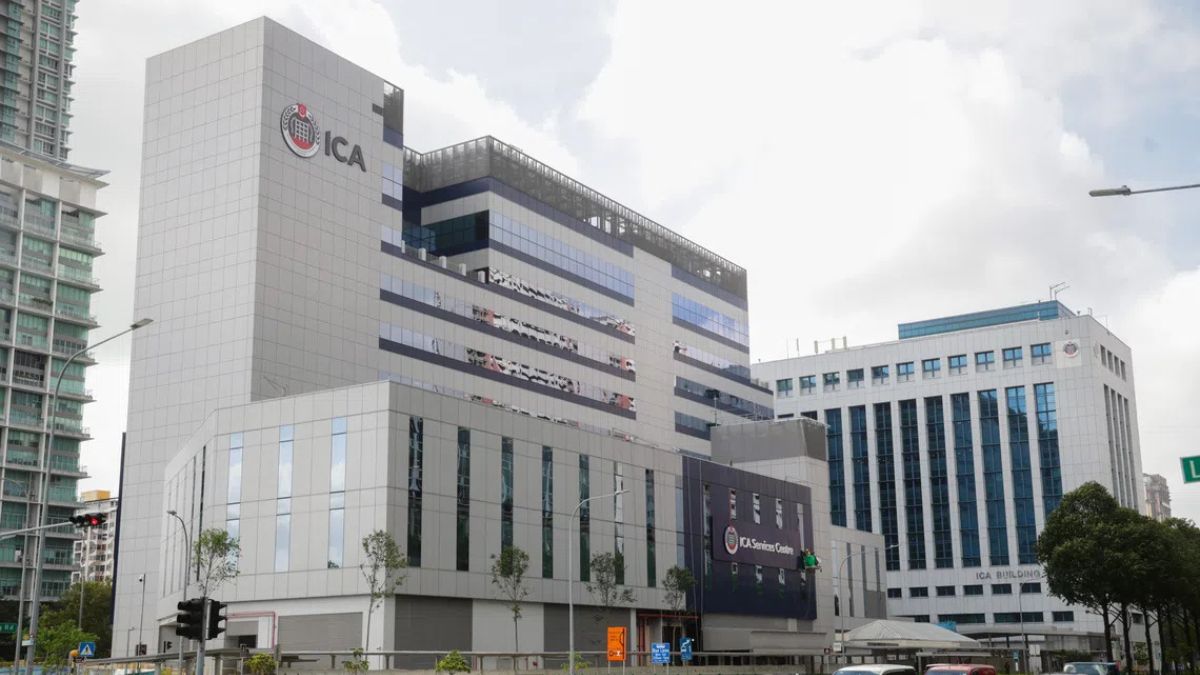
Earlier on 28 November 2025, the Immigration & Checkpoints Authority (ICA) announced it will begin issuing No-Boarding Directive (NBD) notices to airline operators at Changi Airport and Seletar Airport.
According to ICA, the directive requires airlines to deny boarding to identified travellers who are prohibited, undesirable, or do not meet Singapore’s entry requirements.
The move represents a shift towards upstream enforcement, stopping such travellers at their points of origin rather than only upon arrival in Singapore.
ICA said the new approach is intended to strengthen border security by preventing potential risks from reaching Singapore’s checkpoints in the first place.
Over 41,000 foreigners barred from Singapore in 2025
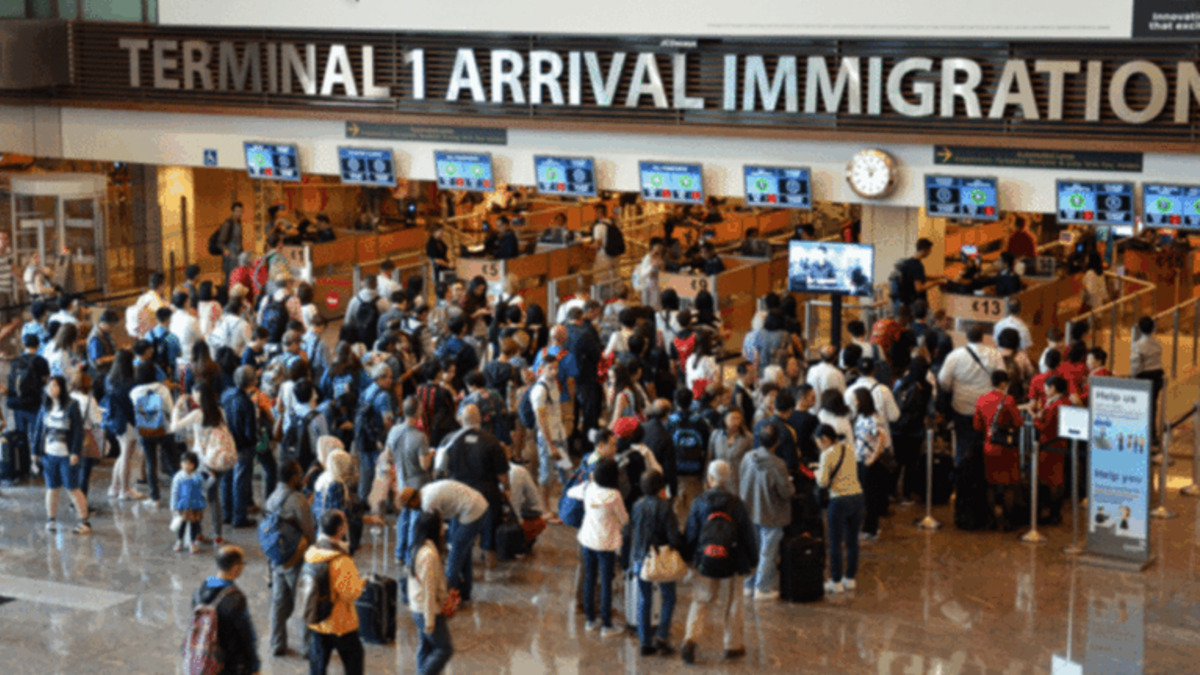
Between January and November 2025, about 41,800 foreigners were denied entry into Singapore.
ICA noted that this was a 26 per cent increase compared with the total number of entry rejections recorded in 2024, and a 46 per cent rise compared with 2023.
Under the initial phase of implementation, Singapore Airlines, Scoot, Emirates, Turkish Airlines and AirAsia will apply the NBD system.
ICA added that more airline operators are expected to join the scheme from March 2026.
Previously, ICA relied on advance traveller information, including data submitted through the SG Arrival Card (SGAC), flight manifests and other sources, to identify higher-risk travellers before arrival.
These travellers would then be flagged for more stringent checks when clearing immigration at Singapore’s checkpoints.
From January 2026, ICA will move further upstream by issuing NBD notices directly to airlines against identified prohibited or undesirable travellers.
Airlines that receive an NBD notice must not allow the affected individuals to board any flight bound for Singapore.
ICA said NBDs may also be issued to travellers who fail to meet entry requirements, such as those without a valid visa or whose travel documents have less than six months’ validity.
According to ICA, advance traveller information provided by airlines will continue to be screened before departure.
Travellers assessed to be prohibited, undesirable, or ineligible for entry will be subjected to an NBD before they attempt to board.
When such travellers check in for a flight to Singapore, the airline that received the NBD notice must deny boarding.
In some cases, ICA may require airlines to carry out additional checks before allowing boarding.
These may include verification of visa status or confirmation that the SG Arrival Card has been properly submitted.
ICA said travellers who are denied boarding but still wish to travel to Singapore must seek approval directly from the authority.
They will be required to write to ICA through its feedback channel and obtain approval before arranging a new flight to Singapore.
Airline operators face strict liability offences if fail to comply
The authority warned that airline operators that fail to comply with an NBD notice will be committing a strict liability offence under the Immigration Act 1959.
Upon conviction, the airline operator may be fined up to S$10,000.
If a pilot or airline employee enables a person subject to an NBD to board an aircraft, whether by act or omission, that individual may face a fine of up to S$10,000, imprisonment of up to six months, or both.
ICA said the NBD scheme brings Singapore in line with practices already adopted in several other countries.
In the United States, the Secure Flight programme screens travellers against a Federal Bureau of Investigation watchlist for known or suspected terrorists.
Australia operates a Movement Alert List administered by the Department of Home Affairs, which flags individuals subject to visa exclusions or assessed as security threats.
Singapore’s NBD is part of broader efforts to enhance border security, which have included significant technological upgrades in recent years.
Under a new clearance concept, ICA has deployed automated immigration lanes equipped with advanced document forgery detection and multi-modal biometric systems.
These systems are designed to detect impersonation attempts and individuals using multiple identities.
ICA also uses data analytics and advance passenger information to pre-screen travellers before arrival.
Those flagged as potentially high-risk are subjected to further interviews and investigations at immigration checkpoints.
According to ICA, the introduction of the No-Boarding Directive strengthens these existing measures by preventing known risks from travelling to Singapore altogether.