AVS dog trapping operation at Seletar West followed protocols, says Alvin Tan
Singapore will review animal management protocols after public backlash over a Seletar West dog trapping operation. Minister of State Alvin Tan said the operation followed AVS standards, while reaffirming collaboration with animal welfare groups under the TNRM programme.
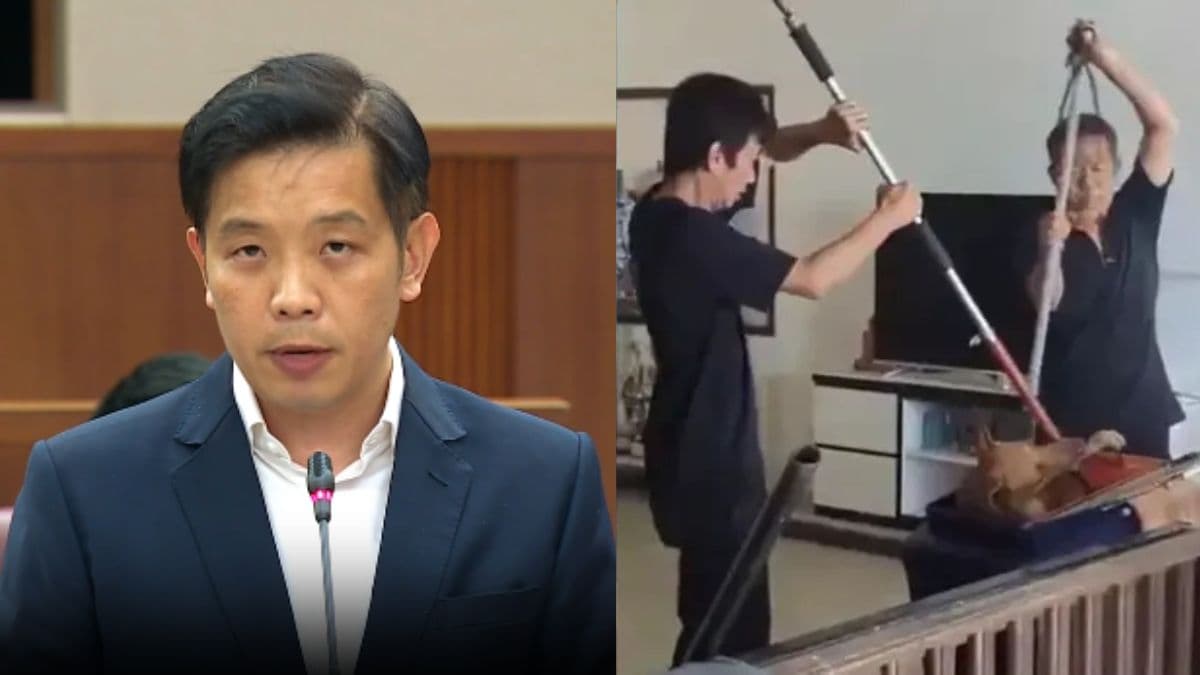
- A Seletar West trapping operation involving three free-roaming dogs followed existing AVS protocols, according to Minister of State for National Development Alvin Tan.
- One dog later died after being handed over for rehoming, sparking public anger and renewed scrutiny of TNRM practices.
- The Government will review joint protocols with animal welfare groups and improve coordination and communication.
SINGAPORE: A recent trapping operation involving three free-roaming dogs at a Seletar West farm was carried out in line with existing protocols, Minister of State for National Development Alvin Tan said in Parliament on 12 January 2026.
The operation later drew public attention after one of the dogs, named Baby Boy or Fluffy, died following its handover from the Animal and Veterinary Service (AVS) to animal welfare group Causes for Animals Singapore for rehoming.
Mr Tan said the Government intends to review joint protocols with animal welfare groups and improve communication and coordination, while building on existing collaboration channels.
The three dogs involved in the Seletar West Farmway operation had been linked to multiple chasing and biting incidents, he added, citing confirmation from several victims.
Mr Tan was responding to questions from People’s Action Party Member of Parliament Lee Hui Ying, who asked whether AVS collaborates with animal welfare groups on Trap, Neuter, Rehome, Release and Manage (TNRM) operations.
She also sought clarification on whether consultations take place before each trapping exercise.
Mr Tan said AVS has worked closely with animal welfare groups on the TNRM programme since its launch in 2018, including holding consultations ahead of trapping operations.
He noted that animal welfare partners play a key role in the programme, including carrying out trapping and sterilisation work in designated areas.
When an unsterilised free-roaming dog is identified, AVS works with the relevant TNRM partner to commence trapping, he said.
However, Mr Tan stressed that AVS will intervene swiftly in situations that pose a risk to public safety.
Citing the Seletar West case, he said AVS activated its animal management contractor to trap and remove three free-roaming dogs due to safety concerns.
The operation was conducted under the supervision of AVS officers and in accordance with existing TNRM protocols, he added.
The incident became widely known after videos circulated on social media on 14 November 2025, showing the dogs being aggressively restrained during the operation.
The footage sparked widespread public anger and scrutiny over the handling of the situation by NParks, which oversees AVS.
NParks subsequently defended the operation, stating that an “acceptable” level of force had been used during the trapping.
In Parliament, Mr Tan reiterated that AVS complies with World Organisation for Animal Health (WOAH) standards on stray dog population control.
These standards include ensuring that uncovered wire loops or ropes are not used during trapping operations.
He added that both personnel safety and animal welfare are considered when determining appropriate restraint procedures.
Mr Tan said AVS officers had recently visited TNRM partners to discuss ways to strengthen collaboration.
These discussions include reviewing joint protocols and improving communication and coordination during operations.
Existing collaboration channels include joint rehoming efforts, community outreach initiatives and AVS Lab adoption drives, he said.
In her follow-up questions, Ms Lee highlighted that animal welfare work is rooted in care and emotional investment.
She asked about the nature of discussions between AVS and animal welfare groups prior to trapping operations.
Ms Lee also sought an assessment of the effectiveness of the TNRM programme and details of the upcoming review.
She urged AVS and NParks to continue working closely with animal welfare groups to refine TNRM methods.
Responding, Mr Tan said there is extensive discussion and collaboration between AVS and animal welfare groups.
He said feedback from these partners has informed ongoing refinements to TNRM protocols over the years.
Areas of refinement include the management of free-roaming dogs and a review of trapping measures.
Other improvements involve streamlining feedback channels and holding regular stakeholder engagements and workshops.
Mr Tan added that many partners have been invited to a TNRM workshop scheduled for 15 January.
The workshop aims to further refine processes and address operational concerns raised by partners.
On the programme’s effectiveness, Mr Tan said AVS has trapped 4,470 dogs since the TNRM programme began in 2018.
Of these, 2,048 dogs have been successfully rehomed, he said.
He added that about 80 per cent of the free-roaming dog population has been sterilised.
This exceeds the programme’s original target of 70 per cent sterilisation coverage.
According to Mr Tan, these efforts have resulted in an 80 per cent reduction in related public feedback cases.
He said AVS will continue working with its partners to further improve outcomes.
The aim, he added, is to balance public safety concerns with the welfare and well-being of free-roaming dogs.