Bertha Henson criticises ST for unclear correction on historical account of Lee Kuan Yew and Goh Keng Swee
Veteran journalist Bertha Henson criticised The Straits Times for issuing an unclear correction to a report on a historical detail involving Lee Kuan Yew and Goh Keng Swee, stressing the need for transparency when dealing with politically sensitive material.

- Veteran journalist Bertha Henson criticised The Straits Times (ST) for an unclear correction concerning a historical detail on Lee Kuan Yew and Goh Keng Swee.
- She argued that ST’s correction notice lacked transparency and precision, especially for a politically sensitive topic.
- The issue arose from an article tied to newly released oral history material and an upcoming exhibition on Singapore’s independence.
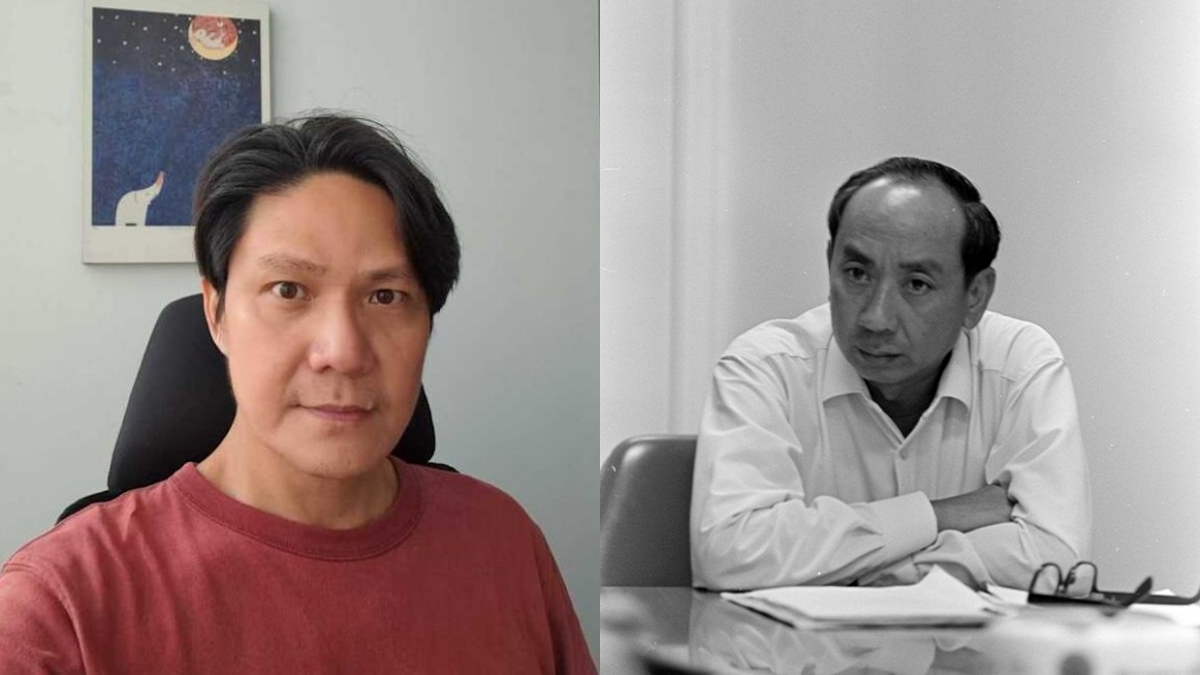
SINGAPORE: Veteran journalist Bertha Henson has criticised The Straits Times (ST) for publishing what she described as an unclear and incomplete correction to a historical detail involving founding prime minister Lee Kuan Yew and former deputy prime minister Goh Keng Swee.
In a Facebook post on 30 November 2025, Henson, a former editor at ST, said the paper’s correction notice lacked clarity.
She argued that corrections must be explicit and transparent, particularly when they involve politically significant or historical material.
The issue arose from an ST report on The Albatross File: Singapore’s Independence Declassified, a permanent exhibition opening on 8 December at the National Library Building.
The exhibition draws on archival material, including Goh’s “Albatross” file and extensive oral history interviews with Singapore’s founding leaders.
The original ST article included a sentence stating:
“Mr Lee said in his oral history interview later that he did not know Dr Goh had not pressed Tun Razak for a looser federation, but had proposed a separation instead.”
This sentence was later edited to remove the reference to Lee’s oral history interview, reading simply that Lee did not know of Goh’s actions until 1994, when he read Goh’s oral history in preparation for his memoirs The Singapore Story.
Henson questions clarity and completeness of ST’s correction notice
ST then added a correction note stating that the earlier version had wrongly attributed the claim to Lee’s oral history interview.
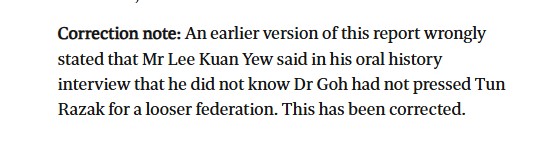
Henson argued that this correction did not clearly identify what was wrong.
“You need to read the original statement to know what has been corrected,” she wrote, adding that the “double negatives don’t help”.
She also noted that the notice did not address whether Lee knew Goh had proposed independence instead, questioning whether this omission was intentional.
"This is the problem when clarity is sacrificed to keep a correction notice as ‘short’ as possible."
According to Lee’s 1998 memoir, he learnt in 1994 that Goh had not pressed Malaysia’s deputy prime minister Tun Abdul Razak for a looser arrangement.
Lee wrote that Goh “went along” with the desire of Malaysian leaders for Singapore to leave the federation, and that Goh had sought a written undertaking from him because he feared he might “balk at separation”.
Henson emphasises accountability as essential to historical reporting
Henson also criticised the handling of the correction in print.
She argued that if the article had run in the newspaper, ST should have published a corrected version the following day.
She added that she had not seen such a correction and would “be happy to be wrong” if someone could point it out.
She observed that the correction notice contained no apology and suggested this implied that ST did not consider the issue its fault.
Addressing readers who might see the matter as trivial, Henson stressed that inaccuracies were not “small” in journalism.
“These are principles,” she wrote, adding that the story dealt with nuanced and complex political history.
She warned that unclear corrections could lead readers to “doublecheck” the paper’s work by listening to original oral history recordings themselves, which she said would signal an erosion of trust in the media.
Netizens criticise ST’s correction and lack of apology
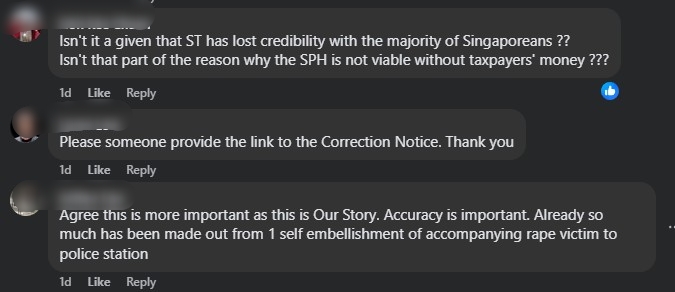
Online commenters expressed frustration with ST for issuing a correction without an apology. Many thanked Henson for highlighting the issue, saying that mistakes in historical reporting were serious matters.
Some argued that ST had long lost credibility, while others linked the concern to SPH Media Trust’s reliance on public funding.
They emphasised the importance of accuracy in shaping Singapore’s historical narrative.

PM Wong reaffirms full confidence in ST as a trusted national newspaper
In July 2025, Prime Minister Lawrence Wong reaffirmed the government’s “full support and confidence” in The Straits Times’ mission to inform, educate, and hold Singapore society together.
He emphasised the importance of trusted journalism, noting that Singapore needs credible media more than ever to help citizens distinguish fact from falsehood in an increasingly complex information landscape.
His remarks came amid ongoing debate over the independence of Singapore’s main English-language newspaper, as questions continue about whether ST can operate free from state influence following substantial government funding for its parent, SPH Media Trust (SMT).
In February 2022, the government announced up to S$900 million n funding over five years for SMT.
The support, amounting to as much as S$180 million annually, was intended to sustain quality journalism and keep the national paper financially viable as advertising revenue declines and audiences shift online.
The funding followed SMT’s 2021 restructuring, which separated it from Singapore Press Holdings and reconstituted it as a not-for-profit entity.
The change aimed to help the organisation adapt to digital disruption while maintaining its role as a trusted source of news for the public.