High Court dismisses Pritam Singh appeal against conviction for lying to COP
The High Court has upheld Pritam Singh’s conviction and S$14,000 fine for lying to the Committee of Privileges, with Justice Steven Chong ruling that the trial judge had sufficient evidence to support the verdict.
- The High Court has dismissed Pritam Singh’s appeal against his February conviction for lying to the Committee of Privileges.
- Justice Steven Chong found the trial judge’s reasoning sound, rejecting arguments that evidence was misinterpreted or ignored.
- The ruling leaves Singh’s total fine of S$14,000.
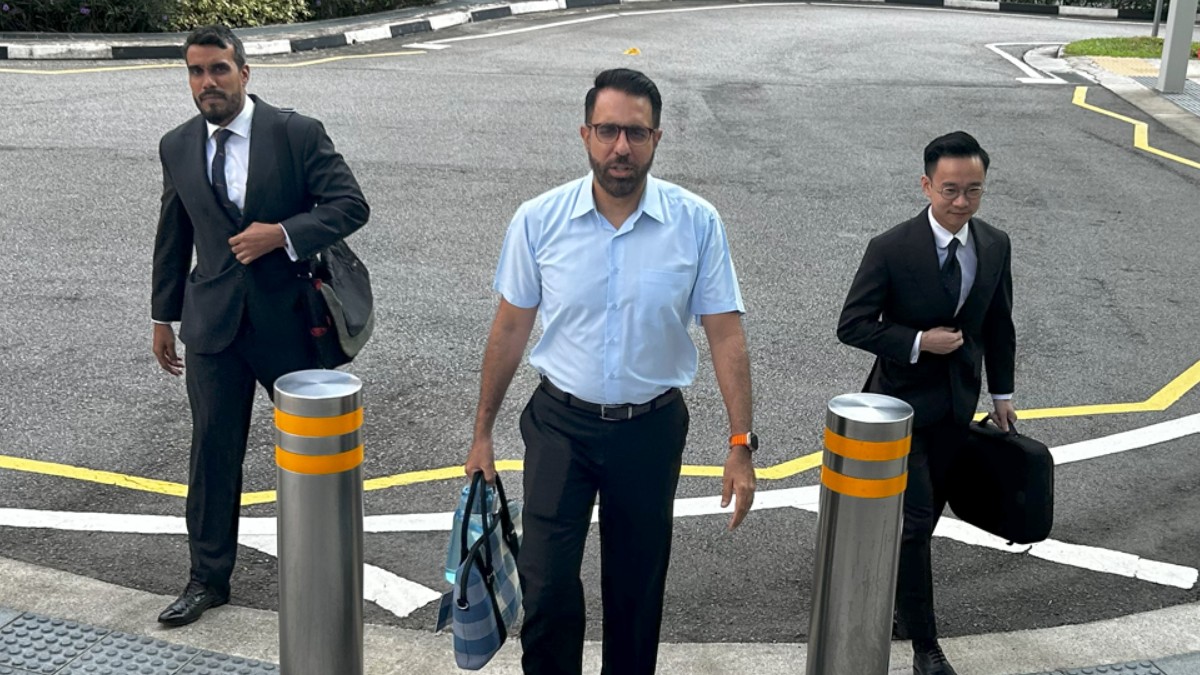
SINGAPORE: On 4 December 2025, Justice Steven Chong dismissed Leader of the Opposition Pritam Singh’s appeal against his conviction on two charges of lying to the Committee of Privileges.
The High Court upheld the trial judge’s findings and confirmed the existing sentence of two fines totalling S$14,000 (approximately US$10,700), which arose from his handling of a false account delivered by then-Workers’ Party (WP) member Raeesah Khan.
According to the court’s written decision, the original ruling was properly supported by the evidence presented during the 13-day trial.
Singh, aged 49, was initially convicted on 17 February 2025.
He is the first sitting opposition MP in almost four decades to be convicted of a criminal offence.
Justice Chong reviewed Singh's “grave statement”, allegedly made on 8 August 2021, and the “judgement statement”, delivered on 3 October 2021.
He stated that the court had examined all evidence, including testimony from Raeesah Khan, WhatsApp exchanges, and contemporaneous conduct.
After summarising the case, the judge affirmed that the lower court’s decision was sustained by the record. The hearing concluded in less than 10 minutes.
Singh has since paid the S$14,000 fine imposed for the two charges.
Singh responds after verdict
Addressing the media outside the court, Singh said that while he was disappointed with the verdict, he respected and accepted the judgment fully and without reservation.
“Some of you would have followed this matter for some time. I certainly took too long to respond to Raeesah’s lie in Parliament. I take responsibility for that,” he told reporters.
“This has been a long journey. Throughout it all, I have done my best to act with sincerity and fulfil my responsibilities to Parliament, and to Singaporeans. "
"My commitment in that regard remains unchanged. My focus now is to continue serving Singaporeans and to speak up for them, alongside my Workers' Party colleagues that important work must continue,” he added.
Singh, Secretary-General of the Workers’ Party, returned to the High Court last month to challenge both conviction and sentence.
His lawyer, Andre Jumabhoy, argued that the trial judge had ignored key evidence and misunderstood the context of Singh’s actions during August to October 2021.
Background: the Raeesah Khan incident
The case stems from events on 3 August 2021, when Khan falsely told Parliament she had accompanied a rape victim to a police station where officers behaved insensitively.
When questioned again by Law and Home Affairs Minister K Shanmugam, she repeated the claim.
Khan later admitted on 1 November 2021 that her account was fabricated.
A Committee of Privileges inquiry recommended referring Singh and fellow WP MP Faisal Manap to the Public Prosecutor.
Faisal received a police advisory, while Singh faced two charges under the Parliament (Privileges, Immunities and Powers) Act, which permits up to three years’ imprisonment or fines of up to S$7,000 per charge.
During last month’s hearing, Jumabhoy urged the High Court to overturn the conviction, arguing that the trial judge misapplied legal principles.
He further said the judge had accepted “impossibilities” in Khan’s account as proof.
The prosecution, led by Deputy Attorney-General Goh Yihan, urged the court to dismiss the appeal and did not seek heavier penalties.
Judge questions defence over key statements during last month hearing
Justice Chong directed the defence to address two key statements central to the original verdict: Khan’s claim that Singh told her they should “take the untruth to the grave”, and his remark, “I will not judge you”.
The defence said Khan’s recollections of the first statement had varied three times.
Justice Chong replied that inconsistent wording alone did not prove the phrase had never been said.
He then questioned Singh’s lack of follow-up during the eight-week period between 8 August and 3 October 2021.
He noted that Singh called the matter “serious” and “grave”, yet no concrete steps were taken.
The judge said it would be expected that some clarification plan would have been formed if responsibility had indeed been assigned on 8 August.
Jumabhoy responded that Singh was sensitive to Khan’s experience as a sexual assault survivor and believed avoiding pressure was appropriate.
Justice Chong acknowledged the sensitivity but noted the absence of any discussion among WP leaders over that period.
Jumabhoy added that Singh had other urgent matters to handle and that Khan was on medical leave due to shingles.
The judge replied that being busy was to be expected but questioned whether the issue could reasonably have been left untouched.
He further stated that other WP leaders were available and that Khan’s condition did not prevent communication.
Court examines timing of party’s shift in position
Justice Chong also examined the shift in the party’s position after Singh met former WP leader Low Thia Khiang on 11 October 2021, noting that preparations for clarification began only after this meeting.
He found that this supported the inference that no earlier plan to correct the falsehood had existed.
The judge also challenged the defence’s explanation that Singh’s intention from 8 August was contingent on Khan first speaking to her parents, pointing out Singh did not verify whether she had done so before her eventual confession.
Justice Chong questioned Singh’s statement to Khan that “I will not judge you”, indicating it more likely conveyed tolerance of inaction rather than encouragement to correct the record.
The prosecution followed by presenting inconsistencies in Singh’s evidence, disputes over recollections of party discussions, and the absence of documentation supporting the defence’s account.
It argued that the decision to clarify the lie was only formed after 11 October, a view Justice Chong said aligned with the evidence.