Oral history access governed by interview agreements and sensitivity reviews
In a written response to a question from Workers’ Party MP Fadli Fawzi, Josephine Teo said access to oral history interviews is governed by interview agreements and sensitivity reviews. While 80% are public, interviews like Kwa Geok Choo’s remain restricted, with no full list of classified accounts disclosed.
- Oral history access in Singapore is governed by interview agreements and sensitivity reviews.
- Interviews with leaders such as Kwa Geok Choo remain partially restricted, despite the passage of time.
- The Government did not disclose which other interviews remain classified or provide detailed reasons.
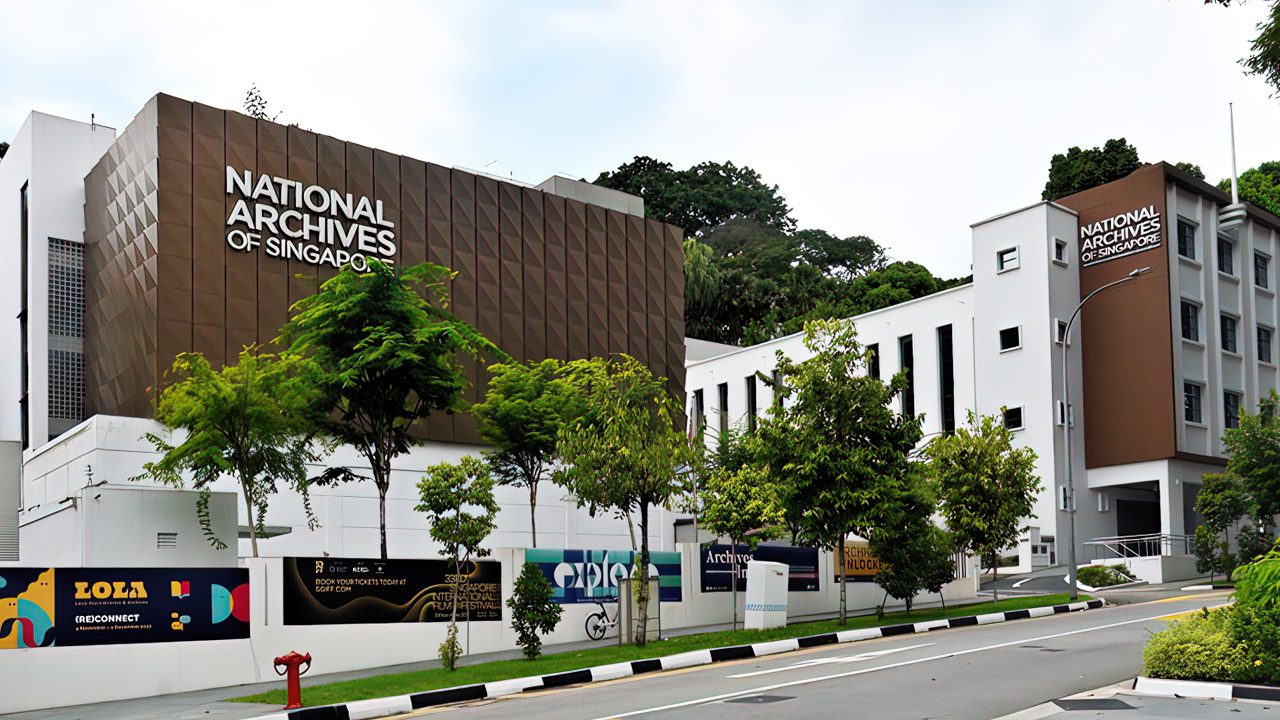
Access to oral history interviews in the National Archives of Singapore (NAS) is determined by agreements signed with interviewees and further reviewed for sensitive content that could affect national security or international relations.
This was clarified in a written reply issued on 13 January 2026 by Minister for Digital Development and Information Josephine Teo, in response to parliamentary questions regarding the classification of certain interviews—including that of Kwa Geok Choo—as part of the declassified Albatross File.
The reply addressed questions filed by Workers’ Party Member of Parliament Fadli Fawzi, who asked:
(a) Why was the oral history interview of Madam Kwa Geok Choo classified for over 40 years;
(b) whether any other similar interviews remain classified;
(c) who are the founding leaders whose interviews remain classified; and
(d) whether these interviews can be declassified.
According to Teo, the NAS oral history collection is governed by agreements made with individual interviewees, which include varying conditions on how long interviews must remain closed. These agreements are tailored to each interviewee’s preferences.
She cited examples where interviews were released five years after the interviewee’s death, including those of C V Devan Nair, S Rajaratnam, E W Barker and Albert Winsemius. These are now publicly accessible in full.
Teo emphasised that even when agreed withholding periods have passed, interviews are still reviewed for sensitive content prior to public release. This includes personal or private information, and content that may have implications for national security or international relations.
This review process, she said, has led to extended restrictions on certain interviews, including those of Kwa Geok Choo, Lee Kuan Yew and Goh Keng Swee. Nonetheless, substantial excerpts from these accounts were recently published alongside the launch of The Albatross File: Inside Separation—a permanent exhibition and companion book.
Teo added that about 80% of the NAS oral history collection is now available to the public via Archives Online. This includes interviews with several pioneer leaders such as Lim Kim San, Othman Wok, Lee Khoon Choy, Mahmud Awang and David Marshall.
She also confirmed that Goh Keng Swee’s oral history interview has been released with redactions, and a fuller version of Lee Kuan Yew’s interview will be made public soon. The oral history of Ong Pang Boon, which was subject to a 15-year embargo from his last interview in 2010, is scheduled for release later this year.
Teo stated that NAS “will continue to work towards providing access to all interviews as soon as it is feasible to do so.”
However, the reply did not address two aspects of Fadli’s question. It did not specify which other founding leaders’ interviews remain classified, nor did it explain why some interviews—such as Kwa Geok Choo’s—remain withheld more than 15 years after the interviewee’s death.
Wife of Singapore's founding Prime Minister
Kwa Geok Choo was a lawyer, a founding partner of the law firm Lee & Lee, and the wife of Singapore’s founding Prime Minister, Lee Kuan Yew. She passed away on 2 October 2010 and was accorded a state funeral, with thousands paying their respects to the respected lawyer and matriarch.
Beyond her professional and familial roles, Kwa played a quiet but influential part in Singapore’s political development. A Queen’s Scholar, she was among the earliest women to be called to the Bar in Singapore and Malaya. She co-founded Lee & Lee in 1955 and was deeply involved in its early operations, mentoring many in the legal profession.
Although never a formal political figure, Kwa is widely acknowledged as a trusted confidante and adviser to Lee Kuan Yew. She assisted with legal drafting in the formative years, including key documents during Singapore’s transition to self-governance and eventual independence.
Her proximity to key national decisions gives her oral history account unique value. The continued withholding of her interview, despite the passage of over 15 years since her death, stands in contrast to the release conditions applied to other figures, and underscores the significance of the questions raised in Parliament.
Background on the Albatross File
The Albatross File refers to a collection of documents, handwritten notes and Cabinet papers compiled by Goh Keng Swee in the period leading up to Singapore’s separation from Malaysia in 1965.
Its contents reveal previously unpublished details of internal deliberations and challenges simplified narratives of Singapore’s “expulsion”, showing the role Singaporean leaders played in negotiating and facilitating the separation.
The file was declassified in 2023. Its materials, along with accompanying oral histories, now form the basis of The Albatross File: Singapore’s Independence Declassified—a permanent exhibition launched on 8 December 2025 at the National Library Building.