Over 41,000 foreigners barred from Singapore in 2025; new no-boarding directive to start in 2026
From January 2026, Singapore will implement a no-boarding directive to stop high-risk foreigners from flying in. The move aims to strengthen border security and reduce rising numbers of ineligible entries flagged by the Immigration and Checkpoints Authority.
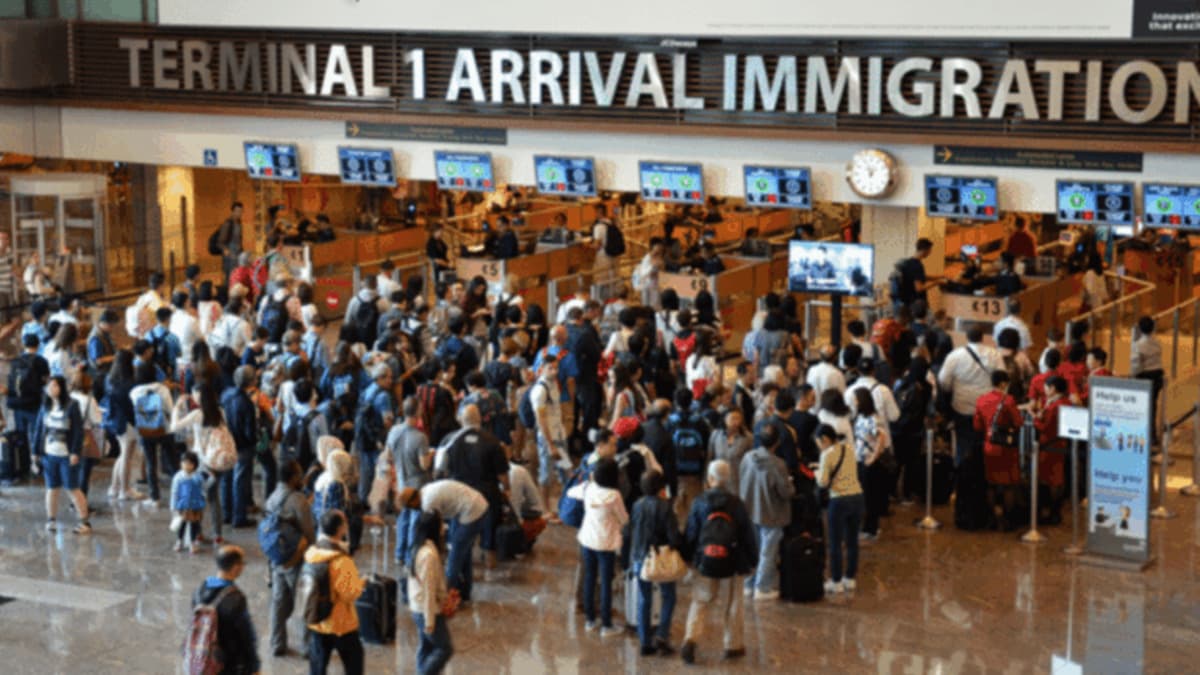
- Singapore will roll out a no-boarding directive from January 2026 with five airlines to pre-emptively block entry by ineligible or high-risk travellers.
- The move follows a 26% year-on-year rise in travellers turned away at checkpoints in 2025.
- The ICA is enhancing security with biometrics, data analytics, and upstream interventions modelled after systems used in the US and Australia.
Singapore is expected to begin implementing a no-boarding directive (NBD) in early 2026 to prevent high-risk foreigners from flying into the country.
The move by the Immigration and Checkpoints Authority (ICA), as reported by the Straits Times, comes in response to a sharp increase in entry refusals at checkpoints.
Between January and November 2025, approximately 41,800 foreigners were denied entry into Singapore. This figure represents a 26 per cent increase compared to the total number of rejections in 2024 and a 46 per cent jump from 2023.
Singapore Airlines, Scoot, Emirates, Turkish Airlines and AirAsia will be the first to implement the NBD system. More airlines are expected to join from March 2026.
The ICA explained that the NBD aims to move enforcement upstream, preventing undesirable travellers from boarding at their points of origin rather than stopping them only upon arrival in Singapore.
According to ICA Deputy Assistant Commissioner Joe Tan, the initiative is designed to prevent prohibited individuals—such as those with serious criminal records or security risks—from ever boarding flights to Singapore.
Under the NBD, participating airlines will receive boarding instructions after advance passenger information is screened through ICA systems. If a traveller is flagged as ineligible, the airline will be instructed not to allow them to board.
DAC Tan emphasised that the directive will be issued only when ICA is certain a traveller is prohibited from entering.
Travellers who receive an NBD but wish to enter Singapore must contact the ICA for approval before booking another flight.
Currently, airlines manually verify travel documents, relying on visual checks of passport biodata and any supporting documents. This method is prone to human error and lacks real-time verification of visa validity or arrival card submission.
By contrast, the new system integrates automated processes that reduce such errors and increase security efficiency.
The NBD scheme aligns Singapore with practices in countries such as the United States and Australia.
In the US, the Secure Flight programme checks travellers against a Federal Bureau of Investigation watchlist for known or suspected terrorists.
Australia’s Department of Home Affairs administers a Movement Alert List, which identifies individuals who are subject to visa exclusions or pose security threats.
Singapore’s broader efforts to improve border control have also led to major technological upgrades in recent years.
Under the new clearance concept, ICA has deployed automated immigration lanes equipped with advanced forgery detection and multi-modal biometric systems.
These systems enable officers to detect impersonation attempts and individuals using multiple identities.
ICA also uses data analytics and advance passenger information to pre-screen travellers. Those flagged as potentially high-risk undergo further interviews and investigations at arrival points.
DAC Tan clarified that a high-risk flag does not automatically mean a traveller will be denied entry. Instead, they will be subjected to additional scrutiny at checkpoints.
Assessment and investigation officers, like Sergeant 3 Muhammad Yusri Karim at the Airport Command, play a key role in this process.
SGT3 Yusri noted that the shift from manual to automated lanes—using iris and facial biometrics—has reduced the time needed to process travellers while maintaining security standards.
He added that the passport-less clearance system, launched in September 2024, helped officers focus more on profiling and less on administrative clearance work.
While the NBD will apply mainly to air and sea checkpoints due to the nature of air travel ticketing systems, ICA clarified that land checkpoints will not be neglected.
Foreigners entering via land are still required to submit arrival cards, giving ICA access to advance information for screening.
“The whole purpose of NBDs is to deny undesirable travellers from boarding (flights) into Singapore,” said DAC Tan. “It doesn’t compromise our ability to stop them even if they were to come to Singapore.”