Singapore posts record maritime performance in 2025, strengthens multi-fuel and digital future
Singapore achieved record-breaking port performance in 2025, with vessel arrivals and container throughput reaching historic highs. The Maritime and Port Authority is advancing bunkering capabilities and digital innovation, reinforcing Singapore’s position as a leading global maritime centre.
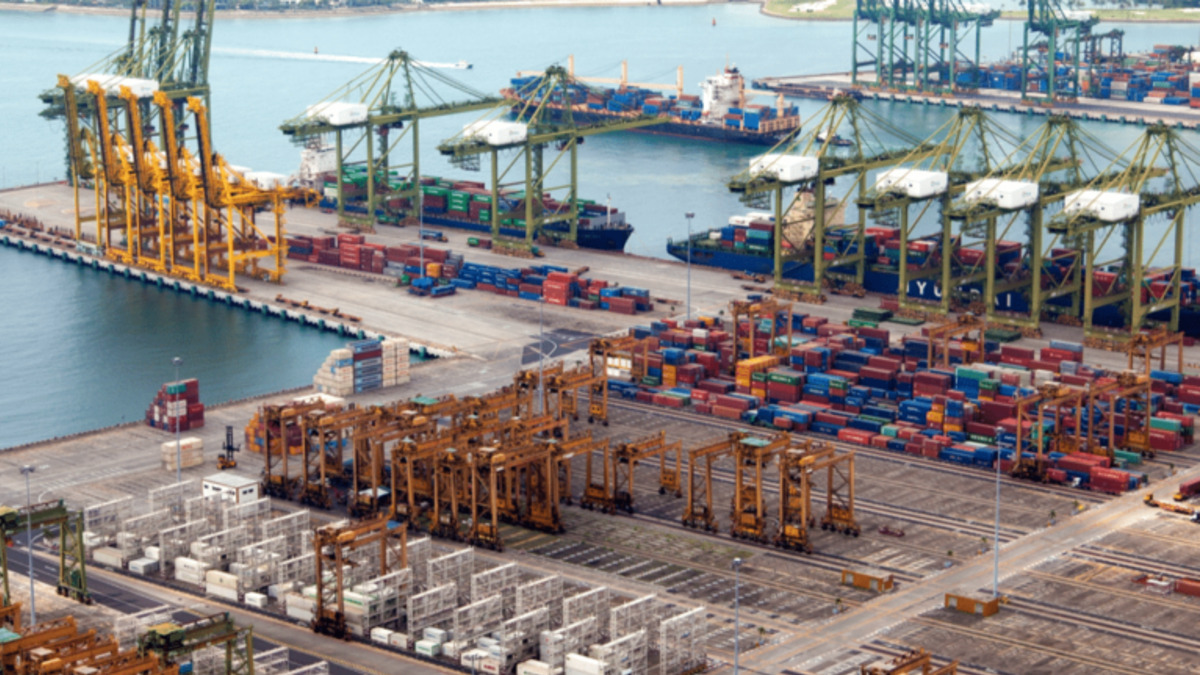
- Singapore recorded all-time highs in vessel arrivals, container throughput, and marine fuel sales in 2025.
- The Maritime and Port Authority (MPA) will introduce new LNG and ammonia bunkering standards and licences in 2026.
- Singapore reinforced its position as a global maritime hub with new shipping corridors and digitalisation milestones.
Singapore achieved record port performance in 2025, supported by resilient global trade, growing fuel demand, and continued maritime innovation.
This was announced on 13 January 2026 by Senior Minister of State for Law and Transport Murali Pillai at the Singapore Maritime Foundation’s New Year Conversations event.
According to the Maritime and Port Authority of Singapore (MPA), vessel arrivals reached 3.22 billion gross tonnage (GT), a 3.5% increase from 2024. Container throughput climbed by 8.6% to 44.66 million Twenty-Foot Equivalent Units (TEUs), setting a new record.
Marine fuel sales also grew to 56.77 million tonnes, up 3.4% from 2024. The use of alternative marine fuels rose sharply, from 1.35 million tonnes in 2024 to 1.95 million tonnes in 2025.
Singapore was named the world’s leading container port in DNV-Menon’s inaugural Leading Container Ports of the World report. It also received the Best Global Seaport award for the fourth time and was recognised as Best Seaport in Asia for the 37th time at the Asian Freight, Logistics and Supply Chain Awards in 2025.
Expanding multi-fuel readiness
From 14 January 2026, the MPA will open applications for new LNG bunker supply licences, aligning with the increasing demand for cleaner marine fuels. In support of this, Singapore will launch new Standards for Port Limit LNG Bunker Vessels to ensure safety, operational efficiency, and regulatory compliance.
In Q2 2026, the current Technical Reference for LNG Bunkering (TR56) will be upgraded to a Singapore Standard. This revision will enhance safety and transparency in LNG bunkering processes.
The MPA and Enterprise Singapore will also introduce Singapore’s first Technical Reference for Ammonia Bunkering in Q2 2026, guiding the early adoption and safe handling of ammonia as a marine fuel.
Two new Green and Digital Shipping Corridors (GDSCs) were launched in 2025 with India and the Republic of Korea, and the existing corridor with China was elevated to a national level. These bring Singapore’s total GDSCs to nine.
GDSC projects planned for 2026 include development of common emissions-reporting protocols, digital exchanges, and fuel trials to enhance global supply chain resilience and sustainability.
In support of these efforts, a Keppel Ltd-led consortium was appointed in October 2025 to conduct front-end engineering design (FEED) studies for ammonia power generation and bunkering. In November, three methanol bunkering licences were awarded.
Advancing digital transformation
By August 2025, all bunker suppliers in Singapore had adopted digital bunkering. This transition includes the verification of electronic bunker delivery notes (e-BDNs) through a centralised facility.
According to the MPA, the shift has significantly boosted productivity and transparency in bunkering transactions, saving an estimated 40,000 man-days per year in administrative efforts.
Maritime growth and global leadership
Singapore’s status as an International Maritime Centre (IMC) was further reinforced in 2025. Thirty-five maritime companies either set up or expanded their presence in the country, bringing the total number of international shipping groups to over 200.
These firms collectively contributed around S$5 billion in annual business spending, underscoring the strength and diversity of Singapore’s maritime ecosystem.
Singapore retained its top spot in the Xinhua-Baltic International Shipping Centre Development Index, highlighting its continued prominence in the global maritime landscape.
Several new maritime innovation centres began operations in 2025. These include the ABS Singapore Maritime Safety Centre, the BV-Singapore Institute of Technology Centre for Maritime Electrification, and the RINA Technology Demonstration Centre.
Registry and sustainability efforts
The Singapore Registry of Ships (SRS) reached 137.46 million GT in 2025, a 27% increase from the previous year. It became the world’s fourth largest ship registry.
In 2025, the registry awarded 34 Green Ship Certificates under the Green Ship Programme. Since 2020, it has flagged five methanol-fuelled ships and expects to flag its first ammonia dual-fuelled vessel within two years.
Singapore was re-elected to the Council of the International Maritime Organization (IMO) for the 17th time and to the Council of the International Organization for Marine Aids to Navigation (IALA) for the 2025–2027 term, reinforcing its role in shaping international maritime standards.
Maritime workforce and talent development
In 2025, MPA, together with industry partners, unions and education institutions, expanded efforts to develop maritime talent and attract new entrants to the sector.
Programmes included internships, scholarships, and the Tripartite Maritime Training Award for mid-career individuals. The Maritime Leadership Programme was also expanded to cover trading and logistics.
The MPA-Singapore Maritime Foundation (SMF) Joint Office on Talent and Skills collaborated with the National University of Singapore (NUS) to introduce stackable micro-credentials in applied data science and analytics.
The first run of the “Foundation Course in Data Analytics” in September 2025 drew 58 participants from 40 companies. A second run is scheduled for January 2026, with 50 participants expected. New courses in AI and sustainability are in development.
Looking ahead, the global maritime sector faces geopolitical uncertainties and rising trade tensions. However, global seaborne trade is expected to grow, particularly in commodity segments, due to diversification and route reconfigurations.
Singapore aims to collaborate with industry partners to navigate these challenges and continue advancing maritime innovation and sustainability.