Singapore raises first-time blood donor age limit from 60 to 65 from January 2026
Singapore will allow first-time blood donors up to age 65 from 2 January 2026, as the Health Sciences Authority seeks to expand the donor pool and maintain a sustainable blood supply amid an ageing population.
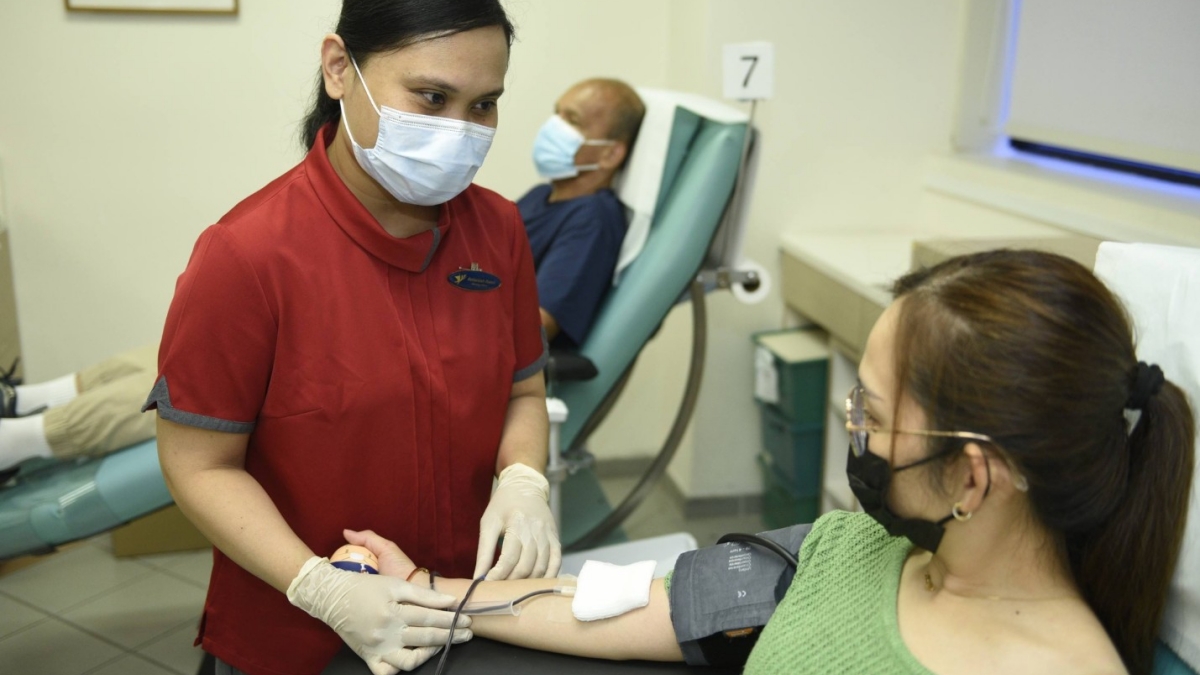
- Singapore will raise the age limit for first-time blood donors from 60 to 65 from 2 January 2026.
- The change aims to expand the donor pool and ensure a sustainable blood supply as the population ages.
- Health Sciences Authority data and international studies show adverse reactions decrease with age among first-time donors.
The age limit for first-time blood donors in Singapore will be raised from 60 to 65 starting 2 January 2026, as part of efforts to ensure a sustainable blood supply, the Health Sciences Authority (HSA) said on 22 December 2025.
With the change, new donors will be able to give blood up to one day before their 66th birthday.
Repeat donors may continue donating until the age of 75, up to one day before their 76th birthday.
HSA said the decision was supported by local data and international research.
Its analysis of donors up to the current age limit of 60 showed that adverse reactions among first-time donors decrease with age.
“This corroborates findings from international studies,” HSA said in a news release.
The authority added that the policy adjustment would not compromise donor safety.
Ageing population drives need to expand donor pool to safeguard long-term blood supply
According to HSA, expanding the upper age limit for first-time donors will help grow Singapore’s donor pool as the population ages.
This, it said, is crucial for ensuring the long-term sustainability of the national blood supply.
“With our ageing population, it is crucial that we tap into every safe opportunity to expand our donor pool while maintaining the highest safety standards for both donors and recipients,” said Adjunct Professor Raymond Chua, chief executive of HSA.
HSA reiterated that all donors must meet existing health requirements.
They must be in general good health, free of infection symptoms, and weigh at least 45kg.
Minimum haemoglobin levels also apply.
Women must have haemoglobin levels of at least 12.5g/dL, while men must meet a minimum of 13g/dL.
The authority said individuals with certain chronic conditions may still be eligible to donate blood.
Those with well-controlled high blood pressure, high cholesterol or diabetes can donate if they have no related complications.
Strict eligibility checks and added safeguards apply, including medical reviews for older donors
However, medication-related criteria may apply in such cases.
For example, donors with high blood pressure may donate only if they require no more than two types of anti-hypertensive medication.
Diabetic donors may donate blood if they do not require insulin treatment.
HSA advised potential donors to check eligibility carefully before making an appointment.
First-time donors are encouraged to complete an online eligibility quiz provided by HSA.
The tool allows individuals to assess their suitability before booking a donation slot.
Additional safeguards apply to older repeat donors.
Those aged 66 and above are required to undergo a medical check-up arranged by HSA.
According to the HSA website, donors in this age group may continue donating if they have donated at least once in the previous three years.
They must also remain in good health and pass the medical evaluation.
Beyond the policy change, HSA also issued a call for donors to come forward during the year-end period.
It said blood collection typically drops by up to 20 per cent at this time of year.
Ong Ye Kung urges public support
In a Facebook post, Health Minister Ong Ye Kung echoed the appeal for public support.
He urged eligible donors to donate blood before the end of the year.
“As many of us travel during the year-end period, we become ineligible to donate blood for a period, depending on the countries or regions we visit,” he wrote.
He noted that travel-related deferrals contribute to the seasonal decline in donations.
“Blood donations will inevitably drop during this period. That is when we may run into the risk of having low stocks of particular blood types,” he added.
The minister said the issue was especially pressing during peak travel seasons.
Ong also shared that he himself is currently unable to donate blood.
He said he will only be eligible again in March after travelling to South Africa for G20 meetings in November.