Singapore’s pioneering urban planner Dr Liu Thai Ker dies aged 87
Dr Liu Thai Ker, widely regarded as the father of urban planning in Singapore, has died at the age of 87. He led the planning of public housing for decades and remained an active city planner globally into his late 80s.
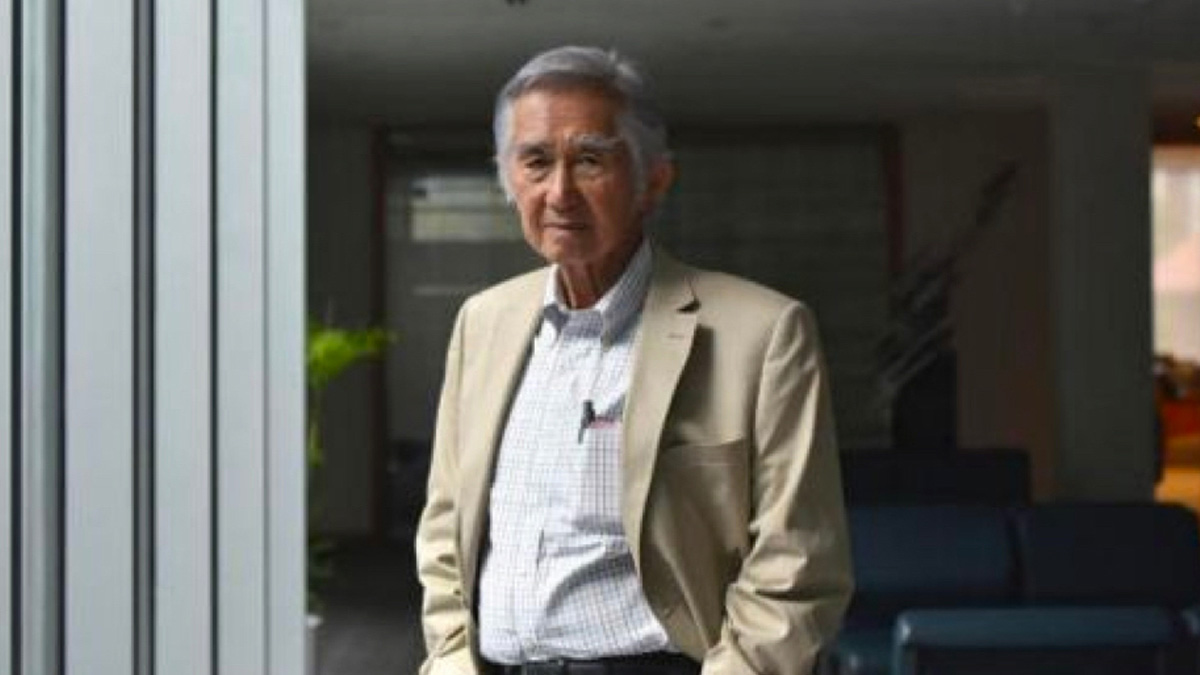
- Dr Liu Thai Ker, key figure in Singapore’s urban planning and housing development, died aged 87 on 18 January 2026.
- He led the design of 20 HDB towns and helped plan over 500,000 housing units during his public service career.
- Dr Liu remained active in planning worldwide after retirement and continued to champion long-term urban sustainability.
Dr Liu Thai Ker, the visionary urban planner who helped shape Singapore’s public housing and urban landscape, died on 18 January 2026 at the age of 87.
His death was confirmed by his son, Daniel Liu, in comments to The Straits Times, who said his father had suffered complications following a fall about a week earlier. Dr Liu passed away surrounded by his family.
Dr Liu played a transformative role in Singapore’s urban planning. During his career at the Housing and Development Board (HDB) from 1969 to 1989, he oversaw the planning of 20 out of 24 HDB towns and more than 500,000 housing units. His work laid the foundation for Singapore’s high-density, liveable urban environment.
From 1989 to 1992, he served as Chief Executive Officer and Chief Planner of the Urban Redevelopment Authority (URA), where he led a major update of Singapore’s Urban Concept Plan. His contributions shaped the modern skyline and infrastructure blueprint still in use today.
After leaving public service, Dr Liu remained active in urban planning. He founded Morrow Architects and Planners in 2017 at age 79, and contributed to planning projects in over 50 cities worldwide. Notable local works include the Marina Bay Cruise Centre.
Dr Liu was also involved in public sector advisory roles. He was the Founding Chairman of the advisory board of the Centre for Liveable Cities, and a board member of Singapore Cooperation Enterprise, which oversees international government-to-government collaborations.
Born in Muar, Johor in 1938, Dr Liu moved to Singapore at the age of six. He received a scholarship to study architecture at the University of New South Wales in Australia, graduating with first-class honours, and later earned a master’s degree in city planning from Yale University.
His early career included a stint at the New York office of renowned architect IM Pei. He returned to Singapore in 1969 to join the HDB’s design and research unit.
Dr Liu received numerous awards during his lifetime, including the Singapore National Day Award – Distinguished Service Order, the Singapore Design Council’s Golden Jubilee Award, and the Singapore Institute of Planners’ Distinguished Lifetime Achievement Award. In 2018, he was honoured with the Graham Mitchell Award (International Chapter) by the Australian Institute of Architects.
Dr Liu remained an active voice in public discourse on urban policy. In 2013, he suggested that Singapore should plan for a population of 10 million in the long term, arguing that such preparation was necessary for long-term sustainability and global competitiveness.
At the time, this view sparked public concern. Many Singaporeans expressed strong opposition to the idea, fearing increased overcrowding and pressure on resources.
In response to the public discourse, the Singapore Government clarified that it “has not proposed, planned nor targeted for Singapore to increase its population to 10 million.” This reaffirmed its commitment to managing growth in a sustainable and transparent manner.
Dr Liu later reiterated his belief in forward planning, stating in 2022 that a 10 million population “is not really a ridiculous number,” but part of thinking long-term. Speaking at an Institute of Policy Studies event, he said, “We must be prepared for possibly faster economic growth to stand tall among them... And partly because of that, a few years ago, I said, ‘Let’s plan for 10 million people’.”
Despite controversy over this suggestion, Dr Liu remained highly respected for his contributions to Singapore’s built environment. According to Daniel Liu, his father was deeply driven by a desire to serve Singapore, a place where he first felt a strong sense of belonging.
“He never actually said it, but not having a national identity when he was younger was something that drove him hard,” said Daniel Liu. “His instinct was to do the best for [Singapore].”
Daniel Liu added that his father loved his work and valued his independence, continuing his professional pursuits until the end of his life.