Zaqy Mohamad: Singapore’s revised food production targets balance ambition with realism
Singapore’s revised food production targets balance ambition with realism, Senior Minister of State Zaqy Mohamad told Parliament on 13 January, citing local scalability limits and sector challenges. The updated strategy replaces the “30 by 30” goal with category-based targets to strengthen food resilience by 2035.
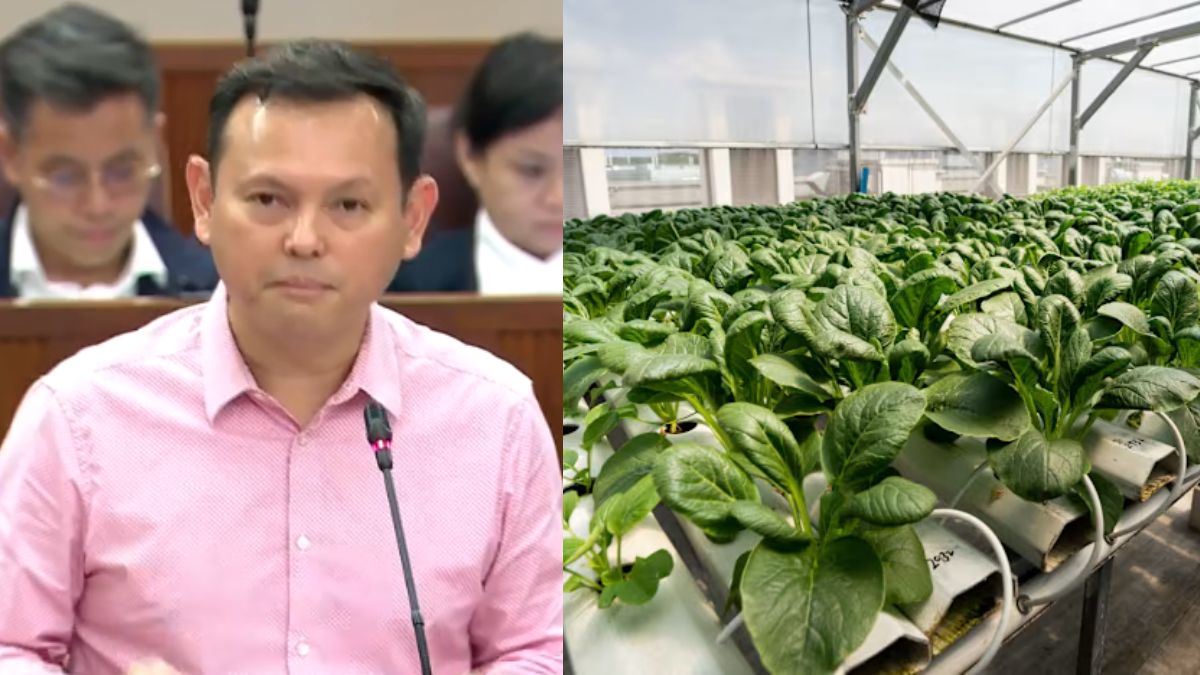
- Singapore has replaced the “30 by 30” goal with more realistic, category-based food production targets under the Singapore Food Story 2 strategy.
- The focus is on locally feasible foods such as vegetables, eggs and seafood, while other items rely on imports and stockpiling.
- The government is supporting farms through technology and says progress towards the 2035 targets is being closely monitored.
SINGAPORE: Singapore’s revised targets for local food production are designed to strike a balance between ambition and realism, Senior Minister of State for Sustainability and the Environment Zaqy Mohamad told Parliament on 13 January.
He said the updated goals take into account what the country can feasibly produce and scale locally, as well as the constraints faced by emerging sectors such as alternative protein.
Zaqy was responding to two parliamentary questions on Singapore’s fibre and protein production targets, which were announced in November last year.
The new targets replace Singapore’s earlier “30 by 30” food sustainability goal, under which the country aimed to produce 30 per cent of its nutritional needs locally by 2030.
Under the revised strategy, known as Singapore Food Story 2, the government has shifted towards setting targets for specific food categories.
The broader objective is to strengthen food resilience through four pillars: local production, import diversification, stockpiling and global partnerships.
For local production, the updated targets aim for farms to supply 20 per cent of local consumption of fresh leafy and fruited vegetables, beansprouts and mushrooms, as well as 30 per cent of local consumption of eggs and seafood by 2035.
Zaqy said the targets reflect the role of local production as a “regenerative and assured source of fresh food”, while also considering the strengths of the local ecosystem and its potential for growth.
“We will focus on food types that are feasible to be produced at scale efficiently,” he said, adding that this approach is consistently applied across government grants and land tenders.
Meat production is excluded from the revised targets due to resource efficiency, land intensity and climate constraints, while alternative protein has been left out because of the sector’s nascency.
Certain food items, such as rice and poultry, will also not be produced locally and will instead be addressed through import diversification and stockpiling.
“The revised targets balance ambition and pragmatism,” Zaqy said, noting challenges such as higher production costs and the need to develop sufficient demand.
Supporting farms and strengthening resilience
Zaqy said the government will continue to support both new and existing farms by helping them lower production costs, build capabilities, strengthen supply resilience and secure buyers for their produce.
He added that support from local consumers and businesses is essential for farms to achieve scale and commercial viability, with more details expected following this year’s Budget announcement.
Responding to a question from PAP MP for Yio Chu Kang SMC Yip Hon Weng on job creation and retention in the sector, Zaqy said the Ministry of Sustainability and the Environment supports farms by helping them adopt new capabilities, including agri-technology.
Some farms have improved yields and competitiveness through the use of technology, while more energy-efficient facilities and automation have helped reduce manpower needs, he noted.
Are the new targets aspirational?
WP MP for Sengkang GRC He Ting Ru asked whether the 2035 targets are aspirational, noting that the earlier “30 by 30” goal had been described as such.
Singapore launched the “30 by 30” campaign in 2019, but the agri-food sector subsequently faced supply chain disruptions, rising energy and manpower costs, and a tougher financing environment.
These challenges delayed farm development and led to the closure of some operations.
Zaqy said the multiple disruptions since 2019 had provided valuable lessons. During the COVID-19 pandemic, border closures highlighted the need to diversify supply sources and strengthen stockpiling, particularly for eggs and poultry.
Singapore now imports chickens from Brazil and eggs from Ukraine, in addition to regional suppliers.
On local production, he said yields have improved and Singapore is currently about four percentage points away from meeting its protein target.
“That gives very good promise in terms of whether we are able to meet a 2035 target,” he said, adding that the government is closely tracking progress and rolling out programmes to help farms transform and meet these goals.
The additional pillars of the food strategy also provide Singapore with greater flexibility, Zaqy added.
“Are we changing the goal posts? That’s a question some people ask me all the time,” he said. “I think it’s not so much about changing goal posts, but perhaps about giving you a better goalkeeper.”