Taiwan legislature passes motion to initiate impeachment proceedings against President Lai Ching-te
Taiwan’s legislature has approved an opposition-backed motion to initiate impeachment proceedings against President Lai Ching-te, setting the stage for a largely symbolic process unlikely to succeed due to constitutional voting thresholds.
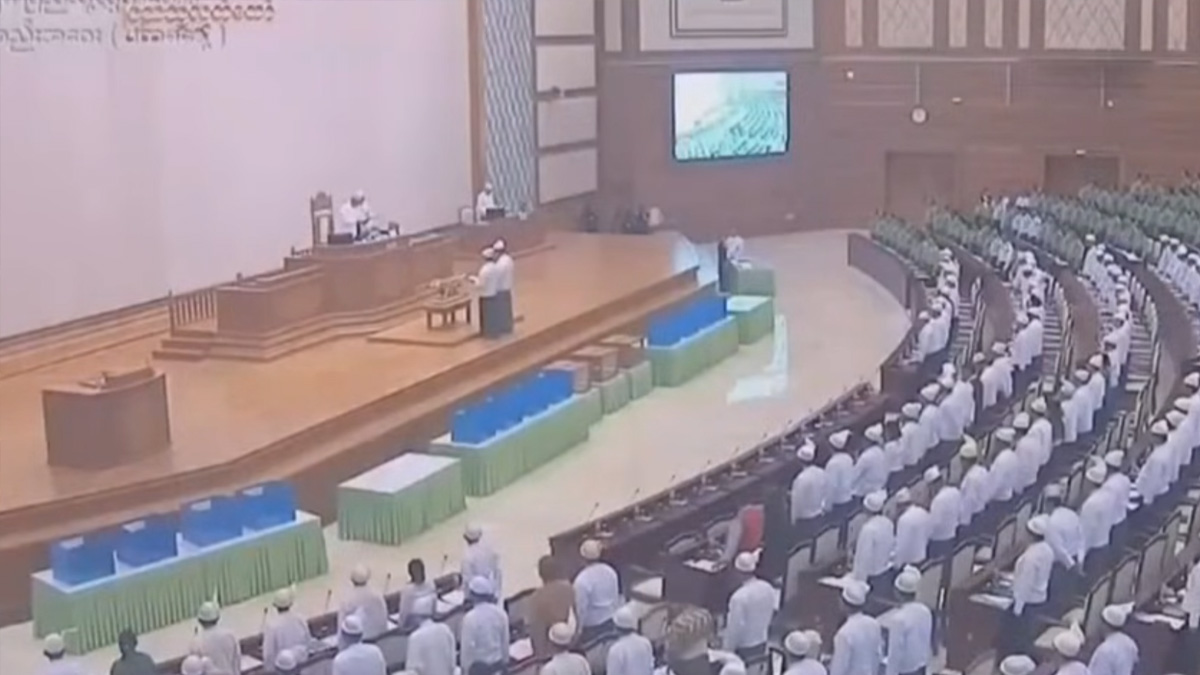
- Taiwan’s legislature voted on 26 December 2025 to pass a motion initiating impeachment proceedings against President Lai Ching-te.
- The motion, proposed by the Kuomintang and Taiwan People’s Party, passed with 60 votes in favour and 51 against.
- Despite passage, the impeachment is widely expected to fail due to the opposition lacking a two-thirds majority.
Taiwan’s Legislative Yuan on 26 December 2025 voted to pass a motion initiating impeachment proceedings against President Lai Ching-te, following a proposal by opposition lawmakers from the Kuomintang and the Taiwan People’s Party.
The motion passed with 60 legislators voting in favour and 51 voting against, reflecting the opposition’s slim numerical advantage in the legislature. The vote formally launches a constitutional impeachment process, though its success remains highly doubtful.
Under the timetable approved by the legislature, President Lai will be invited to report to the chamber on two occasions. The final impeachment vote has been scheduled for 19 May 2026, according to lawmakers involved in the proceedings.
Opposition legislators confirmed on 26 December that the impeachment vote date had been fixed for May next year.
According to statements made in the chamber, the process is intended to hold the president accountable for alleged constitutional violations.
Opposition lacks votes to meet constitutional threshold
Despite the passage of the initial motion, the impeachment effort is widely regarded as unlikely to advance beyond the legislature. The Kuomintang and Taiwan People’s Party together control 60 of the legislature’s 113 seats.
Taiwan’s constitution requires a two-thirds majority of all lawmakers to approve an impeachment motion before it can be referred to the Constitutional Court. That threshold stands at 76 votes, far beyond the opposition’s current numbers.
The ruling Democratic Progressive Party holds 51 seats, while two additional seats are occupied by independent lawmakers who generally align with the Kuomintang. Even with those independents, the opposition falls short of the required majority.
Fiscal dispute at heart of impeachment push
Opposition parties have argued that the impeachment is justified by the president’s alleged failure to uphold constitutional checks on executive power. Central to their case is a dispute over fiscal policy and legislative authority.
According to opposition lawmakers, the Lai administration refused to implement an amendment passed by the legislature that would redistribute more fiscal revenue to city and county governments. Many of those local governments are controlled by the Kuomintang.
They contend that the refusal undermines legislative authority and violates constitutional principles governing the balance of power between branches of government. The administration has rejected those accusations.
Presidential Office spokeswoman Karen Kuo said prior to the vote that the office respects the opposition’s actions, provided the process remains “lawful, constitutional and procedurally sound,” according to remarks cited by local media.
Tensions between President Lai and opposition parties have been building since he took office. Disputes have centred on relations with China, public spending priorities, and calls for reforms to institutions such as the judiciary.
President Lai, who won the presidency in 2024, has advocated a firmer stance toward Beijing.
However, his Democratic Progressive Party lost its legislative majority in the same election, resulting in divided government.
Within the legislature, Democratic Progressive Party lawmakers strongly criticised the impeachment move, describing it as political theatre rather than a genuine constitutional effort.
Ruling party condemns move as political theatre
Legislator Chung Chia-pin said the opposition was treating constitutional rulings “as if they did not exist” and using impeachment as a political game. He urged opposition parties not to make decisions that are illegal or unconstitutional.
Rosalia Wu questioned the opposition’s motives, asking why parties she described as harming national interests were seeking revenge against a governing party she said was working for public benefit.
She argued that the impeachment was a political struggle and an “empty shell,” noting that the opposition was fully aware it lacked the necessary two-thirds majority for success.
Wu added that the legislature’s priority should be budget deliberations rather than impeachment proceedings, accusing the opposition of attempting to humiliate the president rather than pursue meaningful governance.
A rare and untested process in Taiwan’s democracy
Even if the impeachment were to pass the legislature, legal experts consider it unlikely to succeed at the judicial stage. Any approved motion would be referred to the Constitutional Court for adjudication.
All current grand justices on the Constitutional Court were appointed by former president Tsai Ing-wen, who belongs to the Democratic Progressive Party.
This has fuelled opposition scepticism about judicial impartiality, though no evidence of bias has been presented.
No Taiwanese president has been impeached since the island transitioned to a democratic system in the 1990s. The process remains largely untested at the highest level of executive office.
According to Taiwan’s Additional Articles of the Constitution, an impeachment motion must first be proposed by at least half of all lawmakers. It must then secure approval from two-thirds of the total membership.
Only after clearing those thresholds can the case be forwarded to the Constitutional Court for a ruling. Each stage presents significant procedural and political hurdles.