Taiwan president calls for unity against external threats at memorial for democracy advocate
Taiwanese President William Lai has called for unity in the face of external threats, paying tribute to democracy activist Liu Chin-shih, whose lifelong advocacy for freedom was commemorated at a memorial service in Taipei.
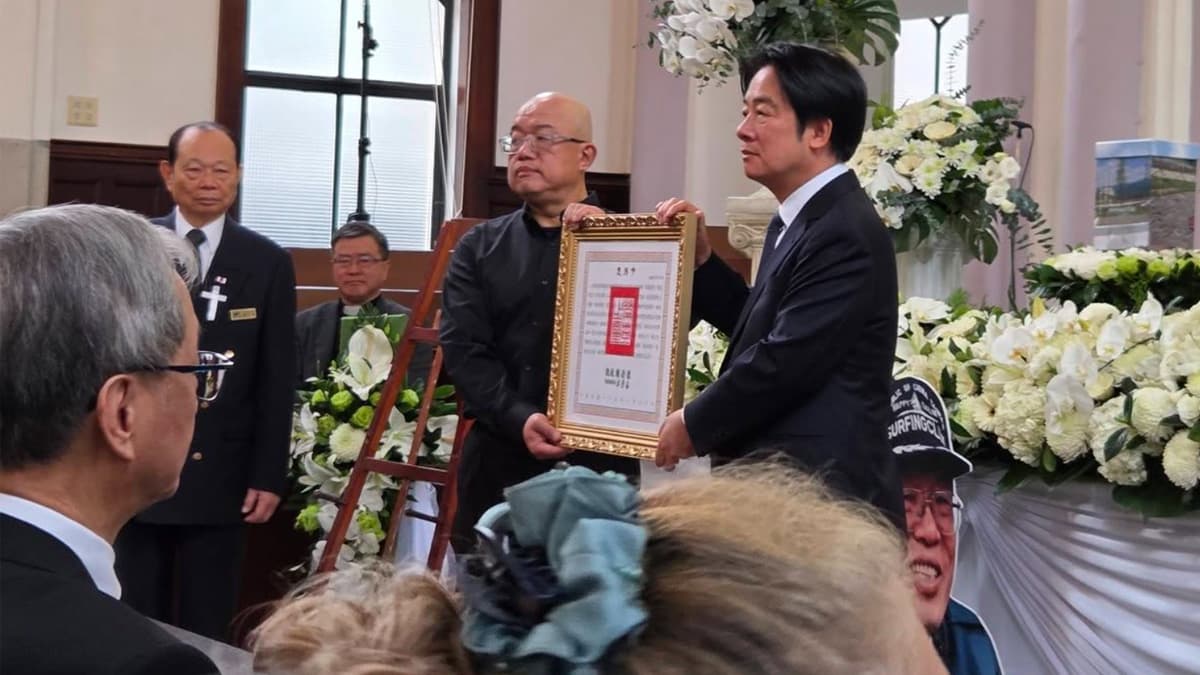
- President Lai honoured Liu Chin-shih’s lifelong struggle for democracy during a memorial service in Taipei.
- Lai urged unity against what he termed “external hostile forces” threatening Taiwan’s future.
- Liu, a former political prisoner, founded the Formosa Political Prisoners Association after his release.
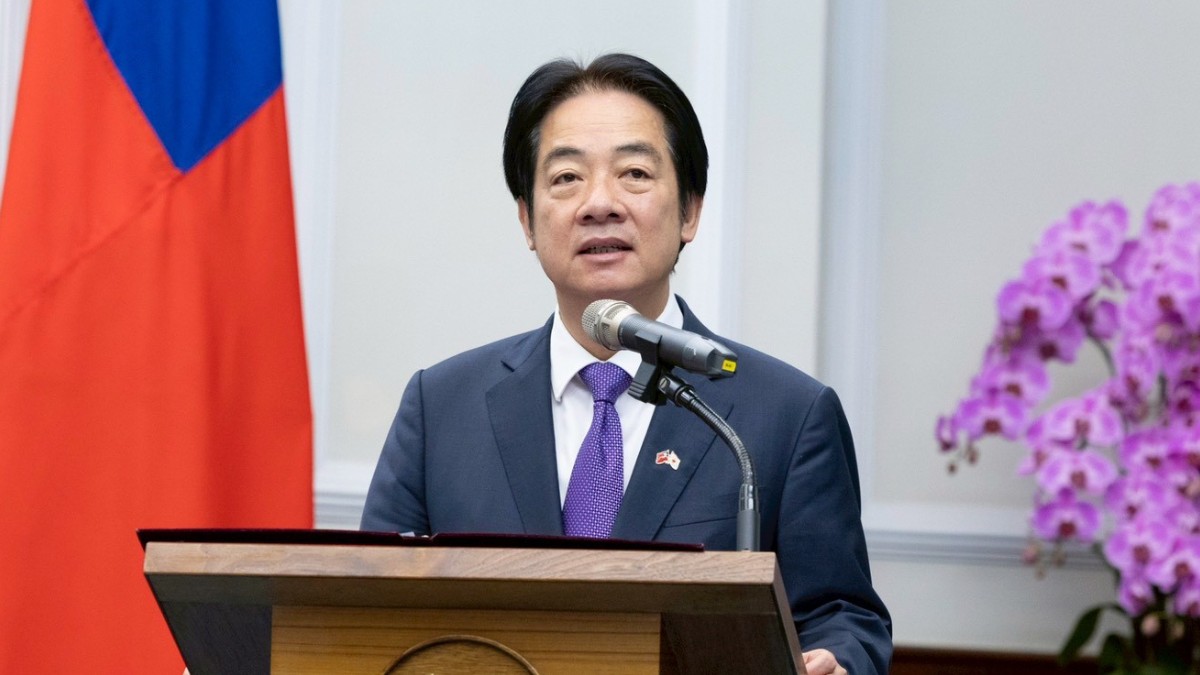
Taiwanese President William Lai Ching-te yesterday called for national unity in facing external threats, as he paid tribute to late democracy activist Liu Chin-shih during a memorial service in Taipei.
Speaking at Che-lam Presbyterian Church, Lai presented a posthumous presidential citation to Liu, describing him as a lifelong champion of democracy, freedom, and human rights.
Lai said Taiwan's current generation must remain resolute and united, just as Liu’s generation resisted autocratic rule under the Chinese Nationalist Party (KMT) in earlier decades.
“Today, we face threats from external hostile forces. We must stand together with even greater solidarity,” Lai stated.
Liu’s legacy, the president said, exemplifies a deep commitment to justice and the values of democracy, noting that Liu’s life resonates with the biblical scripture from 2 Timothy 4:7: “I have fought the good fight, I have finished the race, I have kept the faith.”
Born in Suao Township, Yilan County, Liu witnessed violence firsthand at the age of 12, when he and his father saw troops under then-Taiwan governor Chen Yi fire upon civilians during the 228 Massacre.
This experience, Lai said, planted the seed of conviction in Liu that Taiwan must pursue independence.
In 1962, Liu was arrested for involvement with the pro-independence “Hsing-tai Association” and sentenced to 10 years in prison. Despite the harsh sentence and prolonged incarceration, Lai noted that Liu never abandoned his dedication to Taiwan’s democratic future.
“Whether it was taking part in democratic movements or collecting signatures on the streets, Liu devoted every moment of his life to freedom, justice, and his love for this land,” Lai said.
Following his release, Liu co-founded the Formosa Political Prisoners Association (FPPA), the first organisation in Taiwan established by and for former political prisoners. The FPPA aimed to support victims of political persecution and their families, and to advocate for broader democratic reforms.
Lai praised this initiative as a “deeply moving and powerful act” of resistance and reconciliation.
Although Liu has passed, Lai emphasised that his contributions remain foundational to Taiwan’s democratic evolution. He urged the public to uphold Liu’s spirit and continue the collective efforts to defend freedom and human rights.
“Liu laid the groundwork for a free Taiwan. It is now our responsibility to protect and expand that legacy,” Lai said.
The memorial gathered numerous political figures and civil society representatives, highlighting Liu’s enduring influence within Taiwan’s pro-democracy movement.
The president's remarks come amid rising concerns over Taiwan’s geopolitical situation, with increasing tensions in the region and ongoing efforts to fortify national resilience.