Senate moves to curb Trump's military actions in Venezuela after bipartisan rebellion
A rare bipartisan move in the U.S. Senate, driven by Senator Tim Kaine and supported by several Republican lawmakers, has advanced a proposal to limit President Donald Trump’s ability to order further military action in Venezuela without prior approval from the U.S. legislature, highlighting international concerns over executive authority in foreign interventions.
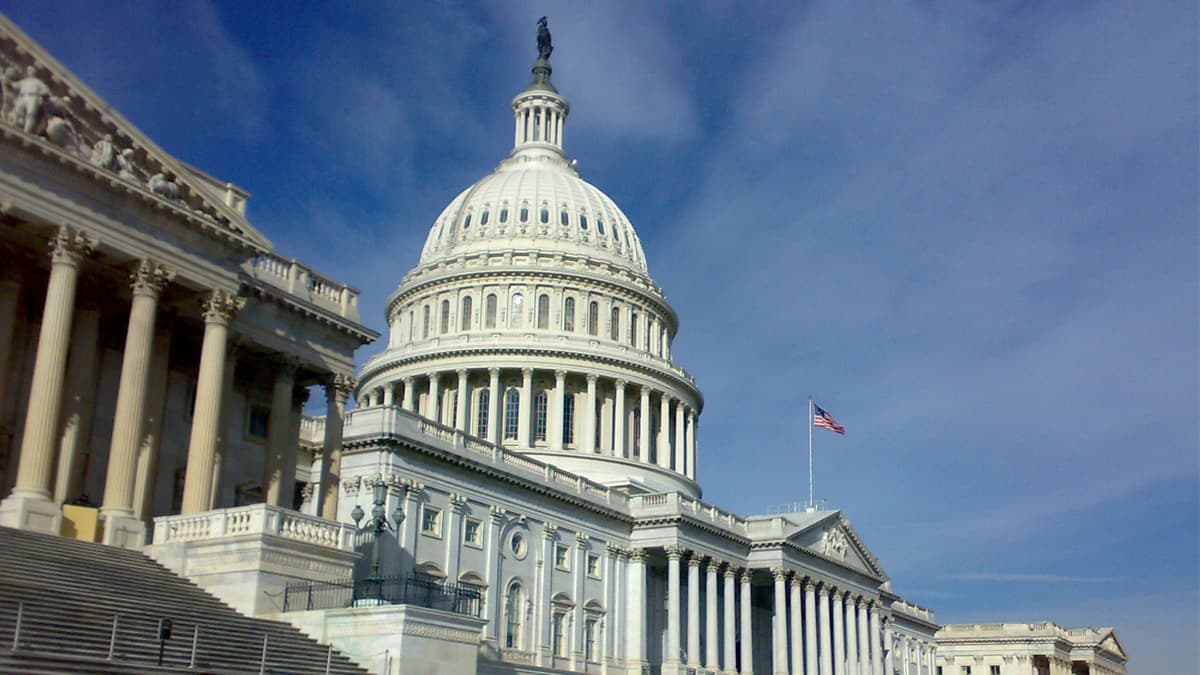
- The Senate advanced a resolution to limit Trump’s military actions in Venezuela, with five Republicans siding with Democrats.
- The resolution targets Operation Absolute Resolve, which led to the capture of Nicolás Maduro.
- The vote underscores growing bipartisan concern about unchecked presidential war powers.
UNITED STATES: A bipartisan group of senators on 8 January, 2026, voted to advance a resolution that would restrict President Donald Trump’s authority to conduct further military operations in Venezuela without congressional approval.
The measure, spearheaded by Democratic Senator Tim Kaine, passed with a 52-47 majority. It marked a significant challenge to Trump's foreign policy approach from within his own party.
Five Republican senators — Rand Paul, Lisa Murkowski, Susan Collins, Todd Young, and Josh Hawley — broke ranks to support the resolution. All Senate Democrats voted in favour.
Kaine’s proposal was introduced in response to "Operation Absolute Resolve," the military mission that resulted in the capture of former Venezuelan President Nicolás Maduro.
The operation, conducted in late December 2025, involved US air and naval strikes and sparked renewed debate over the limits of presidential war-making powers.
According to Kaine, the resolution would prohibit the use of US armed forces in or against Venezuela unless explicitly authorised by Congress.
“This vote is not just about Venezuela,” Kaine said. “It's about restoring Congress' constitutional role in deciding when and where we go to war.”
Although the resolution succeeded in its initial vote, it still faces a higher threshold before final passage in the Senate. A second vote requiring 60 votes to overcome a filibuster is yet to be scheduled.
Even if the measure clears the Senate, it must then pass the House of Representatives. Furthermore, it would require the president's signature — an unlikely outcome given Trump’s opposition.
The White House has defended the military operation, arguing that it was a lawful law enforcement effort. Administration officials described the mission as necessary to detain Maduro and his wife, both of whom face federal charges in the United States, including narcoterrorism and conspiracy to import cocaine.
Supporters of the resolution, including co-sponsor Republican Senator Rand Paul, said the operation’s legality was questionable and that Congress had been sidelined in the decision-making process.
“I believe strongly that war powers rest with Congress,” Paul said. “The symbolism of this vote matters — it is about who decides when the United States goes to war.”
Paul also signalled support for future war powers resolutions, citing concerns over potential military actions in other regions, including Greenland, Nigeria, Cuba, and Colombia.
The Senate's debate followed a classified briefing by senior administration officials. Senators reportedly left the briefing unconvinced that future military escalation in Venezuela was off the table.
“We were told there are no boots on the ground right now,” said Hawley. “But when asked whether that could change, the answer was essentially that all options remain open.”
Republican leadership expressed frustration with the resolution and warned it could undermine US national security.
Senate Majority Whip John Barrasso criticised the measure as “dangerous,” arguing it would limit the president’s authority to enforce international law.
“This is not about reasserting congressional authority,” Barrasso said. “It’s about weakening the president’s ability to act against dictators and drug traffickers.”
Despite the administration’s efforts to quash the resolution, the narrow vote revealed growing discomfort among lawmakers with the president’s unilateral military actions.
Kaine and his allies have already indicated plans to introduce additional resolutions addressing potential future conflicts. These include US involvement in Cuba, Mexico, Colombia, Greenland, and Nigeria.
The resurgence of Greenland in political debate follows recent statements by Trump administration officials, who suggested that military action to acquire the Arctic territory was under consideration — a suggestion that reignited controversy on Capitol Hill.
Republican Senator John Kennedy dismissed the idea of military action in Greenland as “weapons-grade stupid,” reflecting growing divisions within the party over the president's expansive interpretation of his war powers.
Thursday’s vote was a rare instance of congressional pushback against the executive branch's foreign policy, and its outcome could set the stage for further confrontations as Trump continues to pursue aggressive international objectives.
While the resolution's path to becoming law remains uncertain, its advancement signals renewed efforts to rebalance the separation of powers in matters of war and peace.