Ireland, Spain, the Netherlands and Slovenia to boycott Eurovision 2026 over Israel’s inclusion
Four European countries—Spain, Ireland, the Netherlands and Slovenia—have confirmed they will boycott the Eurovision Song Contest 2026 in protest against Israel’s inclusion, citing the humanitarian crisis in Gaza and concerns over the contest’s governance.
- Four countries—Spain, Ireland, the Netherlands and Slovenia—will not participate in Eurovision 2026 due to Israel's inclusion.
- National broadcasters cite the humanitarian crisis in Gaza and dissatisfaction with Eurovision’s neutrality.
- The EBU has introduced new safeguards but avoided a vote specifically on Israel’s participation.
Four European countries—Ireland, Spain, the Netherlands and Slovenia—have confirmed they will boycott the Eurovision Song Contest 2026, citing opposition to the inclusion of Israel amid ongoing conflict in Gaza and growing concerns about the contest’s governance and neutrality.
The coordinated withdrawal represents a significant rupture within the European Broadcasting Union (EBU), the organising body behind Eurovision, and marks the most serious political fallout for the competition since Russia's ban in 2022.
RTÉ: Ireland’s continued participation is ‘unconscionable’
Irish broadcaster RTÉ said it would neither take part in nor air the 2026 competition. In a formal statement, RTÉ described participation as “unconscionable given the appalling loss of lives in Gaza and the humanitarian crisis”.
The broadcaster also condemned the targeted killing of journalists and the denial of access to international media, voicing concern about Israel's conduct in the conflict.
RTVE: Spain withdraws over political interference
Spain’s national broadcaster RTVE was the first to announce that it would withdraw from the contest if Israel were permitted to compete. This position, agreed by RTVE’s board in September 2025, was reaffirmed after the EBU’s decision to allow Israel to remain.
RTVE criticised the EBU for rejecting a request for a secret vote on Israel’s participation, saying the decision deepened its distrust in the festival’s governance and confirmed “political pressure surrounding the event”.
As part of the boycott, Spain will not broadcast the Eurovision final or its semi-finals.
AVROTROS: Dutch values incompatible with participation
The Netherlands’ broadcaster AVROTROS stated that Israel’s inclusion was incompatible with its public values, following the EBU’s decision not to hold a vote on the matter.
The statement expressed concern that the contest no longer reflected fundamental principles such as fairness and neutrality, saying that participation under such conditions would be “irresponsible”.
RTVSLO joins boycott
Slovenian broadcaster RTVSLO also confirmed its withdrawal, citing similar reasons. While less vocal than its counterparts earlier in the debate, RTVSLO formally announced its non-participation following the EBU’s general assembly decision in Geneva.
Its statement aligned with others, stating that continued participation would contradict the broadcaster’s humanitarian values and public expectations.
Israel and the EBU defend decision
Israel’s President Isaac Herzog welcomed the EBU’s decision, calling it a show of “solidarity and cultural inclusion”. In a social media post, Herzog wrote:
“I hope the competition remains one that champions culture, music, friendship between nations, and cross-border cultural understanding.”
Israel’s public broadcaster Kan, which operates independently from the government, asserted it was in full compliance with EBU neutrality rules and has continued with preparations for Vienna 2026.
EBU: No vote on Israel, but reforms passed
Rather than holding a direct vote on Israel’s participation, the EBU held a general vote on new competition safeguards. At its December 2025 assembly, a large majority supported reforms intended to protect the contest’s integrity.
The changes include:
-
Reducing the maximum number of public votes per person from 20 to 10
-
Reintroducing jury voting for semi-finals, creating a 50/50 split with the public vote
-
Discouraging disproportionate promotional campaigns that could distort voting outcomes
According to the EBU, these reforms are designed to “reinforce trust, transparency, and neutrality”.
Two years of controversy
Israel’s role in Eurovision has been the subject of ongoing criticism. In 2024, its entry changed lyrics following concerns they referenced the 7 October 2023 Hamas attacks. In 2025, its contestant Yuval Raphael placed second, winning the public vote despite a low jury score. This discrepancy led to calls to examine vote manipulation and fairness.
Earlier accusations suggested Israel may have boosted votes through aggressive advertising campaigns. Israel denied deliberate interference and instead claimed it was facing a global smear campaign.
Mixed reactions across Europe
While four countries have withdrawn, others expressed disappointment but opted to stay. Germany’s ARD welcomed the new rules and confirmed its participation, while expressing “regret” over the boycotts.
Norway’s NRK reaffirmed that it does not engage in boycotts. Denmark’s DR said it supports Eurovision as a platform for cultural unity.
Belgium’s broadcasters are split, with VRT, which aired the 2025 contest, stating that its future participation depends on EBU’s handling of peace and human rights. RTBF, responsible for 2026 coverage, is expected to announce its decision soon.
Iceland’s RÚV will vote next week on whether to join the boycott. Sweden’s SVT is still deliberating, with programme director Michael Österlund saying participation must remain “apolitical” and enjoy broad public support.
What is Eurovision?
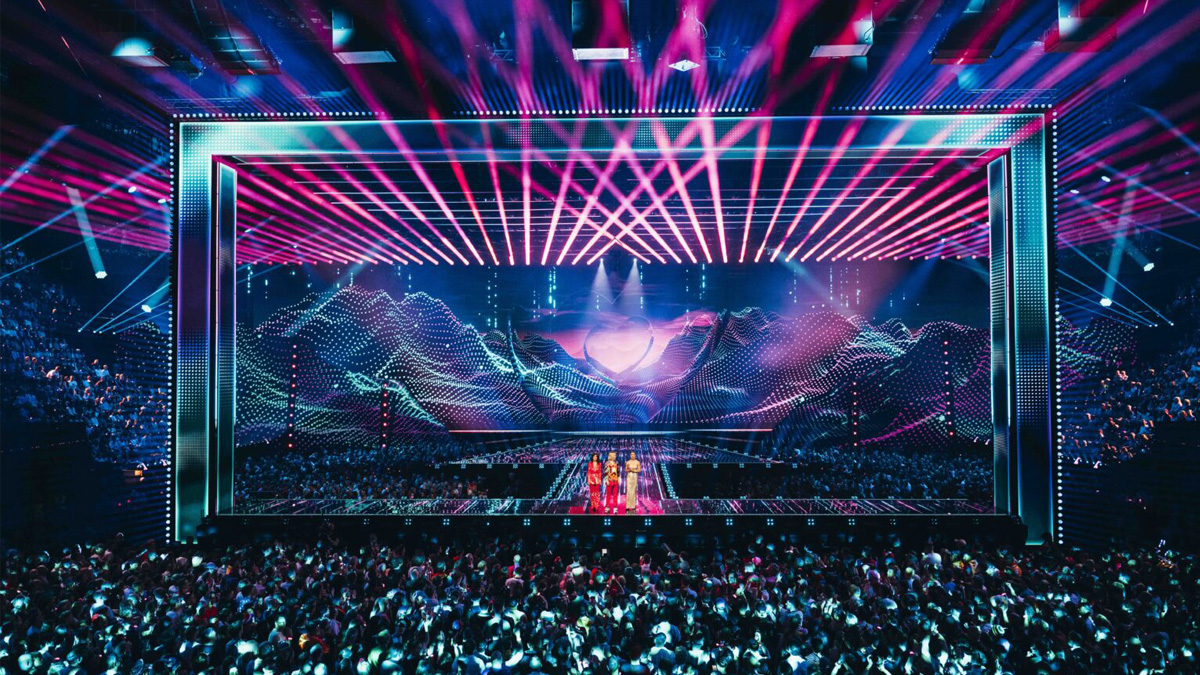
The Eurovision Song Contest is an annual international music competition organised by the European Broadcasting Union (EBU), featuring performances from countries primarily in Europe, along with some invited nations.
Each participating country submits one original song, performed live, and votes are cast by national juries and the public across all countries.
First held in 1956, Eurovision is known for its elaborate performances, eclectic musical styles, and a strong emphasis on inclusivity and cultural exchange. Over the years, it has launched the careers of artists such as ABBA (Sweden, 1974) and Celine Dion (Switzerland, 1988).
While the contest is meant to be non-political, geopolitical tensions and bloc voting have occasionally overshadowed the event, sparking debates about fairness and neutrality.
The 2026 edition is scheduled to be held in Vienna, Austria, following Austria’s win in the previous contest.