China's Hong Kong security office warns foreign media over 'trouble-making' coverage of fatal fire
Beijing's security agency in Hong Kong has warned international journalists not to cross “legal red lines”, accusing foreign media of spreading falsehoods in their coverage of the Wang Fuk Court fire that killed 159 people.
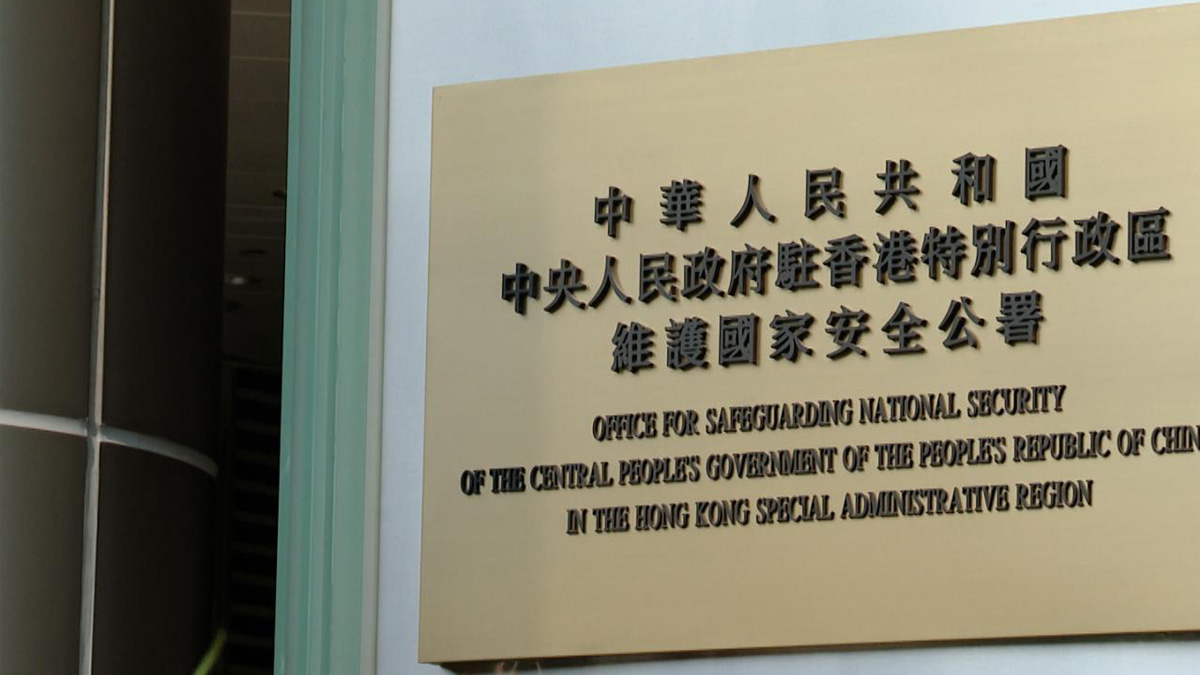
- China’s security office in Hong Kong summoned foreign media over coverage of the Wang Fuk Court fire.
- Journalists were warned not to "interfere" or "spread false information", with rhetoric described as threatening.
- The incident reflects continued erosion of press freedom since the 2020 National Security Law.
China’s top security office in Hong Kong has issued an explicit warning to international media, accusing them of “trouble-making” in their reporting of the fatal Wang Fuk Court fire. The summons of senior journalists marks a sharp escalation in Beijing’s approach to foreign press in the city.
The Office for Safeguarding National Security (OSNS), which was established in 2020 under the National Security Law, summoned representatives from multiple international news organisations, including The New York Times and Agence France-Presse (AFP).
According to AFP, officials at the meeting levelled accusations of distorting government disaster relief efforts but did not cite specific articles or allow questions. A subsequent statement released by the OSNS online reiterated its accusations that some foreign media had “disregarded facts, spread false information, distorted and smeared the government’s disaster relief and aftermath work.”
The warning follows widespread international reporting on the 26 November fire at Wang Fuk Court in Tai Po, which claimed at least 159 lives, making it Hong Kong’s deadliest disaster in 75 years and the world’s worst residential fire since 1980.
The OSNS’s online statement urged foreign reporters not to cross “the legal red line”, adding: “The office will not tolerate the actions of all anti-China and trouble-making elements in Hong Kong... Don’t say we didn’t warn you.”
The phrase “Don’t say we didn’t warn you” (勿謂言之不預) is historically significant in Chinese political rhetoric, previously used by state media ahead of military action, including before the 1962 Sino-Indian War and in warnings to the United States over Taiwan.
The backdrop to the fire includes allegations that flammable materials used in renovations contributed to the rapid spread of flames. Home to approximately 5,000 residents, Wang Fuk Court is a high-density residential complex in northern Hong Kong, where public outrage has mounted over poor oversight and accountability.
Amid mourning, the government has faced mounting scrutiny, and the OSNS warned earlier this week that “external forces” and “anti-China media organisations” were attempting to exploit the disaster. The security office further accused some outlets of “attacking and interfering with” the upcoming Legislative Council election, scheduled for 7 December.
Under electoral reforms passed in 2021, only vetted “patriots” aligned with Beijing can hold office. Critics argue this has all but eliminated genuine opposition voices in Hong Kong’s legislature.
The summoning of foreign journalists ahead of this election has been widely interpreted as a move to insulate the process from international critique. The timing, language, and secrecy of the meeting have alarmed press freedom advocates, many of whom point to a deepening climate of fear for journalists operating in the region.
Hong Kong’s global reputation as a media hub has sharply declined since the introduction of the National Security Law. Once considered among Asia’s freest press environments, the territory now ranks 140 out of 180 in the World Press Freedom Index, compiled by Reporters Without Borders.
The fate of prominent figures such as Jimmy Lai, founder of the now-defunct Apple Daily, further underscores the climate. Lai, a staunch critic of Beijing, currently faces life imprisonment under the same national security framework.
While the OSNS's message did not explicitly threaten deportation or visa revocation, analysts say the implications are clear: foreign media must align with official narratives or risk operational restrictions.
As Hong Kong grapples with public grief and political control tightens, the line between press scrutiny and state security appears increasingly blurred.