Democratic Party of Hong Kong formally disbands after 30 years of political activism
The Democratic Party, once Hong Kong’s leading pro-democracy political group, formally voted to dissolve on 14 December, marking the end of its 30-year presence in the territory’s political landscape.

- Hong Kong’s oldest pro-democracy party voted to dissolve on 14 December, 2025.
- The Democratic Party cited changing political conditions and past struggles.
- The disbandment marks a significant shift in Hong Kong's opposition landscape.
The Democratic Party of Hong Kong, the city’s oldest pro-democracy political organisation, officially dissolved on 14 December, 2025, following a special general meeting of its members. Party chairman Lo Kin-hei confirmed the decision at a news conference held later that day.
“We have officially announced the disbandment and dismissal,” Lo stated. “This process has been completed at the time of the special committee meeting just now.”
The move ends the Democratic Party’s 30-year role in Hong Kong’s political life. Founded in 1994 through the merger of leading liberal groups during the final years of British colonial rule, the party once represented the largest and most prominent force in the territory’s pro-democracy camp.
Lo, addressing reporters, acknowledged the significance of the moment. “As a group, I believe we can conclude that the Democratic Party’s operation will end today,” he said. He also expressed appreciation to citizens for their support over the past three decades: “We are deeply grateful to all the citizens who have walked with the Democratic Party for the past 30 years.”
Former party chairwoman Emily Lau, a veteran figure in Hong Kong’s democratic movement, expressed her disbelief following the decision. “I don’t understand why the Democratic Party would end up like this,” she told reporters after the meeting.
The party’s official statement, published on its Facebook page, described the vote to dissolve as a painful but necessary step. It cited a history of commitment to universal suffrage, transparency, and accountability, and reflected on the challenges faced by the organisation in adapting to Hong Kong’s shifting political landscape.
“Over these thirty years, we have taken part in and borne witness to the development and transformation of Hong Kong society,” the statement read. “Yet as the times have shifted, we now, with deep regret, must bring this chapter to a close.”
The Democratic Party played a leading role in advocating for democratic reforms under the “one country, two systems” framework promised in the Basic Law. Its members held significant positions in the now-weakened Legislative Council and various district councils.
The party’s dissolution comes amid a broader decline in political opposition within the territory, particularly following Beijing’s imposition of a sweeping national security law in mid-2020. That law, implemented in response to months of mass pro-democracy protests in 2019, has led to the arrests and imprisonment of numerous opposition figures and the departure of others from public life or into exile.
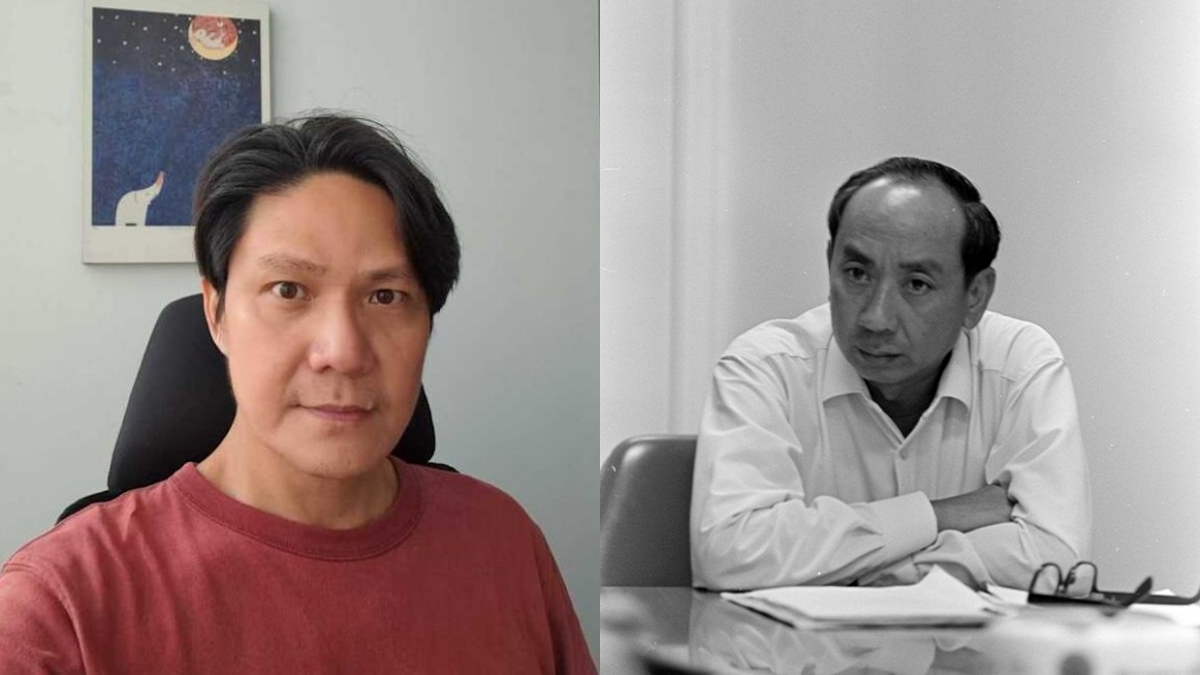
This development stands in stark contrast to the early vision for Hong Kong outlined by Chinese leader Deng Xiaoping. Speaking on 16 April, 1987, Deng stressed that the territory’s systems and way of life were to remain “unchanged for 50 years” after the 1997 handover, and that “there would be no need for change after 50 years.”
Deng also stated that “stability means no change,” and that maintaining policy continuity in Hong Kong, Macao, and Taiwan would be crucial to China’s broader development goals. His vision became the foundation for the Basic Law, which guarantees the continuation of Hong Kong’s capitalist system and legal autonomy.
Decades later, that principle remains officially endorsed. According to the Hong Kong Department of Justice, leaders including Xia Baolong, Director of the Hong Kong and Macao Affairs Office, have reiterated that the “one country, two systems” model remains firmly in place. Xia reportedly cited Deng’s assertion that “50 years was just a figure of speech,” and stated that if the system continues to function effectively, there is no reason for it to change.
Nonetheless, many observers note that the practical space for political diversity has narrowed. Under recent electoral reforms and national security provisions, opposition voices face growing legal and institutional barriers.
Despite these headwinds, the Democratic Party continued to engage with the public and local policy issues until the decision to wind down. Its final statement acknowledged that not all of its decisions had met public approval but emphasised its continued dedication to the people of Hong Kong.
“After weathering thirty years of storms, the Democratic Party has come to the moment when a full stop must be written,” it read. “Yet we believe that the convictions and perseverance of these three decades will leave their mark on Hong Kong’s history.”
In its farewell, the Democratic Party left a message of hope, urging citizens to hold on to integrity and compassion. “It is you, every single Hongkonger, who makes Hong Kong shine,” the statement concluded.
The party now enters the process of liquidation, formally concluding an era that shaped much of Hong Kong’s democratic struggle in the post-colonial period.