Air India uncovers long-missing Boeing 737, triggering scrutiny over legacy record-keeping
A 43-year-old Boeing 737 freighter, abandoned for over a decade, was recently rediscovered at Kolkata Airport, exposing significant record-keeping lapses in Air India's legacy asset management systems before its privatisation under Tata Group.

- Air India discovered a long-abandoned Boeing 737-200 (VT-EHH) at Kolkata Airport, missing from its records for 13 years.
- The incident reveals legacy asset management failures under state ownership, raising concerns over past financial oversight.
- Singapore Airlines, holding a 25.1% stake in Air India, faces pressure as the carrier's losses drag down group earnings.
A missing Air India aircraft was recently found abandoned at Kolkata Airport (CCU), highlighting serious lapses in the airline’s historical asset tracking and internal governance.
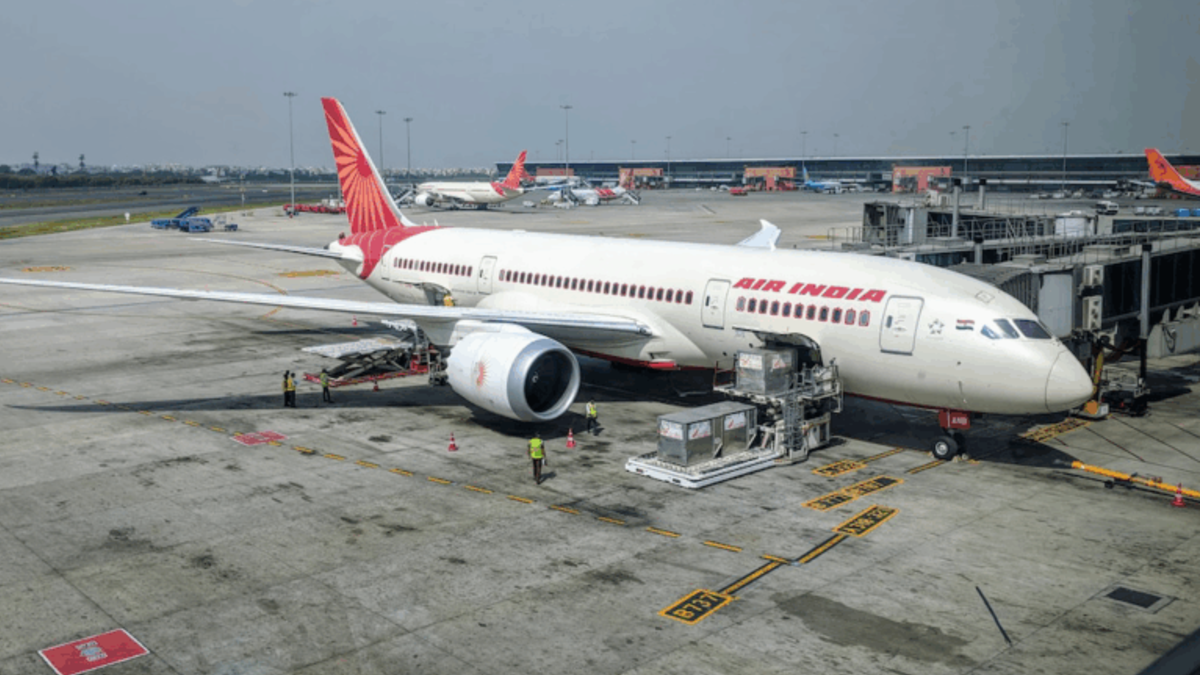
The Boeing 737-2A8F, registration VT-EHH, had been grounded at the airport for over 13 years, with no trace in the airline’s official documentation until its rediscovery in 2025.
The 43-year-old jet, originally delivered to Indian Airlines in 1982 and later operated by Alliance Air, was converted into a freighter in 2007. It carried India Post titles before being taken out of service in 2012. Rather than being formally retired or disposed of, it remained parked in a remote corner of the airfield and was effectively forgotten.
Kolkata Airport officials, noticing the derelict jet, contacted Air India to request its removal. This action prompted an internal audit, which revealed that VT-EHH had disappeared from multiple fixed-asset registers years prior to the airline’s 2022 privatisation.
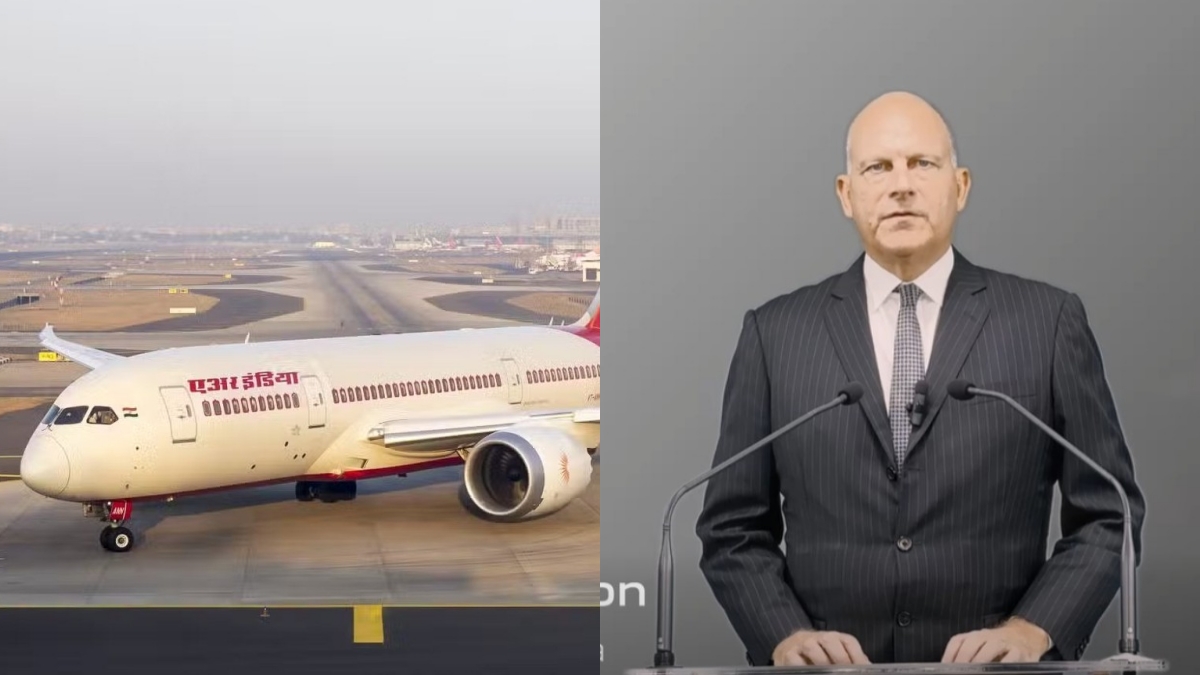
The airline’s Chief Executive, Campbell Wilson, disclosed the oversight in an internal note to staff, admitting that Air India had no record of the aircraft’s existence until Kolkata Airport authorities alerted them.
“Disposal of an old aircraft is not unusual,” Wilson wrote. “This one is — because we didn’t even know we owned it.”
Officials confirmed that the jet had effectively disappeared from both the airline’s ledgers and institutional memory during the privatisation process three years ago.
According to Wilson, VT-EHH was not included in pre-privatisation records or financial statements, thereby escaping depreciation schedules, insurance databases, and maintenance forecasts.
Consequently, it was excluded from the valuation process when the Tata Group acquired Air India from the Indian government.
Such omissions reflect the disorganised asset management practices that characterised the former state-run carrier. Under state ownership, there were no structured registers to track operational exposure, maintenance cycles, or long-term liabilities for aircraft like VT-EHH.
Industry observers noted that the aircraft had once been stored alongside another Boeing 737, VT-EGG, which was eventually moved to Rajasthan and converted into a themed restaurant. VT-EHH, however, remained at CCU, overlooked through successive administrative cycles.
The aircraft has since been sold and removed, though Air India has not disclosed details regarding the buyer or the price. The event serves as a case study in the operational dysfunctions that the Tata Group has been attempting to reform since its takeover.
Air India’s modernisation programme, initiated in 2022, has included overhauls of its IT systems, restructuring of vendor contracts, and reevaluation of lease and HR practices. These measures are aimed at aligning the airline with global aviation governance standards.
Financial pressure from Singapore Airlines' stake
The rediscovery of VT-EHH coincides with mounting financial pressure on Air India's minority shareholder, Singapore Airlines (SIA), which now holds a 25.1 per cent stake following the merger of its joint venture Vistara into Air India.
According to SIA’s financial disclosures, its earnings for the second quarter of FY2026 fell by 82.1 per cent year-on-year, largely due to losses incurred through Air India. These losses also dragged down first-quarter results, contributing to a 58.8 per cent drop in net profit.
SIA began accounting for Air India’s performance from December 2024, post-merger. For the first half of FY2026, SIA’s share of associates’ losses, excluding SIA Engineering contributions, stood at S$428 million. In the previous year’s comparable period, the group recorded a S$3.2 million profit.
To secure its stake in Air India, SIA paid S$322.1 million on top of its existing 49 per cent holding in Vistara. The carrier has also contributed S$666.8 million in post-merger capital injections—S$499.9 million in November 2024 and S$166.9 million in March 2025. Including equity payments, its total financial commitment to date stands at S$988.9 million.
Bloomberg reported in October that Air India is seeking a fresh 100 billion rupees (S$1.45 billion) capital injection from shareholders. If SIA fully participates, its total cash investment in Air India would rise to approximately S$1.37 billion — bringing it close to the S$1.4 billion mark.
SIA has not disclosed the specific amount of its share of Air India’s recent quarterly losses but acknowledged the impact of reduced flight capacity, foreign currency volatility, and airspace disruptions over Pakistan and the Middle East.
The financial burdens and legacy issues, such as the case of VT-EHH, underline the scale of Air India’s transformation challenge. Both Tata Sons and SIA now face the task of cleaning up decades of systemic inefficiencies, while restoring the airline’s reputation and profitability.