Canadian Prime Minister Mark Carney calls for unity and global resolve in Quebec speech
Canadian Prime Minister Mark Carney has called for national unity and urgent domestic reforms following his global warning about a fractured international order. Addressing Canadians from Quebec City, he vowed to act swiftly on economic challenges and uphold Canadian values amid global uncertainty.
- Mark Carney calls for national unity and swift economic reform amid global instability.
- He challenges US dominance, affirming Canada’s independence and values in a "divided" world.
- Carney sets ambitious domestic goals, including economic partnerships and defence investment.
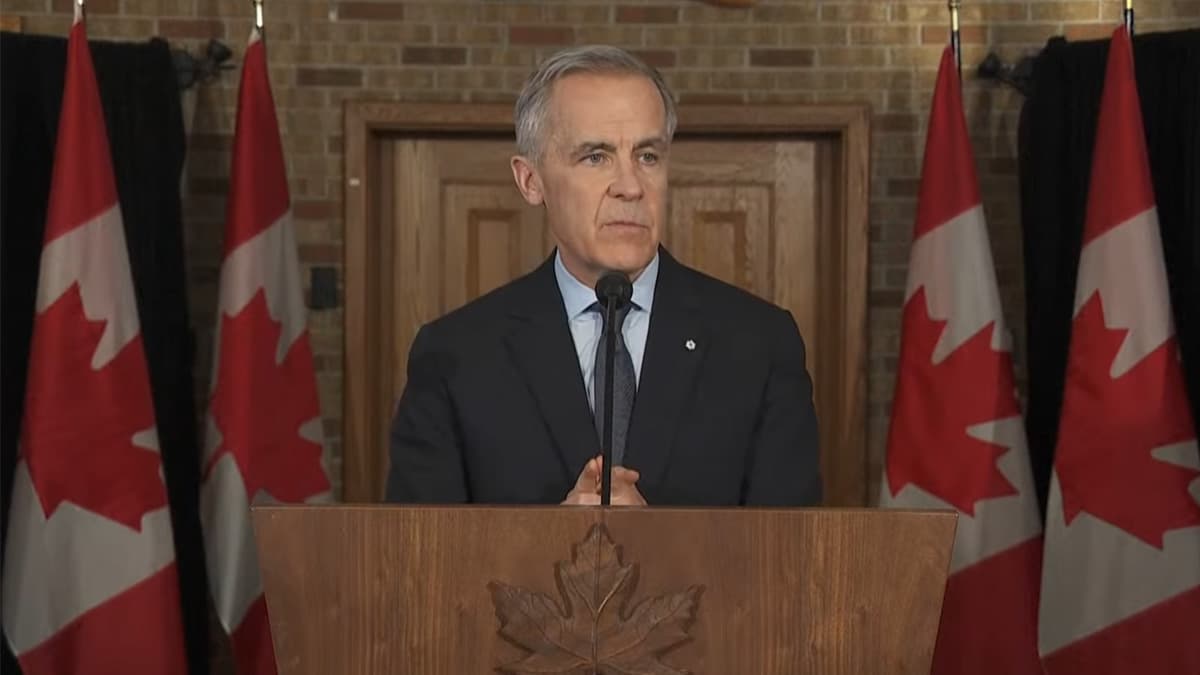
Prime Minister Mark Carney delivered a forceful national address on 22 January 2026, opening a two-day cabinet retreat at Quebec City’s historic La Citadelle with calls for unity, urgent economic reform, and global responsibility.
Speaking at the 19th-century military fortress overlooking the St Lawrence River, Carney framed his message around Canada’s role in a divided world and its independence from larger powers.
His remarks came just two days after a high-profile address at the World Economic Forum in Davos, where he warned of a "rupture" in the postwar international order and urged middle powers to resist economic coercion by superpowers.
“Canada doesn’t live because of the United States,” Carney said on Thursday. “Canada thrives because we are Canadians”. The comment was a direct rebuke of US President Donald Trump’s statement in Davos that “Canada lives because of the United States.”
While Carney did not name Trump during either speech, his criticism of American economic hegemony and coercive diplomacy was clear. Trump, in turn, responded from Davos by saying Carney should be “grateful.”
Carney’s Thursday address was attended by his full cabinet and a panel of invited experts. It was delivered on a platform overlooking the site where British and French empires once clashed — a setting Carney used to illustrate Canada’s foundation through cooperation, diversity and pluralism.
“In a time of rising populism and ethnic nationalism, Canada can show how diversity is a strength,” he said. “In a time of democratic decline, we can show how rights can be protected and equal freedoms endure”.
The cabinet retreat is focused on affordability, job creation, and Canada's global economic position. Speaking to reporters, Finance Minister François-Philippe Champagne said these themes reflect the “key objective and mission” of Carney’s government. He emphasised Canada’s need to be resilient and to strengthen new international partnerships beyond the United States.
Carney outlined an ambitious domestic agenda, reiterating a commitment to lowering costs for Canadians, including repealing the consumer carbon tax, cutting income taxes for 22 million citizens, and expanding affordable housing under the “Build Canada Homes” programme.
The prime minister also cited permanent implementation of the National School Food Programme and automatic federal benefits for 5.5 million low-income Canadians. “Now we need to execute, fairly and fast,” he said, acknowledging pressure for swift action on economic and social challenges.
In line with his Davos message, Carney called for economic diversification through new trade partnerships. He referenced recent agreements secured during an eight-day tour through Qatar and China, aimed at lowering tariffs and attracting investment. Ministers are expected to further explore trade diversification strategies during the retreat.
Mexico’s President Claudia Sheinbaum praised Carney’s Davos remarks as “in tune with current times,” while US Commerce Secretary Howard Lutnick criticised the tone as “political marketing,” accusing Canada of arrogance and warning against jeopardising its favourable trade status under USMCA.
The retreat also features speakers including Quebec City Mayor Bruno Marchand, Food Banks Canada CEO Kirstin Beardsley, and economists from Royal Bank of Canada, Scotiabank, and BlackRock. The discussions are expected to touch on infrastructure investment, economic resilience, and Canada’s positioning ahead of USMCA renegotiations later this year.
Political analysts have highlighted the risk of deteriorating trade ties with the US, given Trump’s unpredictable stance and recent comments questioning USMCA’s relevance. Carney’s firm tone may energise domestic support, but it also heightens diplomatic friction.
Opposition figures have pressed for results beyond rhetoric. “Mark Carney cannot simply return to Parliament and expect… that re-announcing projects or creating new bureaucracies will suffice,” said Conservative MP Michelle Rempel Garner in an online post.
Carney closed his address by invoking Canada’s founding values, calling on ministers and citizens alike to build inclusively, in partnership with Indigenous peoples and across all regions of the country.
“When we’re united, unity grows. When we’re Canadian — inclusive, fair, ambitious — Canada grows,” he said.
With Parliament returning the following Monday, Carney faces mounting pressure to translate his global warnings and domestic promises into legislative and economic results.