Iran delays response to US peace proposals as Strait of Hormuz tensions persist
Iran has yet to respond to US peace proposals as sporadic clashes continue in the Strait of Hormuz, with the UAE struck by missiles and drones and Washington escalating sanctions against Chinese and Hong Kong entities.
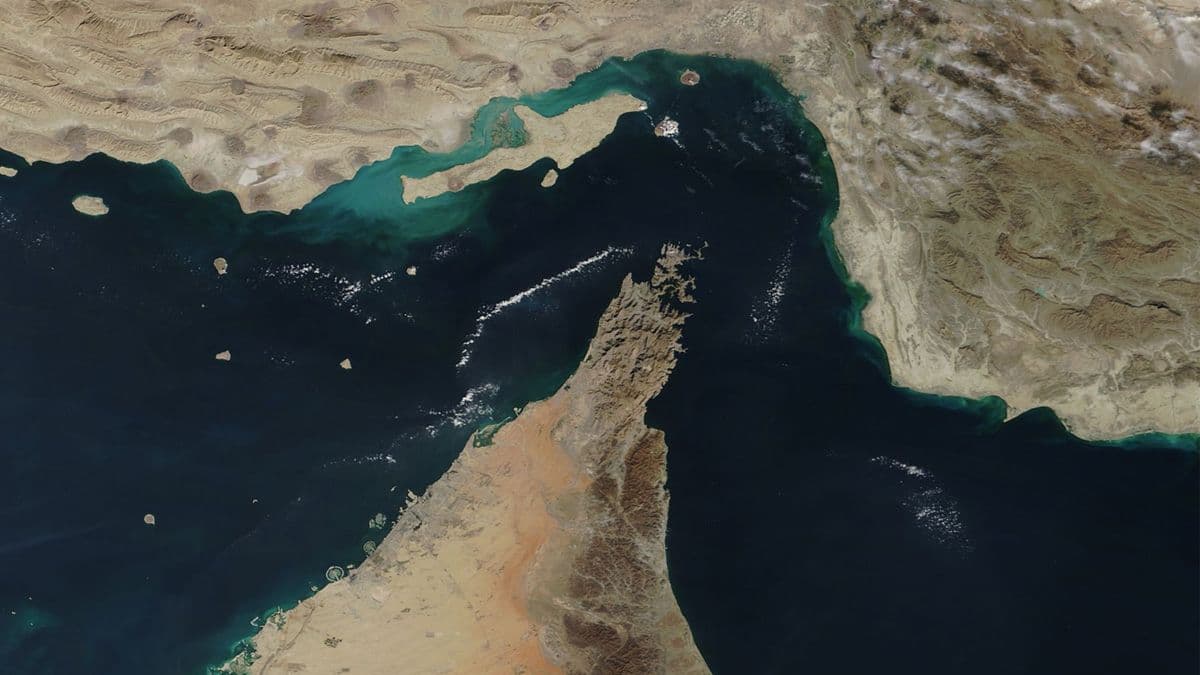
A state of relative calm prevailed around the Strait of Hormuz on Saturday, following days of sporadic exchanges of fire, as the United States awaited Iran's response to its latest proposals to formally end more than two months of conflict and begin peace negotiations.
US Secretary of State Marco Rubio said on Friday that Washington expected a response from Tehran within hours. By Saturday, no movement had emerged from the Iranian side on a proposal that would formally end the war before talks on more contentious issues, including Iran's nuclear programme.
Pressure to resolve the conflict has intensified ahead of US President Donald Trump's long-awaited visit to China next week, where he is scheduled to meet President Xi Jinping. The ongoing crisis has thrown global energy markets into turmoil and posed a growing threat to the world economy.
Clashes in the strait
Friday brought fresh clashes between Iranian forces and US naval vessels in the strait, according to Iran's semi-official Fars news agency. The Tasnim news agency subsequently cited an Iranian military source saying the situation had calmed, while warning that further clashes remained possible.
The US military said it struck two Iran-linked vessels that had attempted to enter an Iranian port, with a fighter jet hitting their smokestacks and forcing them to turn back.
Iran has largely blocked non-Iranian shipping through the Strait of Hormuz since the war began with US-Israeli airstrikes across Iran on 28 February 2026. Before the conflict, one-fifth of the world's oil supply transited the narrow waterway. More than 1,550 vessels are reported to remain trapped in the Gulf, and no merchant ships transited the strait on either Wednesday or Thursday, according to S&P Global Market Intelligence.
The ceasefire, announced on 7 April, has been subject to competing interpretations. Trump said on Thursday that it was still holding despite the flare-ups. Iran accused the US of breaching it.
"Every time a diplomatic solution is on the table, the US opts for a reckless military adventure," Iranian Foreign Minister Abbas Araqchi said on Friday.
UAE struck as regional tensions broaden
The clashes extended beyond the strait itself. The UAE said its air defences engaged with two ballistic missiles and three drones launched from Iran on Friday. Three people sustained moderate injuries.
Iran has repeatedly targeted the UAE and other Gulf states that host US military bases. The UAE described the Friday attacks as a major escalation, occurring in response to Trump's announcement of what he called "Project Freedom," a unilateral US proposal to escort merchant shipping through the strait using more than 100 fighter jets and several naval destroyers.
The initiative collapsed after approximately 50 hours, following objections from Saudi Arabia, which had not been consulted prior to the launch. Riyadh refused to grant US access to its airspace and bases, concerned the plan could restart full-scale fighting. Major shipping companies were also not consulted, and industry observers expressed scepticism about its effectiveness.
Richard Meade, editor of Lloyd's List, a specialist shipping industry publication, said no major industry organisations he was aware of had been approached by the US for any briefing. "Security teams in the region remain unclear what's happening," Meade said, adding that no ship owner he had spoken to in the preceding 24 hours had any confidence the plan would change the situation.
Trump paused Project Freedom after 48 hours.
Iran's military resilience and endurance
Analysts have cautioned against underestimating Iran's capacity to sustain the standoff. Assessments from US intelligence, leaked to the Washington Post, indicated that Iran retains approximately 70 per cent of its missiles, 75 per cent of its launchers, and potentially half of its Shahed attack drones following the 38-day war.
The same intelligence assessment suggested Iran could endure economic pressure from the US blockade for approximately three to four months before facing more severe hardship, according to a US official familiar with the matter. A senior intelligence official described as false the characterisation of the CIA analysis as leaked.
Burcu Ozcelik, a Middle East expert with the Royal United Services Institute, said Iran had proven a more formidable adversary than many had anticipated. "Trump wanted a quick win, and was not prepared to commit the substantial military force that would have been required to dislodge the regime properly," she said.
The US has imposed a blockade on Iranian vessels to the east of the strait, where two carrier strike groups are currently operating. US Central Command has turned back 52 vessels since 13 April. Reports from within Iran point to rising inflation, unemployment, and unpaid wages.
Iran's position on nuclear talks
Iran has continued to push back against US demands for a total end to its nuclear weapons programme, which include calls for the dismantling of nuclear sites, a 20-year moratorium on enrichment, and the handover of near weapons-grade uranium.
Analysts note that Tehran appears to calculate that Trump is unwilling to restart a full bombing campaign, in part because US high-end missile stocks are estimated to have been drawn down by between one-quarter and one-half during the conflict, designated by Washington as Operation Epic Fury. The campaign is estimated to have cost approximately US$25 billion.
On Wednesday, Iran's top nuclear negotiator, Mohammad Bagher Ghalibaf, sought to shore up domestic resistance, arguing that the US was attempting to destroy national cohesion through a combination of naval blockade, economic pressure, and what he described as media manipulation.
US sanctions target Chinese and Hong Kong entities
While pursuing diplomatic engagement, the US also ratcheted up economic pressure. On Friday, the US Treasury announced sanctions against 10 individuals and companies, including several based in China and Hong Kong, for aiding Iran's military in securing weapons and raw materials used to build Shahed drones.
The Treasury said it was prepared to act against any foreign company supporting illicit Iranian commerce, and warned it could impose secondary sanctions on foreign financial institutions, including those connected to China's independent oil refineries.
The announcement came days before Trump is scheduled to travel to Beijing.
China is believed to be supplying drone components to Iran, in a pattern analysts have compared to its support for Russia. There are also reports that Beijing may seek to covertly send Tehran handheld air defence systems, though these would represent basic defensive rather than offensive capability.
Diplomatic isolation and strategic uncertainty
The US has found limited international support for its position. After meeting Italian Prime Minister Giorgia Meloni, Rubio questioned why Italy and other allies were not backing Washington's efforts to reopen the strait, warning of a dangerous precedent if Iran were allowed to control an international waterway.
Speaking in Stockholm, German Chancellor Friedrich Merz said European countries shared the objective of preventing Iran from obtaining nuclear weapons, and said they were working to bridge differences with Washington.
Analysts caution that the current situation remains highly unstable. Iran has no close allies of consequence in the present conflict, but retains meaningful military capacity and an apparent willingness to absorb economic pain. The US, for its part, faces growing domestic political pressure to resolve a crisis that has contributed to higher inflation and energy costs across large parts of the world economy.
"It is the insurgent's dilemma," Ozcelik said. "At first to survive is to win, but there's always a point when that is no longer enough. When Iran gets to that point, we don't know."