
UN-backed experts confirm famine in Gaza as starvation claims more lives amid ongoing conflict
A UN-backed panel has confirmed famine conditions in Gaza, with the humanitarian crisis escalating as the Palestinian death toll surpasses 60,000 and starvation spreads amid severe aid restrictions and continued conflict.
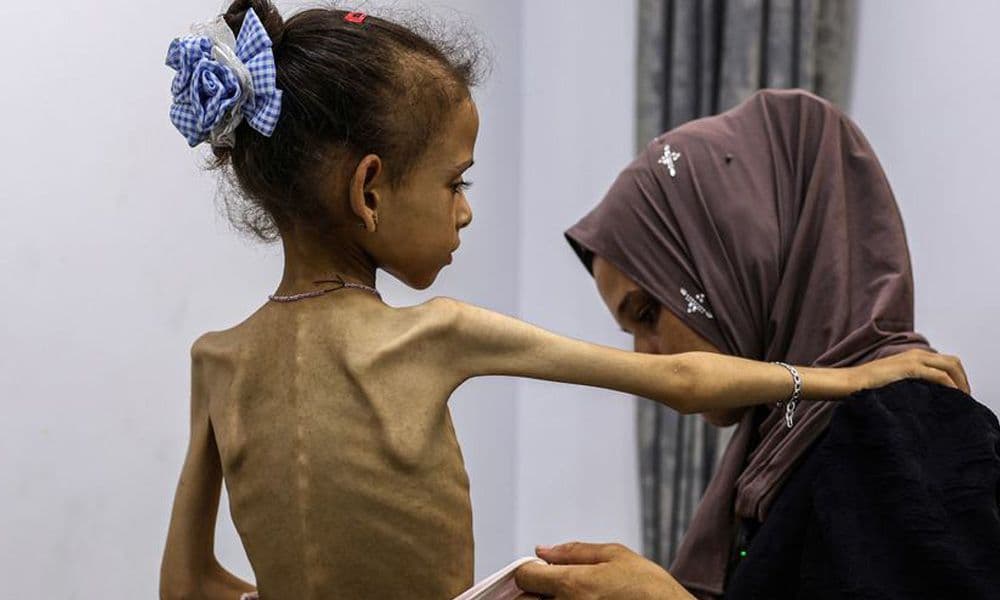
- UN-backed IPC declares famine unfolding in Gaza, citing starvation, lack of aid, and ongoing conflict.
- Official Palestinian death toll surpasses 60,000, with many still unaccounted for.
- Severe food shortages leave families surviving on minimal meals or nothing at all.
- Aid deliveries remain limited; some convoys intercepted by armed groups or disrupted by violence.
- IPC and humanitarian agencies call for urgent ceasefire to avert further catastrophe.
A UN-backed panel of hunger experts has formally confirmed that famine is unfolding in the Gaza Strip, as the humanitarian catastrophe intensifies amid ongoing Israeli military action and crippling restrictions on aid.
The Integrated Food Security Phase Classification (IPC), a global authority supported by the United Nations and international aid organisations, released a report on 29 July 2025 stating that “the worst-case scenario of famine is currently playing out in the Gaza Strip.”
The announcement comes as the official Palestinian death toll from the Israel-Gaza conflict surpassed 60,000 this week, with many more believed to be buried under rubble. The real figure remains uncertain due to inaccessible areas and the collapse of local infrastructure.
According to the IPC, the famine is the direct result of sustained conflict, severe limitations on humanitarian access, and the collapse of basic services, such as healthcare and sanitation. The panel urged an immediate ceasefire to prevent “further catastrophic human suffering.”
Gaza’s 2.2 million residents have faced deteriorating conditions since the war escalated in October 2023. Israeli restrictions on aid convoys and the destruction of key logistics routes have made access to essential food supplies nearly impossible for most of the population.
“Sometimes we only have one meal a day, which is lentils — and sometimes, nothing at all,” said Jamil Mughari, a 38-year-old resident of Maghazi in central Gaza. His family, displaced seven times due to Israeli military operations, has been unable to find consistent food sources.
Mughari described the failure of aid distribution, with the limited trucks that do arrive often intercepted and looted by armed groups. “Only the strong and those with weapons seize the trucks and sell the goods at extremely high prices,” he said.
The Gaza Humanitarian Foundation, which operates four food distribution sites across the territory, has managed to remain partially operational, but only for minutes each day. Crowds seeking assistance have been targeted by Israeli fire on multiple occasions, resulting in casualties.
Parents now face the agony of watching their children waste away without the means to help them. In Deir al-Balah, a father identified as Abu al-Abed described the condition of his youngest daughter, saying her “ribcage bones are clearly visible due to extreme weakness and malnutrition.”
With no access to formal aid and market prices soaring beyond affordability, families are relying on borrowed funds or rare charitable handouts to secure basic staples like lentils.
The IPC’s formal declaration of famine adds pressure to international actors to push for a resolution. However, past inaction has left many in Gaza sceptical about whether the global community will intervene effectively.
The recognition of famine by the IPC comes after months of warnings. Aid agencies such as the World Food Programme and Médecins Sans Frontières have consistently sounded the alarm about catastrophic food insecurity in the enclave.
Famine, under IPC classification, indicates that at least 20 percent of households face extreme food shortages, 30 percent of children suffer from acute malnutrition, and the daily death rate exceeds two per 10,000 people. Gaza now meets or exceeds all these thresholds.
Despite mounting evidence, aid delivery has been systematically obstructed. According to a recent statement by the UN Office for the Coordination of Humanitarian Affairs (OCHA), only a fraction of the required food aid has reached northern Gaza, where needs are greatest.
Israel has denied accusations of deliberately blocking aid but maintains that all deliveries must undergo rigorous security checks to prevent weapons smuggling. This process has significantly slowed the movement of humanitarian supplies into the strip.
While some Western nations have pushed for temporary humanitarian pauses, a sustained ceasefire has not been achieved. Meanwhile, families continue to report widespread starvation, with some describing survival by consuming animal feed or water alone.
The IPC’s call for an urgent ceasefire adds to the growing chorus of international demands for an end to hostilities. However, political deadlock in global forums, including the United Nations Security Council, continues to hinder coordinated action.
The humanitarian situation is now among the worst globally, with Gaza’s children bearing the brunt. Malnutrition-related illnesses are rising rapidly, and medical facilities, already decimated by airstrikes, are unable to cope with the influx of patients.
As famine tightens its grip, Gaza’s population faces not only the immediate threats of war but also a silent killer — hunger — that is indiscriminate, slow, and increasingly pervasive.