Zelensky says Ukraine ready for elections if allies guarantee security
President Volodymyr Zelensky has said Ukraine could hold elections within 60 to 90 days if allies, particularly the US and Europe, provide security guarantees. His remarks follow criticism from Donald Trump, who accused Ukraine of delaying democratic processes.
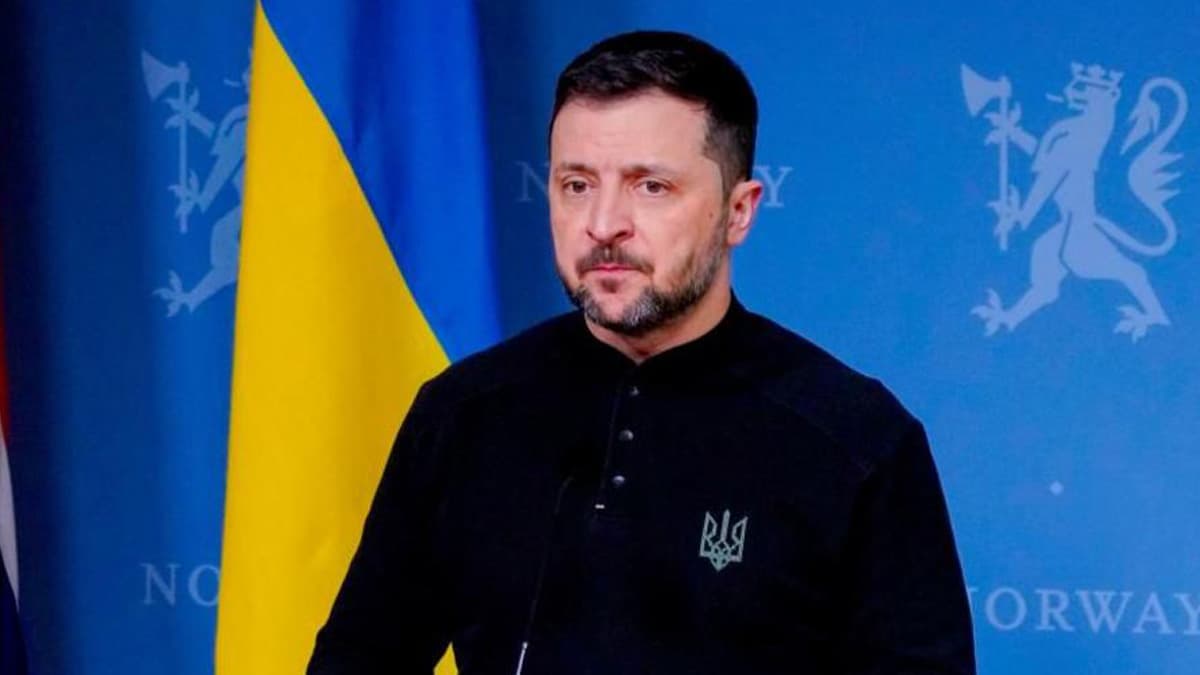
- Zelensky says Ukraine could hold elections within 90 days if security can be ensured by allies.
- Tensions rise between Zelensky and Trump over peace talks and democratic governance.
- Ukraine prepares a revised peace plan for submission to the US, amid diverging views on concessions.
Ukraine is prepared to hold national elections within the next 60 to 90 days, provided international partners can guarantee security, President Volodymyr Zelensky announced on Tuesday.
Speaking to reporters from his plane following meetings in Italy, Zelensky directly addressed criticism from US President Donald Trump, who recently claimed Ukraine was using the ongoing war as an excuse to delay democratic processes.
“I am ready for the elections,” Zelensky stated. “Not only that, I am asking – and I am now declaring this openly – the United States of America to help me, together with our European colleagues, to ensure security for the elections.”
The Ukrainian leader’s response follows an interview in which Trump told Politico that Ukraine’s leadership was resisting elections under the guise of war, saying: “They talk about a democracy, but it gets to a point where it’s not a democracy anymore.”
Zelensky, whose five-year term was set to expire in May 2024, has postponed elections under martial law imposed since Russia’s full-scale invasion in February 2022. He rejected the notion that he was unwilling to step down, stressing that security under conditions of frequent missile attacks was the main obstacle.
“How can this be done under missile attacks on our military? The question is, how will they vote?” he said.
Zelensky added that he had asked Ukrainian lawmakers to begin drafting legislative proposals that could enable elections to take place under wartime conditions. However, he emphasised that such a decision rests with Ukrainians, not foreign leaders.
“With all due respect to our partners, I will say frankly that I am ready for the elections,” he reiterated.
New peace plan underway
Zelensky’s comments came amid renewed efforts to end the war, now approaching its fourth year. Following a series of meetings with European leaders, he announced that Ukraine would submit a “refined” peace proposal to the United States by Wednesday.
“We are working today and we will work tomorrow. I think we will hand it over tomorrow,” he told reporters.
Talks were held in London on Monday with the leaders of Britain, France, and Germany. According to Zelensky, Ukraine and its allies are discussing three key documents: a 20-point framework for peace, a proposal for long-term security guarantees, and a strategy for Ukraine’s post-war recovery.
On the second document, Zelensky said he was awaiting input from Ukraine’s military in coordination with US defence officials. The recovery plan, he added, would be relevant only after a ceasefire or the end of hostilities.
Transatlantic tensions emerge
As Kyiv prepares to advance its diplomatic proposals, strains have appeared in the US-European alliance. Pope Leo voiced concern on Tuesday over Trump’s approach to peace, suggesting it risked weakening longstanding transatlantic cooperation.
The pontiff remarked: “Trying to reach a peace agreement without including Europe in the talks, so to speak, is unrealistic, because it’s a war in Europe, and I think that Europe must be part of the security guarantees.”
Pope Leo did not name specific statements but referred to Trump’s new national security strategy, which takes a more adversarial stance towards Europe. The document criticises European governments for supporting Ukraine and claims that “unrealistic expectations” in Europe are obstructing peace.
The Pope’s warning follows Trump’s claims that European countries are “decaying” and no longer viable allies. In his Politico interview, the US president said many European leaders were “politically correct” and “don’t know what to do.”
In contrast, UK Foreign Secretary Yvette Cooper rejected these criticisms, stating: “All I see in Europe is strength,” citing increased defence spending and sustained support for Ukraine.
Trump presses Zelensky to concede territory
Trump’s pressure on Zelensky to accept a peace deal with territorial concessions to Russia has also sparked controversy. He claimed Ukrainian negotiators “loved” the most recent US peace proposal and accused Zelensky of failing to read it.
Responding, Zelensky said he had reviewed multiple versions of the US plan and that negotiations were ongoing. He urged direct leadership-level meetings between Kyiv and Washington within the coming weeks.
Zelensky wrote on X (formerly Twitter) that Ukraine and Europe were working “on all components of potential steps toward ending the war” and that the plan would soon be ready for US review.
Crimea and NATO ambitions acknowledged
Zelensky also addressed the status of Crimea, which Russia annexed in 2014. Asked whether he reiterated his claim to Crimea during his first meeting with Russian President Vladimir Putin in 2019, Zelensky said: “Maybe I said that at the first meeting. And I believe that I was right.”
However, he acknowledged that Ukraine lacks the strength to retake the peninsula at present.
“I will be honest – today we do not have the strength for all this, we do not have sufficient support for all this,” he said.
This admission contrasts with earlier assertions of reclaiming all occupied territories but reflects a pragmatic shift amid evolving military realities.
Europe resists US-led pressure
European leaders have voiced unease over what they see as Washington pushing for a rapid peace deal that could undermine Ukraine’s long-term security. Germany’s Chancellor Friedrich Merz responded critically to the new US national security strategy.
While acknowledging some valid concerns, he rejected the implication that Europe needs American intervention to safeguard democracy. “Europeans can address such questions themselves,” he stated.
Trump’s recent remarks align with similar criticisms delivered at the UN earlier this year, where he targeted Western Europe’s migration and energy policies.
Amid these tensions, Ukraine has urged NATO and European leaders to help deter any deal that could leave Kyiv exposed to future aggression.