Government says GIC and Temasek returns within expectations, rejects comparisons with other funds
The Singapore Government said it will continue assessing GIC and Temasek based on long-term mandates and risk profiles, with Acting Transport Minister Jeffrey Siow telling Parliament that their returns remain reasonable despite tougher global conditions.
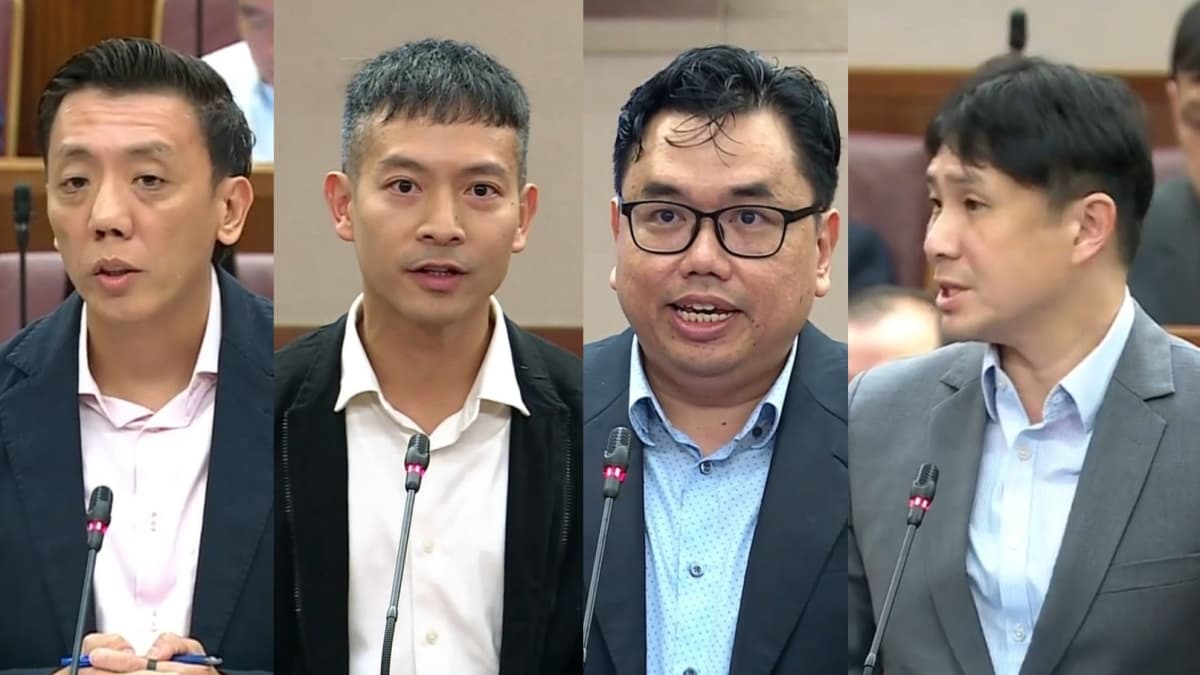
- The Government assesses GIC and Temasek against their mandates and risk profiles, not global fund rankings.
- Acting Transport Minister Jeffrey Siow said both investors’ long-term returns are reasonable and within expectations.
- MPs raised concerns about benchmarks, risk-taking and the sustainability of the Net Investment Returns Contribution framework.
SINGAPORE: The Singapore Government will continue to assess the performance of state investors GIC and Temasek based on their mandates and risk profiles, and will not compare them with other global funds, Acting Transport Minister Jeffrey Siow said on 12 January 2026.
Speaking in Parliament, Siow, who is also Senior Minister of State for Finance, said the Government’s focus remains on long-term performance rather than short-term or year-to-year fluctuations in returns.
“The government’s assessment is that the returns generated by GIC and Temasek are reasonable and within expectations given their mandates and their risk profiles,” he told Members of Parliament.
Siow was responding to questions from seven MPs who asked whether the two state investors had underperformed, following recent media reports that compared their returns with other sovereign wealth and investment funds worldwide.
He said such comparisons were not meaningful because GIC and Temasek operate under distinct mandates and adopt different risk approaches from other funds.
Siow noted that over the past 20 years, GIC has achieved a real return of 3.8 per cent per annum, while Temasek has reported a total shareholder return of 8 per cent per annum in US dollar terms over the same period.
“These outcomes reflect a long-term investment approach, and must be viewed together with the risks taken to achieve them,” he said.
Temasek, Siow explained, operates mainly as a “bottom-up investor”, investing directly in companies across geographies and sectors where it has built deeper capabilities and sees long-term growth potential.
He said Temasek’s performance in recent years had been affected by developments in the Chinese market, but this impact was mitigated by stronger returns from its growing investments in Europe and the United States.
“Ultimately, the Government holds the board of Temasek accountable for delivering good long-term returns on its overall portfolio,” Siow said.
He added that this assessment is based on net portfolio performance, after deducting all investment fees and expenses, and that the Government does not intervene in individual investment decisions.
On GIC, Siow said its mandate is to preserve the international purchasing power of the assets under its management, rather than to maximise short-term returns.
He explained that GIC had taken pre-emptive steps in recent years to moderate its risk exposure in anticipation of increased market volatility and heightened asset valuations.
“These measures were intended to keep portfolio risks within acceptable limits and to guard against the possibility of significant asset impairment in the event of a sharp market correction,” he said.
As global equity markets remained elevated, these prudent de-risking measures resulted in some foregone returns, but Siow said this reflected deliberate choices to preserve capital.
“Any assessment of returns must therefore be considered alongside the risks that are taken,” he added.
Shawn Loh presses on NIRC trigger points as SMS Siow defends system without threshold
Several MPs pressed the Government on whether there should be clearer benchmarks or thresholds to assess performance over time.
Jalan Besar GRC MP Shawn Loh said that while global rankings were not helpful, there should still be clarity on when weaker returns might warrant concern.
He asked what level of long-term returns would trigger a review of the Net Investment Returns Contribution framework, given structural headwinds in the global investment climate.
In response, Siow acknowledged that generating strong investment returns had become more challenging and that this trend was likely to persist over the long term.
However, he said the system was designed so that Singapore could “ride out” year-to-year fluctuations, even during periods of sustained underperformance, because of its large asset base and long investment horizon.
Opposition MPs also questioned whether the two investors were delivering sufficient risk-adjusted returns.
Jamus Lim presses GIC and Temasek on returns as Siow defends risk approach
Associate Professor Jamus Lim of Sengkang GRC highlighted GIC’s lower performance relative to its reference portfolio and asked whether risk levels or benchmarks should be adjusted.
Siow responded that the reference portfolio published on GIC’s website is not a returns benchmark, but a tool to illustrate risk exposure.
He said there would be periods when GIC deliberately takes less risk than the reference portfolio in order to preserve capital.
“On hindsight, we can always make assertions, but GIC made the judgment to de-risk and still deliver the returns that we expect of them,” he said.
On Temasek, Jamus Lim asked whether the Government would reconsider its geographical diversification or return to a more domestically oriented mandate.
Siow said the Government does not intervene in Temasek’s management decisions, including its choice of geographies, sectors or restructuring efforts.
“Ultimately, accountability rests with the Temasek board for delivering good, long-term returns,” he reiterated.
Fadli presses on GIC–CPF gap; SMS Siow leaves underperformance scenario unanswered
Aljunied GRC MP Fadli Fawzi also raised questions about the relationship between GIC’s investment returns, interest paid on Singapore Government Securities to the Central Provident Fund Board, and the sustainability of CPF rates.
Siow said the Government can meet all its debt servicing costs and obligations, including committed CPF interest rates, and emphasised the system’s buffers and long-term design.
He did not specify any quantitative trigger that would prompt a review of the Net Investment Returns Contribution framework, instead stressing prudence, mandate discipline and capital preservation.