Wolbachia cuts dengue risk by over 70%, but not a ‘silver bullet’: Goh Hanyan
Singapore recorded its lowest dengue cases since 2018 in 2025, with 4,036 infections reported, as Senior Parliamentary Secretary Goh Hanyan told Parliament. She attributed the decline to global trends, the absence of major outbreaks and NEA’s integrated mosquito control efforts.
- Dengue cases fell to 4,036 in 2025, the lowest since 2018, due to the absence of major outbreaks, global trends and sustained control efforts.
- Project Wolbachia cut dengue risk by over 70% in release areas and will cover 50% of households by end-2026, but is not a standalone solution.
- Expansion depends on mosquito data, risk levels and resources, with community vigilance still crucial.
SINGAPORE: Dengue cases in Singapore fell to their lowest level since 2018 in 2025, driven by a combination of global trends, the absence of major local outbreaks and sustained mosquito control efforts, Senior Parliamentary Secretary for Sustainability and the Environment Goh Hanyan told Parliament on 13 January.
Goh was responding to questions from PAP MP Ang Wei Neng (West Coast–Jurong West GRC) on the sharp decline in dengue cases last year and the timeline for expanding Project Wolbachia nationwide.
According to Goh, Singapore recorded 4,036 dengue cases in 2025, marking the lowest annual total since 2018.
She attributed the decline to several factors, including the lack of large-scale outbreaks locally, a global reduction in dengue cases last year, and collective efforts by government agencies, stakeholders and residents to curb mosquito breeding.
She said the National Environment Agency’s (NEA) holistic dengue control strategy — which integrates Project Wolbachia, vector control operations and community action to keep premises free of mosquito breeding — has helped keep dengue incidence low.
Project Wolbachia expansion
Goh said Project Wolbachia will continue to be expanded in phases. By March 2026, the programme is expected to cover 740,000 households, up from 580,000 households in April 2025.
By the end of 2026, releases are projected to reach 800,000 households, or about 50 per cent of all households in Singapore, covering most areas at higher risk of large dengue outbreaks.
She added that NEA will continue to monitor the programme’s progress and adjust its deployment strategy accordingly, stressing that reducing dengue risks requires sustained cooperation from residents.
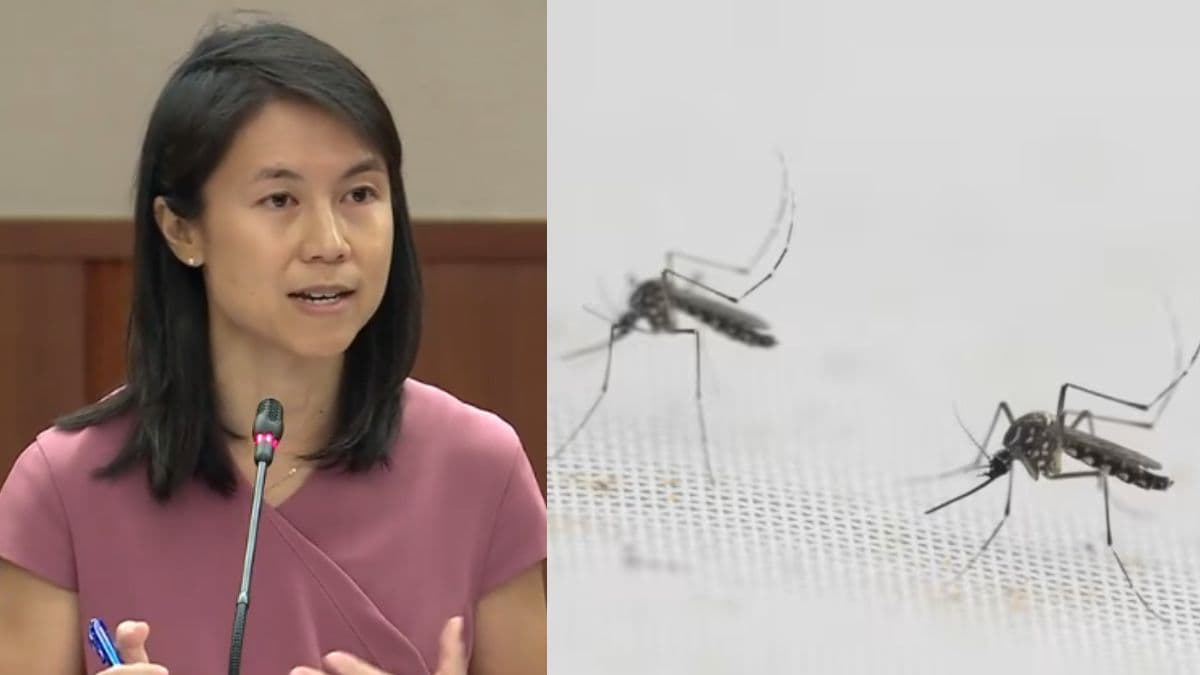
Goh also urged public understanding that residents may observe more mosquitoes during release periods, as male Wolbachia-carrying mosquitoes are released to suppress the Aedes aegypti population. These mosquitoes do not bite or transmit diseases.
Ang questions effectiveness and pace of rollout
In a supplementary question, Ang asked how effective Project Wolbachia has been and whether it was the main reason for the sharp drop in dengue cases last year.
He cited feedback from residents in Nanyang, a part of Jurong West previously considered a dengue hotspot, who had experienced repeated infections.
Ang noted that while the Wolbachia trial had been extended to parts of Jurong West, it had not reached Nanyang.
He questioned what bottlenecks were preventing faster expansion, given that coverage would still stand at 50 per cent by the end of 2026, and asked whether more resources could be deployed to accelerate the rollout.
Wolbachia effective but not a “silver bullet”
Responding, Goh said Project Wolbachia has demonstrated strong results, reducing the risk of dengue transmission by more than 70 per cent in release areas.
However, she cautioned that it is not a “silver bullet” for suppressing mosquito populations or managing dengue risks.
She emphasised that sustained vigilance and collective responsibility remain critical in preventing mosquito breeding.
Goh also pointed to the broader global context, noting that dengue cases worldwide fell from 14.4 million in 2024 to about 5 million in 2025.
Locally, the absence of major clusters, together with the combined impact of NEA’s comprehensive dengue control measures, contributed to the decline in cases.
Project Wolbachia was one factor, she said, but not the sole reason.
Site selection and resource constraints
Addressing Ang’s concerns about expansion, Goh said site selection for Wolbachia releases is based on multiple considerations, including historical dengue trends and current Aedes aegypti populations. Decisions are made on a relative basis across different locations.
She added that resource constraints also affect the pace of expansion, as mosquito suppression depends on local conditions and the prevalence of breeding habitats.
NEA needs time to assess the effectiveness of releases at existing sites before deciding on further expansion.
Goh said NEA will announce new sites in due course as the programme continues to scale up towards the end of the year.