LTA says manual intervention caused AV collision in Punggol; operations to resume
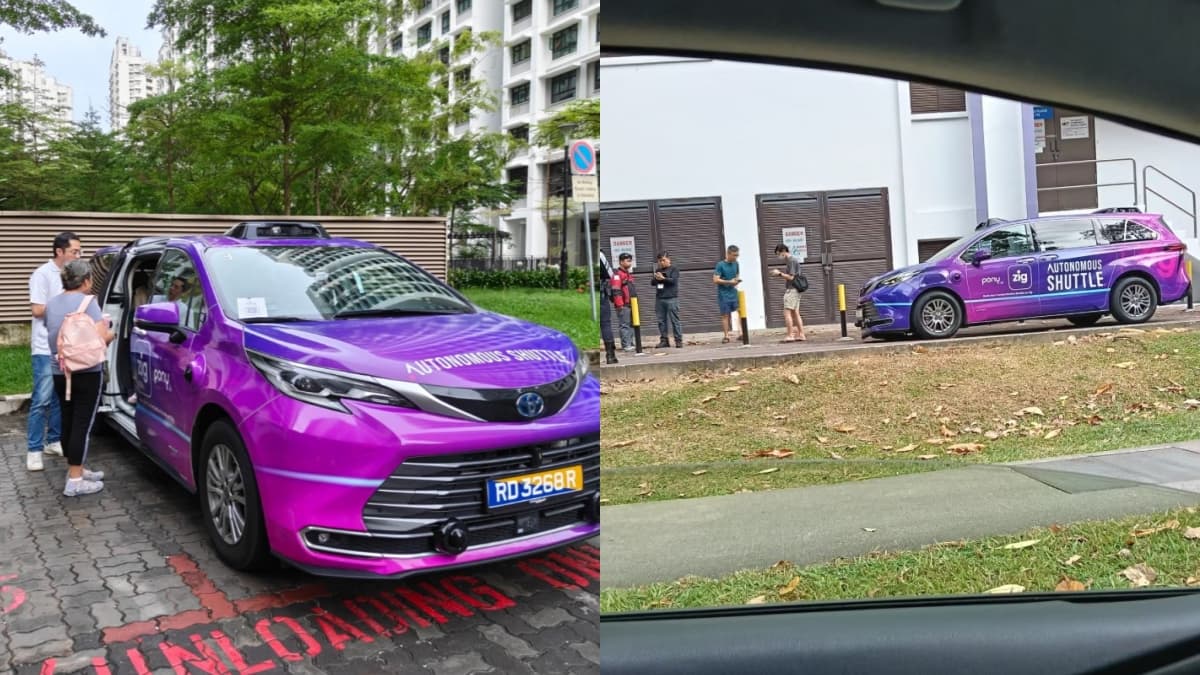
LTA said a safety officer’s manual intervention caused a self-driving vehicle to collide with a road divider in Punggol. Simulations showed the vehicle would likely have avoided the collision without intervention, with autonomous operations resuming on 30 January.
- LTA concluded that a safety officer’s manual takeover caused the autonomous vehicle collision in Punggol.
- Simulations showed the vehicle would likely have completed the manoeuvre safely without intervention.
- Autonomous operations by ComfortDelGro will resume in Punggol on 30 January after a safety timeout.
SINGAPORE: The recent collision involving an autonomous vehicle along Edgedale Plains in Punggol was caused by manual intervention from its on-board safety officer, following a review by the Land Transport Authority.
In a statement issued on 29 January 2026, LTA said its investigation found that the vehicle’s autonomous system had initially responded appropriately to a perceived hazard.
According to LTA, the autonomous vehicle detected an object that was not on the road and, as a precaution, manoeuvred into an adjacent lane.
The authority said this response was consistent with the system’s design and safety protocols during autonomous operation.
Manual takeover reportedly triggered the collision
However, the safety officer on board observed the vehicle moving into another lane without what appeared to be an obvious reason and decided to intervene.
LTA said the safety officer took manual control of the vehicle, causing it to exit autonomous mode during the manoeuvre.
The authority added that the safety officer was unable to complete the manoeuvre in time, resulting in the vehicle colliding with a road divider.
“A simulation of the incident showed that the AV would likely have completed the manoeuvre safely and resumed its intended course, had there been no manual intervention,” LTA said.
Incident occurred during testing phase
The incident occurred on 17 January while the vehicle was undergoing testing, with no passengers on board at the time.
LTA said there were no injuries reported as a result of the collision.
Following the incident, LTA and the vehicle’s operator, ComfortDelGro, reviewed operating procedures governing transitions between autonomous and manual driving.
The review also examined guidelines on when safety officers should intervene during autonomous operations.
According to LTA, the objective is to strengthen safety outcomes for road users and personnel involved in autonomous vehicle trials.
The authority said the incident underscored the importance of the familiarisation phase of autonomous vehicle deployment.
During this phase, vehicles adapt to local road conditions, while fleet operators and safety officers gain practical understanding of autonomous system behaviour.
LTA noted that familiarisation runs are conducted without passengers on board to reduce risk while learning and validation take place.
Autonomous operations to resume
As part of its response, LTA said it would lift the safety timeout imposed on ComfortDelGro’s self-driving vehicles.
ComfortDelGro is set to resume autonomous operations in Punggol on 30 January, the authority added.
In a separate statement, ComfortDelGro said it would resume autonomous vehicle familiarisation runs in Punggol from 30 January.
The company said the runs form part of its ongoing testing and validation process for self-driving technology.
ComfortDelGro said the incident highlighted the importance of familiarisation, particularly in enabling safety operators to gain real-world experience working with autonomous systems.
The operator said safety operator training extends beyond classroom instruction.
According to ComfortDelGro, its programme, developed with technology partner Pony.ai, includes a stringent selection process and comprehensive theory training.
The programme also includes technology familiarisation, practical driving sessions and daily toolbox briefings before deployment.
ComfortDelGro added that safety operators are supervised on board by qualified operations supervisors during runs.
To further strengthen safety assurance, the company said it would introduce new quality checks using in-cabin footage.
It also plans to conduct specialised refresher courses led by training instructors.
Earlier account of the incident
On 18 January, ComfortDelGro told media that the vehicle had been conducting routine mapping and familiarisation at about 3.10pm along Edgedale Plains.
The company said the vehicle detected a small object on the road and responded accordingly before the safety operator took manual control.
ComfortDelGro said the collision occurred during the manual takeover phase, reiterating that no one was injured.
The operator was approved last month to begin trials of five five-seater autonomous shuttles.
Industry groups respond
In a joint statement responding to LTA’s findings, the National Private Hire Vehicles Association, the National Taxi Association and the National Transport Workers’ Union expressed support for the authority’s conclusions.
The associations said they supported calls to review the transition process between autonomous and manual driving.
They also said fleet operators and safety officers should develop a deeper understanding of autonomous vehicle behaviour.
The groups reiterated the importance of adequate training for all personnel involved in autonomous vehicle operations.
They further emphasised the need to ensure the safety of drivers and safety officers inside autonomous vehicles during pilot phases.
The associations said trial periods should extend beyond technology testing and route mapping.
They added that personnel must be given sufficient time to familiarise themselves with broader industry systems and operating environments.
According to the groups, this is especially critical as autonomous vehicle deployment remains in a familiarisation phase requiring continuous learning and improvement.