Mark Chay’s ‘come to the party’ remark disputed as athletics flags structural gaps despite SEA Games gains
Singapore athletics pushed back against SNOC secretary-general Mark Chay’s call for the sport to “come to the party”, arguing that medal expectations must be matched by sustained funding, full-time athlete support and long-term development, despite recent SEA Games breakthroughs.
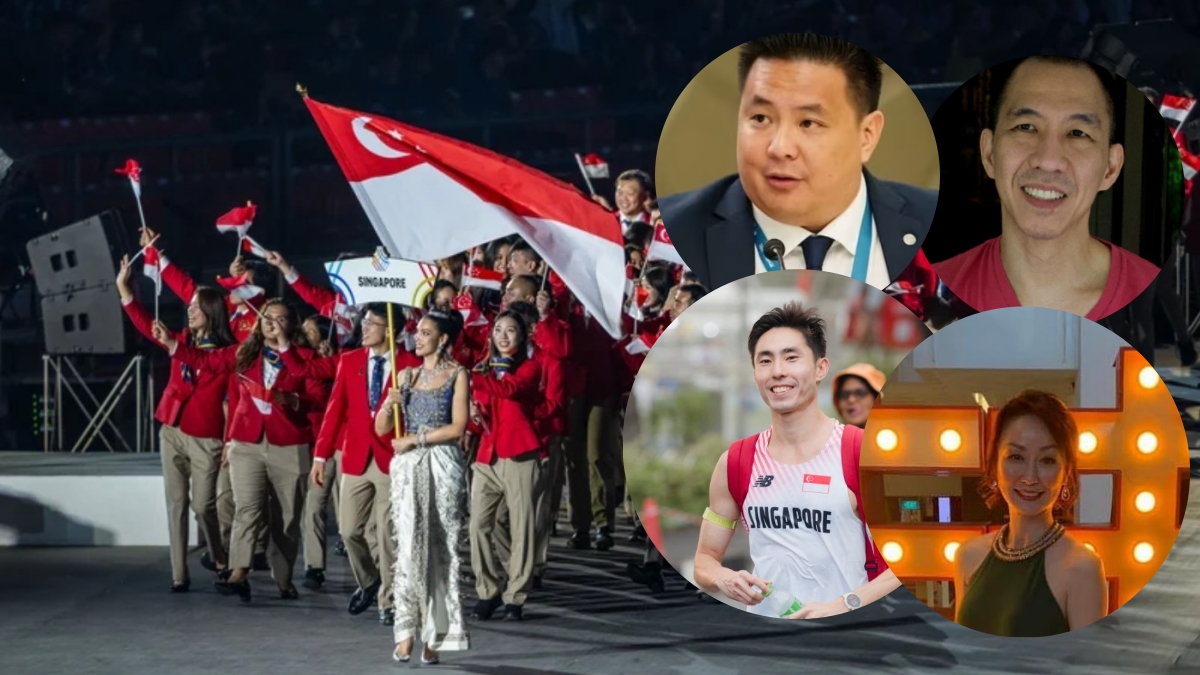
- Singapore athletics pushed back against SNOC secretary-general Mark Chay’s remarks that the sport needs to “come to the party” ahead of the 2029 SEA Games, arguing that medal outcomes must be viewed in the context of funding gaps and regional competition from full-time athletes.
- Chay highlighted the disparity between aquatics and athletics at the Thailand SEA Games, noting that swimming delivered half of Singapore’s gold medals while athletics produced three golds, as he called for stronger competitive edge and world-class standards.
- Athletics leaders and athletes pointed to recent breakthroughs, grassroots rebuilding efforts and the need for sustained, long-term investment and systemic support to close the performance gap by the 2029 home Games.
SINGAPORE: The athletics fraternity has pushed back against comments by Singapore National Olympic Council (SNOC) secretary-general Mark Chay, who said the sport needs to “come to the party” at the SEA Games if Singapore hopes to finish among the top three nations when it hosts the Games in 2029.
Chay made the remarks at the Team Singapore review held at Bangkok’s Grand Fourwings Convention Hotel on 20 December, the final day of the Thailand SEA Games, as officials assessed the Republic’s performance and mapped out expectations for the home Games in four years’ time.
His comments drew responses on social media from Singapore Athletics (SA) president Lien Choong Luen, deputy president Marinda Teo and national distance runner Soh Rui Yong, who questioned the framing of athletics’ contribution and highlighted structural challenges faced by the sport.
Chay highlights medal gap between aquatics and athletics
At the review, Chay said Singapore athletics must deliver more medals if the Republic is serious about consistently finishing among the top three nations in South-east Asia.
“There are two compulsory sports at the SEA Games – aquatics and athletics,” said the former national swimmer.
“Swimming delivered 50 per cent of the gold medals, but for athletics, there are three golds out of 47.”
He added that aquatics and athletics must “pull their weight” if Singapore wants to mount a strong home Games showing in 2029, noting that athletics is contested at every major international competition, including the Olympics, Asian Games and SEA Games.
“If we’re really hunting for golds, hunting for medal tallies, athletics need to come to the party,” he said. “We need to have more athletes at the world-class level.”
Chay also warned against athletes becoming comfortable with non-winning performances.
“If not, what we’re doing is that we’re encouraging satisfactory performances, where our athletes are satisfied with not winning,” he said. “We need to do something about that.”
Team Singapore finishes fifth overall in Thailand
At the Thailand SEA Games, Team Singapore won a total of 202 medals – 52 golds, 61 silvers and 89 bronzes – to finish fifth overall. Hosts Thailand topped the medal table with 233 golds, followed by Indonesia and Vietnam. Malaysia finished fourth.
It was Singapore’s third-best medal haul at an away SEA Games.
The Republic’s best-ever finish was second at the 2015 SEA Games on home soil, where it won 84 gold medals.
In athletics, Singapore sent its largest-ever away contingent of 39 athletes, who won three golds, three silvers and three bronzes, alongside three national records. The 3-3-3 haul matched Singapore’s best athletics showing at the SEA Games in a decade.
Athletics leaders point to progress and constraints
Responding to Chay’s remarks, SA president Lien acknowledged that neighbouring countries’ heavy investment in full-time athletes training overseas has led to a sharp rise in regional standards.
He pointed out that four of the eight finalists in the men’s 100m at the 2023 Asian Games were from South-east Asia, underlining how competitive the region has become.
“I set great store by our athletes surpassing our historical performances or their own records, but I cannot control what the competition does,” said Lien.
Singapore also recorded several breakthroughs in Bangkok. Calvin Quek’s 400m hurdles gold was the country’s first in the event in 60 years, while sprint star Shanti Pereira achieved a historic double-double by retaining her women’s 100m and 200m titles.
Other milestones included Kampton Kam’s high jump silver, Singapore’s first medal in the event in three decades; Andrew Medina’s long jump bronze, ending a 42-year wait; and Gabriel Lee’s triple jump bronze, Singapore’s first since 1971.
Soh Rui Yong highlights full-time athlete gap
Two-time SEA Games marathon champion Soh Rui Yong said Singapore’s athletes are often competing against full-time professionals from the region.
“Singapore are sending a bunch of full-time students, software engineers, teachers, government employees, and corporate workers,” he said, citing Thai sprint star Puripol Boonson and Thai-American distance runner Kieran Tuntivate as examples of full-time elite athletes.
While a handful of Singapore athletes, including Pereira and men’s 200m silver medallist Marc Louis, are supported under the Sport Excellence Scholarship, Soh said broader high-performance investment is lacking.
“Singapore has the resources to fund a proper high-performance athletics programme if this country wants to, but those resources don’t seem to be flowing into the sport,” said the 33-year-old.
“Till then, don’t expect to win many gold medals bringing knives to a gun fight.”
Funding, development pathways and long-term support
Lien said SA has stepped up fund-raising efforts, with companies such as DBS Bank (POSB), NTUC Income, New Balance and Pocari Sweat backing athletes, while Standard Chartered Bank supports the Singapore Marathon.
However, he stressed the need for a long-term financing pipeline that gives athletes certainty over multiple seasons, through both personal bests and setbacks.
Teo added that around 80 per cent of national track and field athletes at the most recent SEA Games were funded through resources raised by SA, highlighting both community commitment and the need for stronger systemic backing.
She called on SNOC to support broader SEA Games nominations and urged Sport Singapore to expand funding pathways and increase the number of Spex scholars, similar to the fencing model.
SA is also working to rebuild its grassroots pipeline, with plans to introduce a zonal combined schools track and field competition in the third quarter of 2026, with the aim of feeding into the National School Games.
Netizens question tone of SNOC comments
On Facebook, netizens questioned Chay’s remarks, with several describing them as divisive.
One user said the comments reflected bias, noting that different sports face different challenges, while another expressed surprise that Chay, himself a former national athlete, would make such remarks.


Others pointed to funding gaps. One commenter said that without proper investment, expectations of medals were unrealistic, while another called for more corporate sponsors to step in, suggesting Singapore’s wealthy business community could play a larger role.


Another user compared Singapore with Finland, noting that both countries have similar population sizes, yet Finland has consistently produced Olympic champions.

Calls for stronger government backing were also raised, with one netizen saying ultimate financial support and policy fine-tuning are needed to nurture young talent and sustain long-term success.